
Picture a dog camped by the cutting board while blueberries roll off the counter one at a time, and picture the half-second of doubt before a hand reaches down to let the dog have one. That pause is honest. Dogs share a kitchen with foods that range from harmless to lethal, and nothing about the color or shape of a berry tells you which pile it belongs in. So before the next one hits the floor, it’s worth settling the question properly rather than guessing.
Here is the short version: AKC: dogs can eat blueberries, and they’re one of the fruits I hand over without much hesitation, provided the amount stays modest and the dog isn’t a gulper. They aren’t a superfood that changes a dog’s trajectory, and they aren’t a hazard either — they sit in a comfortable middle ground that a lot of foods don’t get to occupy.
What blueberries bring to the bowl. A small handful of blueberries is mostly water, a bit of fiber, and a meaningful dose of vitamin C and anthocyanins — the pigments responsible for that deep blue skin. PetMD notes they’re low in calories relative to most commercial treats, which matters more than owners tend to assume; treat calories creep. The anthocyanins are antioxidant compounds, and antioxidants in general help neutralize the free radicals that accumulate with normal metabolism and with age. I’d stop short of calling a berry a joint supplement or an anti-aging tool — the doses a dog eats from a handful of fruit are small next to a formulated product, and the research base in dogs specifically is thinner than the marketing around it. What blueberries realistically offer is a low-calorie, nutrient-dense way to vary a treat rotation without adding much sugar or fat.
Fiber is the other piece worth naming honestly. A few berries add a little bulk to stool, which some owners notice as steadier digestion. More isn’t better here — overshoot the amount and that same fiber turns into loose stool instead of a benefit, which is the same lesson that applies to nearly every fiber-forward treat, blueberries included. If you want the fuller picture of where that line sits, the piece on how much fiber is too much for a dog walks through the signs to watch for.
Serving size, plainly. Treats of any kind, blueberries included, should stay under roughly 10% of a dog’s daily intake. For most dogs that lands somewhere around a small handful, offered a few times a week rather than every day. Start smaller than that the first time — one or two berries — and watch for a normal stool the next day before making it routine. Small dogs need fewer berries than large ones for the same reason a small dog needs less of anything: their whole daily calorie budget is smaller.
Consider a fifty-pound dog and a five-pound dog standing side by side, both looking up at the same handful of blueberries. The math isn’t close. What reads as a reasonable snack for the bigger dog can be a meaningful chunk of the smaller one’s daily calories, and a smaller mouth also has a smaller margin for a round berry to go down wrong. I’d rather an owner underfeed a treat and adjust up than overfeed one and spend an evening watching for stomach upset. That’s not caution for its own sake; it’s just matching the treat to the dog actually eating it, the same way you’d size a dose of anything else to body weight.
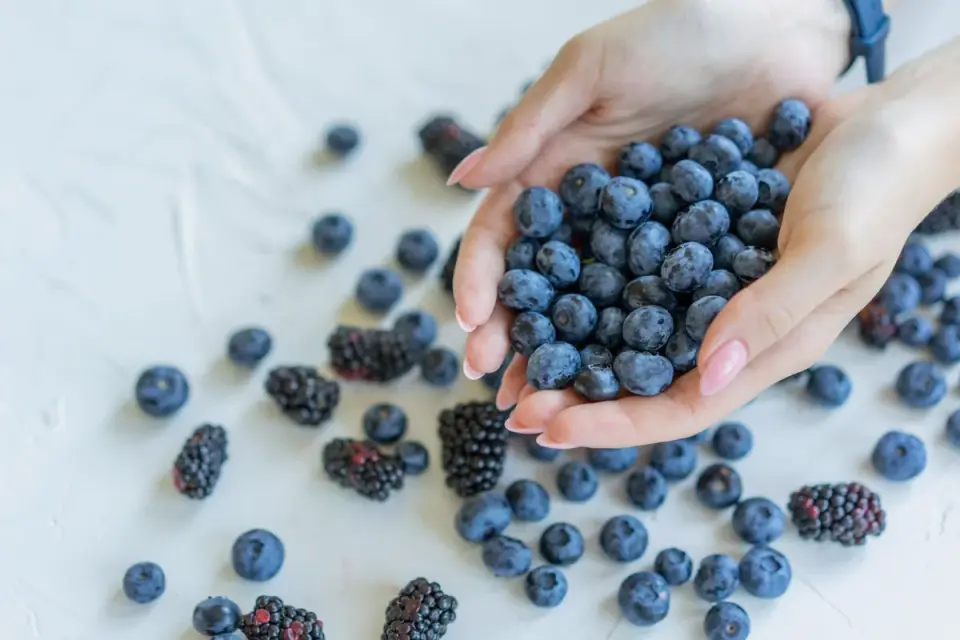
Texture and choking risk. Round, smooth, and roughly bite-sized — that combination is exactly what makes a food a choking risk for a dog that doesn’t chew before swallowing. Frozen blueberries are firmer than fresh ones and raise that risk a notch further, especially in small breeds and dogs that treat every snack like a race. I don’t think that risk should scare anyone off blueberries entirely, but it’s a real reason to hand them over one at a time rather than dumping a handful into a bowl and walking away, at least until you know how a particular dog handles them.
The mix-up worth knowing. Blueberries get lumped in conversation with other small round fruits, and that’s where the real danger lives — not in the blueberry itself. Grapes and raisins are genuinely toxic to dogs; even one grape has been linked to sudden kidney failure, and Chewy’s guide to grapes and raisins is blunt about it: symptoms can show up within hours, and there’s no known safe amount. Blueberries share none of that mechanism. They aren’t a diluted version of a grape risk; they’re a different food entirely that happens to look vaguely similar rolling across a kitchen floor. Keep the two separate in your head and in your fruit bowl, and skip pre-cut fruit mixes where a grape could hide next to a blueberry.
A dog with a sensitive stomach, a history of pancreatitis, or a diet that’s already tightly managed for a medical condition is a different conversation — check with your veterinarian before adding any new treat, blueberries included, since the right answer depends on the individual dog. The same logic applies to a senior dog whose diet is already in transition; if you’re navigating that, a step-by-step guide to switching a senior dog’s food covers how to introduce anything new without upsetting a gut that’s already working with less margin. And if you’re building out a wider rotation of dog-safe produce beyond blueberries, the piece on what sweet potato adds to a dog’s diet is a reasonable next stop.
My honest bottom line: blueberries are a treat worth keeping in the rotation for most healthy dogs, not because they’re medicinal, but because they’re a low-calorie, low-risk way to say yes to a dog standing by the counter. Start with a couple, watch the next stool, and settle into whatever amount that particular dog handles well. That’s the whole method — no dramatic health claim required, just a sensible portion and a little attention.
Frequently asked questions
Can puppies eat blueberries?
Small amounts are generally fine once a puppy is eating solid food, but start with one berry, cut it in half for tiny mouths, and watch for loose stool before making it a habit.
Are frozen blueberries okay for dogs?
They're fine nutritionally, but they're firmer and rounder than fresh ones, which raises the choking risk — hand them over one at a time and watch smaller dogs chew rather than gulp.
Can dogs eat blueberry muffins or pie?
Skip them. The sugar, butter, and sometimes xylitol-sweetened fillings in baked goods do the damage, not the berries themselves.
How many blueberries can a dog eat in a day?
Treats, blueberries included, should stay under roughly 10% of a dog's daily food intake — for most dogs that's a small handful a few times a week, not a daily bowlful.