On this page
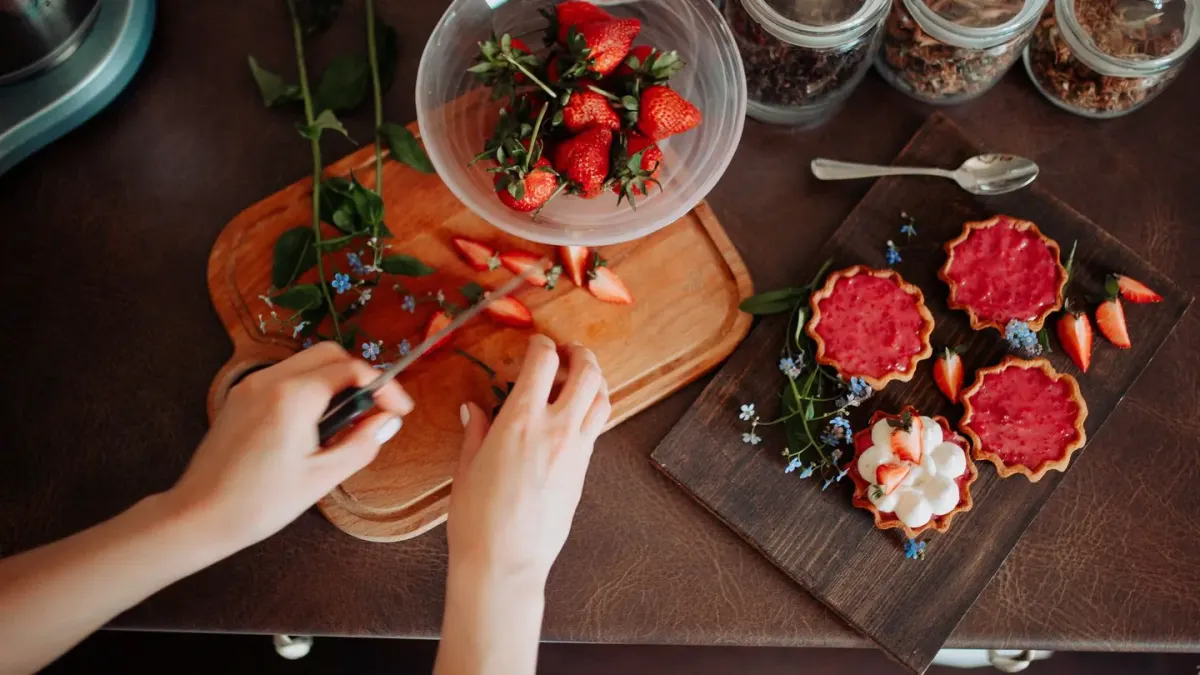
There’s a fork in the road that happens in a lot of kitchens: a dog sits at your feet while you slice strawberries for breakfast, and you have to decide, right there, whether one lands in the bowl or stays on the cutting board. Most of the time, for most dogs, the fruit is fine to share. But “most of the time” is doing real work in that sentence, and I’d rather walk you through why than hand you a blanket yes.
I remember a Cavalier King Charles Spaniel named Biscuit who used to plant herself under the counter every summer morning, waiting on the first berry to fall. Her owner would toss her a sliver, and Biscuit would carry it to the rug like a prize before eating it in three bites. It was a small, ordinary ritual, the kind that makes a kitchen feel lived-in. Nothing dramatic happened, no emergency, no drama. That’s the case for most dogs and most strawberries. But I bring Biscuit up because the calm, ordinary version of this story is the one worth understanding, not just the scary outlier. Feeding a dog safely isn’t about avoiding every risk. It’s about knowing which risks actually apply to the dog in front of you.
So, Can Dogs Eat Strawberries?
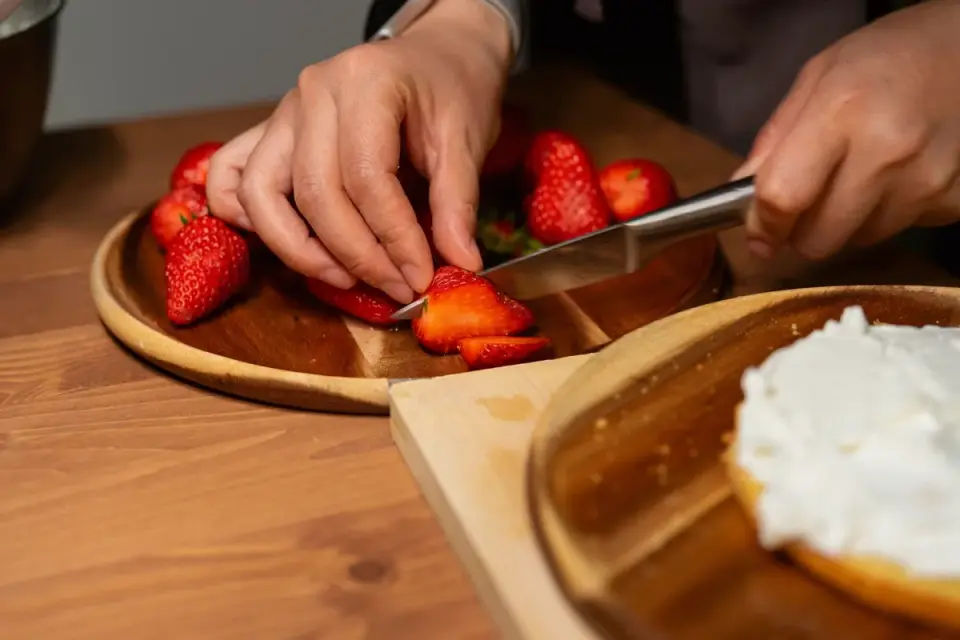
Yes. AKC recommends washing the fruit and cutting it into small pieces before offering it, both to prevent choking and to make it easier to digest, and suggests treats stay under roughly 10% of a dog’s daily calories. For most dogs, that works out to one to three strawberries a day, fewer for a small dog, a bit more for a large one. Strawberries themselves aren’t toxic. The concerns that come up are about quantity, preparation, and which dogs are feeding them to.
Here’s where I stay anchored to mechanism rather than headline. A strawberry isn’t a supplement or a cure for anything. It’s roughly 91% water, with dietary fiber, vitamin C, and antioxidants along for the ride. The fiber can support normal bowel function and may feed the gut’s resident bacteria, similar in principle to how pumpkin’s soluble and insoluble fiber blend is often used to firm up loose stool. That’s a structure/function statement, not a treatment claim, and the distinction matters. I’d rather you understand what a berry is actually doing in the gut than assume it’s doing something it isn’t.
Whole Fruit vs. Processed Strawberry Products
This is the comparison that actually matters more than “strawberries: yes or no.” A fresh, washed strawberry and a spoonful of strawberry jam are not the same food. Canned strawberries, fruit packed in syrup, and strawberry-flavored yogurts or baked goods often carry added sugar and, in some cases, artificial sweeteners. That second category is where real danger lives. ASPCA has warned specifically about xylitol, a sweetener that triggers a sudden insulin release in dogs, dropping blood sugar fast enough to cause vomiting, weakness, or seizures. Xylitol occurs naturally in trace amounts in some fruits, strawberries included, but at levels far too low to matter. The real xylitol risk sits in processed products, not the produce aisle. So the rule I give owners isn’t “avoid strawberries.” It’s “read the label the moment a strawberry stops looking like a strawberry.”
A basket of ripe berries at a farmers market is genuinely a different food from the strawberry-flavored protein bar sitting in the same tote bag, and it’s worth pausing on that difference before you toss either one to a dog waiting by your feet.
The Sugar Question, and Where I Draw the Line
Sugar, not toxicity, is the honest reason for portion control. PetMD notes that even naturally occurring sugars add calories, and feeding too many strawberries can contribute to weight gain over time. That’s a slow, cumulative risk, not an acute one, which is exactly why it’s easy to overlook on any single afternoon. For a healthy adult dog, a couple of berries a week isn’t going to move the needle. For a dog carrying extra weight already, or managing diabetes, the math changes, and I’d rather you check with your own veterinarian before establishing a strawberry habit. This is also where I’d point you toward how a bigger fiber shift plays out; if you’re weighing fruit alongside a broader diet change, our guide on whether you can give a dog too much fiber walks through the tipping point in more depth.
A good comparison here is sweet potato, another produce-aisle favorite owners ask about constantly. Cooked sweet potato brings more starch and calories per bite than a strawberry does, so it’s a heavier addition to the day’s total, while a strawberry is closer to a light, watery snack. Neither one is inherently better. They just solve different problems, and knowing which is which keeps you from overthinking a simple treat.
When I’d Skip Strawberries Altogether
I don’t hand out blanket permission slips, and this is one of those cases. Dogs with diabetes, a history of pancreatitis, or significant obesity are the ones I’d hold off with until their own vet weighs in, since even modest sugar and calorie additions can complicate management in those dogs. Puppies under a few months old, dogs with known food sensitivities, and any dog that’s never had a new fruit before also deserve a small, single-piece test rather than a handful all at once. Watch for loose stool or vomiting over the following day. That’s your dog telling you something, and it’s worth listening to.
A family I picture often is one with an aging Labrador, the kind who’s slowed down on walks but still parks himself by the cutting board out of pure habit. Adding a new fruit to that dog’s routine isn’t reckless, but it also isn’t automatic. His owners would do well to start with one small piece, note how the next bowel movement looks, and build from there rather than assuming a food that’s fine for the neighbor’s terrier is automatically fine for him. Older bodies process new things a little differently, and that’s worth respecting even when nothing about the ingredient itself has changed.
If you’re introducing new foods as part of a bigger transition, like moving an older dog onto a different diet, the pacing matters as much as the ingredient. Our step-by-step guide to switching a senior dog to a new food covers the same slow-and-steady logic that applies here: one new thing at a time, small amounts, and eyes on the stool.
The Short Answer for Tonight’s Bowl
Cut a strawberry small. Give a piece or two. Skip anything with syrup, sweetener, or a label you can’t read in one glance. If your dog has diabetes, pancreatitis in their history, or a weight problem you’re actively managing, call your vet before this becomes a habit rather than a one-off. For everyone else, the fruit on your cutting board this morning is probably fine to share.
Frequently asked questions
Can dogs eat strawberry tops or leaves?
Remove the green cap and stem before feeding. They're not considered toxic, but they're fibrous, hard to digest, and add unnecessary choking risk for no nutritional gain.
Are frozen strawberries okay for dogs?
Plain frozen strawberries, thawed or given as a cool treat, are fine in the same small portions as fresh ones. Just skip anything with added syrup or sweetener.