On this page
The Fork at the Kitchen Counter
A client once stood at her cutting board making a salad, a beagle mix parked at her ankles like he’d been welded there. A slice of tomato slipped off the board. He had it in his mouth before she could decide whether to stop him. She didn’t panic, but she also didn’t know whether to text her vet or shrug it off and keep chopping. That small, ordinary moment is the whole question this article answers: which fork do you take, the calm one or the careful one, and how do you tell them apart before it matters.
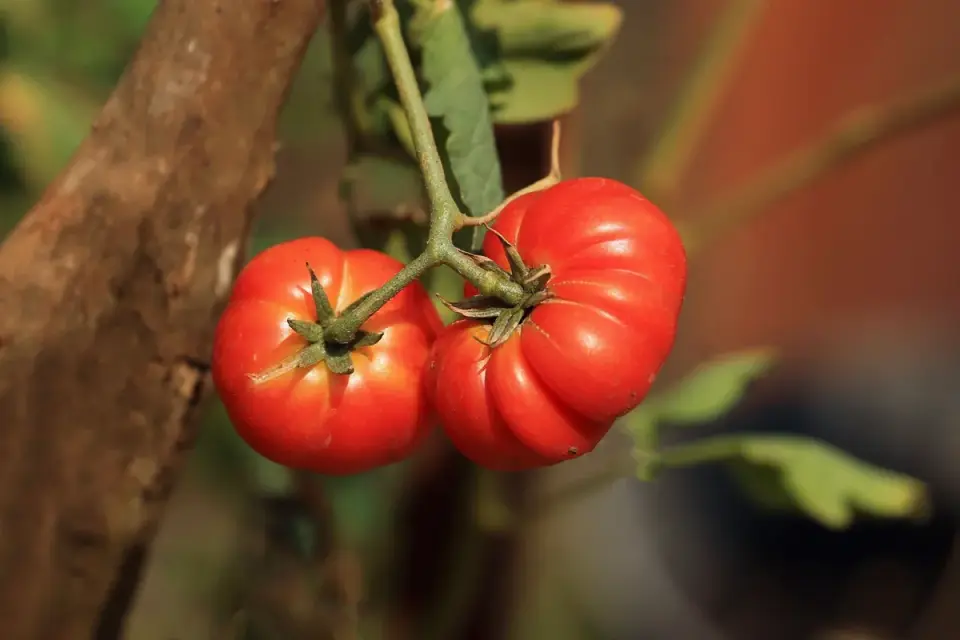
Here’s the short version. A ripe, red tomato is a different food than a green one still fighting for sunlight on the vine, and your dog’s safety runs almost entirely along that line.
What’s Actually in a Tomato, and Why Ripeness Changes the Math
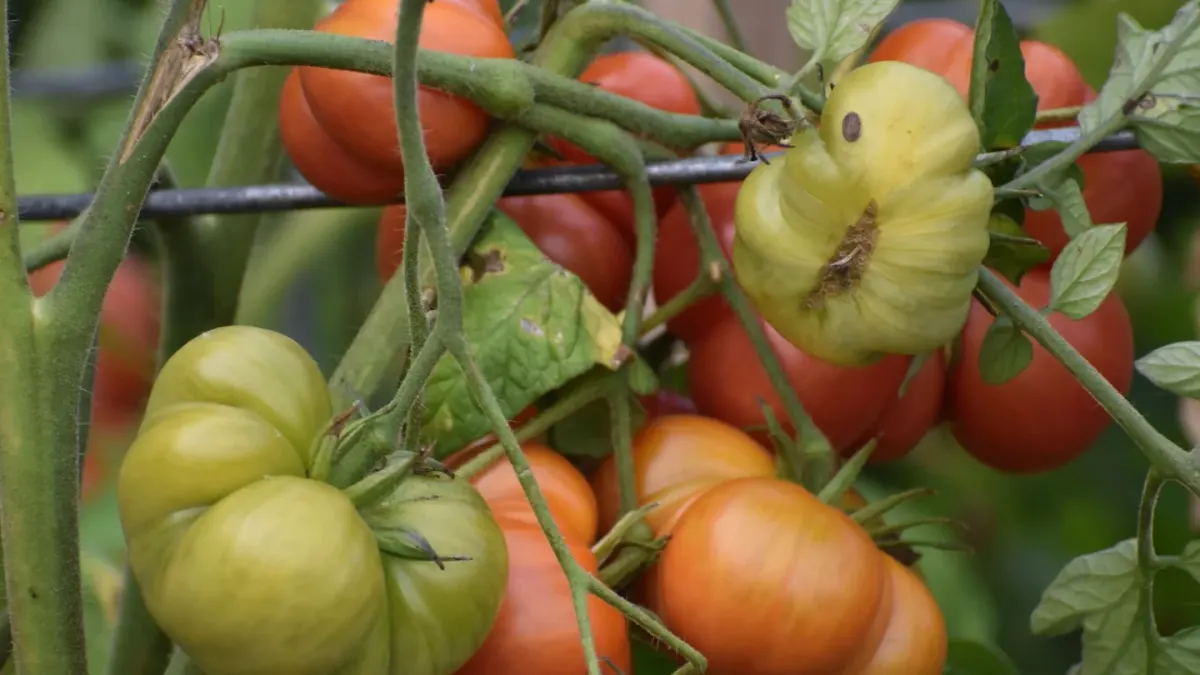
Tomatoes belong to the nightshade family, and like their relatives they carry glycoalkaloid compounds called solanine and tomatine. According to the ASPCA, the tomato plant is listed as toxic to dogs, with solanine as the toxic principle behind clinical signs that include hypersalivation, appetite loss, gastrointestinal upset, weakness, and a slowed heart rate, though the ripe fruit itself is considered non-toxic. That last clause matters more than most owners realize. As a tomato ripens from green to red, its tomatine content drops sharply, which is precisely why the fruit your dog stole off the counter is a fundamentally lower-risk item than the one still hanging green on the stem in your garden.
The American Kennel Club draws the same line: ripe tomato flesh, given occasionally and in modest amounts, is generally fine, while the stems, leaves, vines, and any unripe green fruit are the parts to keep away from a curious dog. I’d rather owners remember one rule than five bullet points: red and ripe, off the vine, no stems, and you’re working with a low-risk snack.
The Vine Is the Real Risk, Not the Salad Bowl
A family I’ve worked with grew a modest tomato patch along their back fence, more hobby than harvest. Their terrier discovered it on a warm afternoon and spent unsupervised minutes doing what terriers do, tugging at low branches and green fruit. By evening he was drooling more than usual and turned down his dinner, a dog who never turns down dinner. That’s the pattern worth knowing: it’s rarely the ripe fruit in the kitchen that causes trouble, it’s the unsupervised hour in the garden among stems, leaves, and fruit that hasn’t turned yet.
If your dog free-ranges near a vegetable patch, fence the tomato bed or keep the dog leashed nearby until harvest. That single habit prevents most of the cases I hear about. If your household is weighing other backyard-adjacent produce, our guide to sweet potato covers a plant with a much gentler risk profile, which is a useful contrast for anyone building a mental map of what belongs in the yard versus the bowl.
Where I Stop Guessing and Start Ordering Tests
I reach for imaging and labs earlier than some colleagues do, and this is one of the places that habit pays off. Mild GI upset after a nibble of ripe tomato rarely needs anything beyond a bland meal and a watchful evening. But when a dog has torn into the green plant itself and starts showing weakness, tremors, disorientation, or a heart rate that seems off, I don’t wait to see if it resolves on its own. Those are neurologic and cardiac signs layered on top of a GI story, and treating them as “just a stomach thing” risks missing something that diagnostics would catch early. The counterargument is fair: most tomato exposures are trivial, and reflexively running bloodwork on every dog who mouths a cherry tomato would be overkill and needless cost. I agree with that for the ripe-fruit cases. My line sits at plant material plus any sign beyond simple vomiting, because that combination is where I’d rather have data than a guess.
A single short truth underneath all of this: ripeness protects your dog, the vine does not.
How to Serve a Ripe Tomato Without the Regret
If you want tomato to be part of the rotation, keep it simple. Choose fully red, ripe fruit. Remove the stem and any green shoulder near it. Slice cherry tomatoes in half so they’re not a whole-swallow choking risk for small dogs. Skip sauces, ketchup, and canned tomato products, since sodium and often onion or garlic ride along in those, and both are separate problems from the tomato itself. Keep the whole thing to a couple of small pieces now and then, not a daily habit.
For dogs already managing sensitive digestion, it’s worth reading how much roughage a bowl can reasonably hold before it backfires; our piece on too much fiber walks through that balance in more depth, and it pairs well with any conversation about adding a new produce item to a dog’s diet.
The Bottom Line at Midnight
A ripe tomato is a small, ordinary treat. The plant it grew on is not a food at all, and that’s the only distinction that actually needs to live in your head.
Frequently asked questions
Can dogs eat cherry tomatoes?
A ripe cherry tomato, halved so it isn't swallowed whole, is roughly the same low-risk snack as a slice of a bigger tomato. Whole ones are a choking risk for small dogs, so cut them first.
What if my dog ate a green tomato off the vine?
Watch closely for drooling, vomiting, or unusual weakness over the next several hours. A small nibble rarely needs anything more than monitoring, but a determined mouthful of green fruit or plant material is worth a call to your vet or an animal poison control line.
Is tomato sauce or ketchup safe for dogs?
Generally no, not as a regular treat. Most jarred sauces carry added salt, sugar, and often onion or garlic, all of which cause their own problems separate from the tomato itself.
How much ripe tomato is too much?
Treats, tomato included, shouldn't run past roughly 10% of a dog's daily calories. A couple of small pieces now and then stays well inside that line for most dogs.
Sources
- Toxic and Non-Toxic Plants: Tomato Plant — ASPCA
- Tomatoes for Dogs: What's Safe and What's Not — American Kennel Club