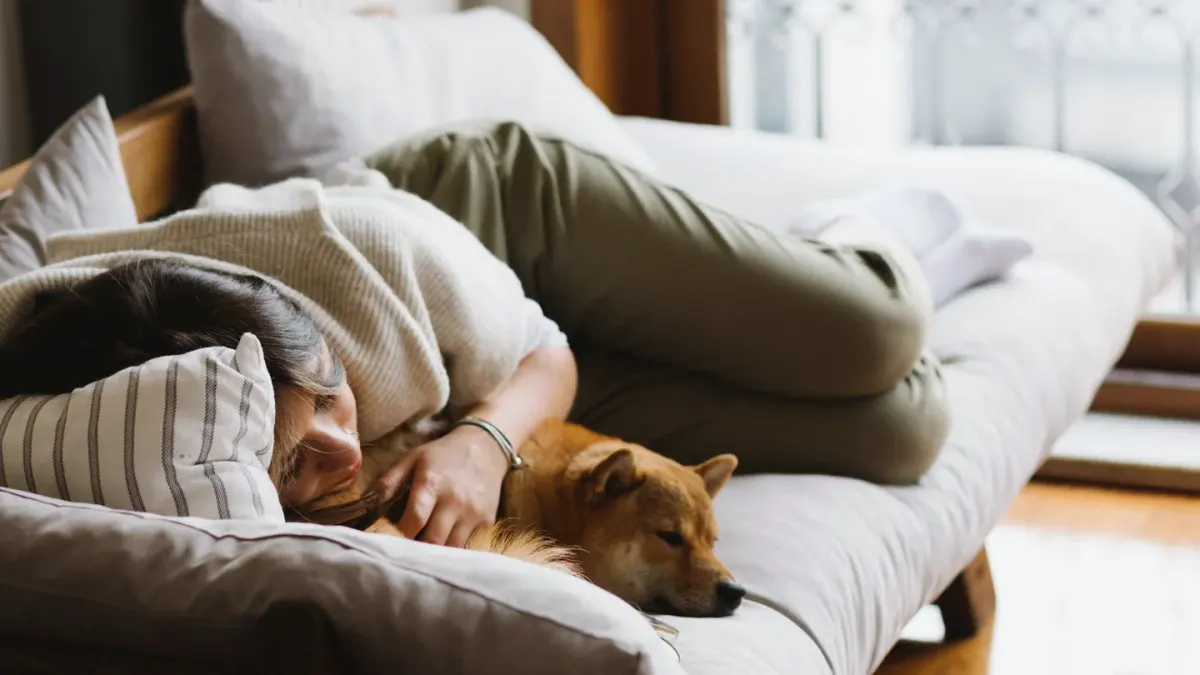
If your dog pants through the evening and moves from bed to tile floor, start with cool air, shade, and fresh water before you buy anything.
A cooling blanket for dogs is a light mat or throw that feels cool to the touch and gives a warm dog a comfortable place to rest. It may help support comfort on a warm day. It does not lower a dangerous body temperature, and it never replaces shade, water, rest, and veterinary care for heat illness.
Vickie lives in Arlington, Texas, with Peppa, her 9-year-old spayed female Cane Corso mix. On 92-degree afternoons Peppa would pant for about 20 minutes after a short yard break, then settle only on the kitchen tile. Vickie weighed a cooling blanket against moving Peppa’s bed near the vent and shortening midday outings. The room change and shorter outings helped first. The blanket became the extra layer.
Start with shade, water, and rest
Bring the dog inside during peak heat. Offer cool drinking water. Keep walks short and save exercise for cooler morning or evening hours. Let the dog rest on tile, near a fan, or in air conditioning.
This order matters because dogs release heat mainly by panting and through paw pads and belly skin, so moving air and a cool surface support comfort more than any fabric can. Guidance on warm-weather safety from AVMA lists shade, water, and never leaving a dog in a parked car as the first steps.
Watch for heavy panting, thick drool, bright red gums, vomiting, stumbling, or collapse. Move the dog to a cool place, offer small sips of water, and call your veterinarian right away. Practical hot-weather tips from ASPCA also stress close watching on humid days and easy access to water indoors and out.
Heatstroke can progress quickly.
Signs and first-response steps described by VCA Hospitals remind owners to cool gently and seek veterinary care without delay, rather than relying on a blanket or mat.
Lay the blanket so your dog can choose it
Place the cooling blanket beside the regular bed, not on top of it. Leave half the floor bare. Let the dog step on or off freely.
Choose a flat, low-pile blanket that stays in place and washes well. Skip electric pads, ice blocks inside fabric, and anything with gel beads, loose filling, or a chewable plastic core. Wash and dry fully between uses so damp fabric does not sit against skin.
For older dogs who pace at night, keep the setup simple and familiar. The same low light, steady bed spot, and quiet routine that helps restless sleepers in The 5 Best Calming Supplements for Dogs, Reviewed by a Vet (2026) also helps a warm dog settle.
When a cooling blanket is the wrong call
Skip the blanket and call your veterinarian when panting does not ease within a few minutes of rest, when gums look dark red, pale, or blue, or when the dog vomits, stumbles, or seems confused. Skip it too when the dog chews fabric, has a skin sore, or needs to stay dry after surgery.
Brittney, a 2-year-old spayed female Chihuahua owned by Maurice in Colorado Springs, Colorado, illustrates the other fork. She shivered in air conditioning and burrowed under a throw after a 10-minute evening walk. She needed warmth and a smaller draft-free corner, not a cooling layer.
Small dogs in apartments often overheat indoors more from stale air than from sun. Cracking a window safely, running a fan, and keeping water near the bed usually steadies them, a pattern also seen in The Real Test for an Apartment Dog Isn’t Size.
Keep comfort the goal, not a fix.
Frequently asked questions
Can a dog sleep on a cooling blanket all night?
Only if the dog can move off it, stays dry, and does not chew it. Offer the regular bed alongside and check skin and comfort.
What matters more than a cooling blanket in warm weather?
Shade, cool indoor air, fresh water, shorter outings in heat, and prompt veterinary care for heavy panting, vomiting, or collapse.
Sources
- Warm Weather Pet Safety — AVMA
- Hot Weather Safety Tips — ASPCA
- Heat Stroke in Dogs — VCA Hospitals