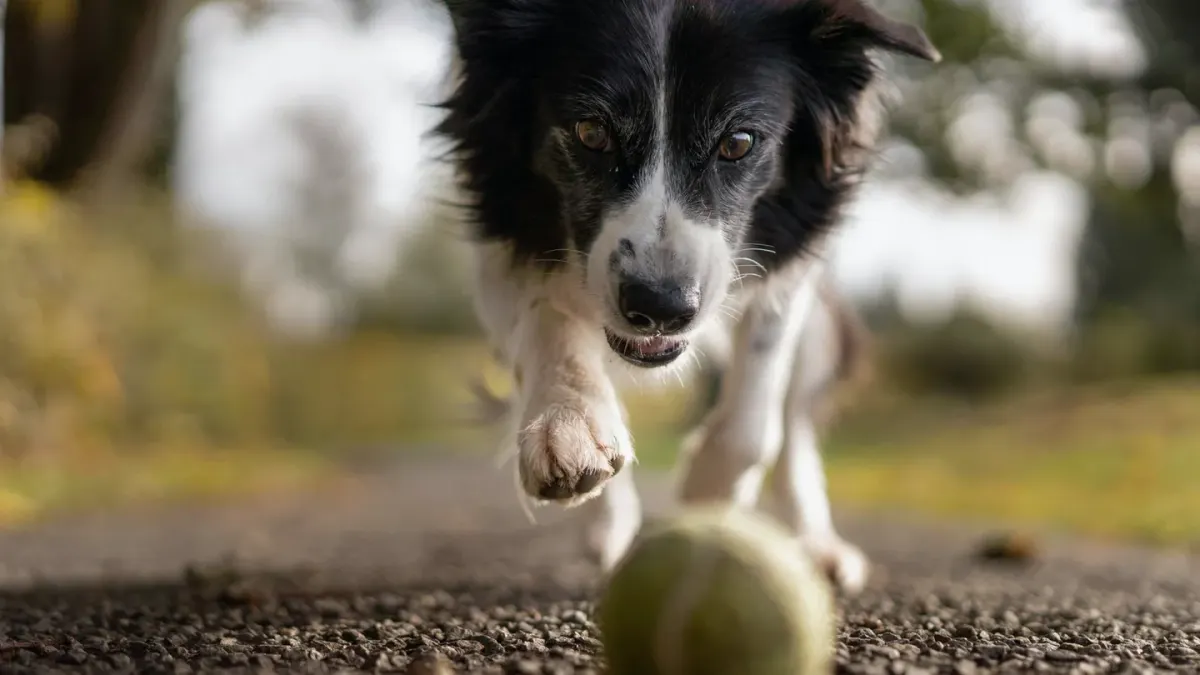
It is hard to watch your dog hesitate at a doorway that used to mean nothing. You may be wondering if play is over, or if joy now has to look smaller.
For a dog losing vision, I land here. Keep the world predictable first, then add enrichment through nose, ears, and paws. That is my recommendation even though the strongest counterargument sounds reasonable, that you should keep tossing the same visual toys to keep things normal. Normal has changed, and asking a dog to keep using failing sight can erode confidence faster than anything else.
A 12-year-old Labrador mix, about 68 pounds, showed me this clearly. Three weeks in after his vision faded from progressive retinal atrophy, he would freeze at the edge of the kitchen rug and then pace at 3 a.m. His family weighed two choices. Clear the furniture to make paths wider, or keep everything exactly where it was and teach him the layout once. They kept the layout, added a runner with a different texture to mark the hallway, and started dinner as a scatter of kibble in the grass by day five. By day 10 he was finding the back door on his own again, tail low but moving, and sleeping through most of the night.
Keep the map steady, then add scent
Dogs map home by memory and smell far more than we do. When sight fades, that map can still hold if you stop redrawing it.
Pick one layout and keep it. Leave food, water, and bed in the same spots. Pad sharp corners at head height for a week or two while bumping decreases. Use texture as signage, a bath mat before stairs, a different rug at the door to the yard. Talk on approach rather than touching from behind, and use the same short cue for steps or thresholds.
The American Veterinary Medical Association notes that senior pets benefit from predictable routines and low-stress handling as senses change, which fits what I see in vision loss. Predictability is not boring for these dogs. It is what lets them relax enough to play.
For more ideas on matching toys to attention span, this guide to Enrichment Toys for Mental Stimulation: What Actually Helps a Bored Dog walks through calm versus challenging options.
Choose sound and sniffing over chasing
This is where many families hit a snag. Throwing the old tennis ball feels kind, but a blind dog often hears it bounce away and then stands still, unsure whether to search or wait.
A 9-year-old, 22-pound spaniel mix taught me the tradeoff. Her owner bought a box of squeaky toys and rolled a ball across the living room, hoping noise would replace sight. For four days the dog would startle, trot two steps, then return to her bed. The failure was not motivation. It was too much open space and too fast a target. We swapped to a snuffle mat with three treats hidden at first, then a treat ball that rattled and dispensed in a small carpeted corner by the end of week two. She worked for six minutes, lay down beside the mat, and sighed. Less distance, more sniffing, was the fix.
Lean into what still works well.
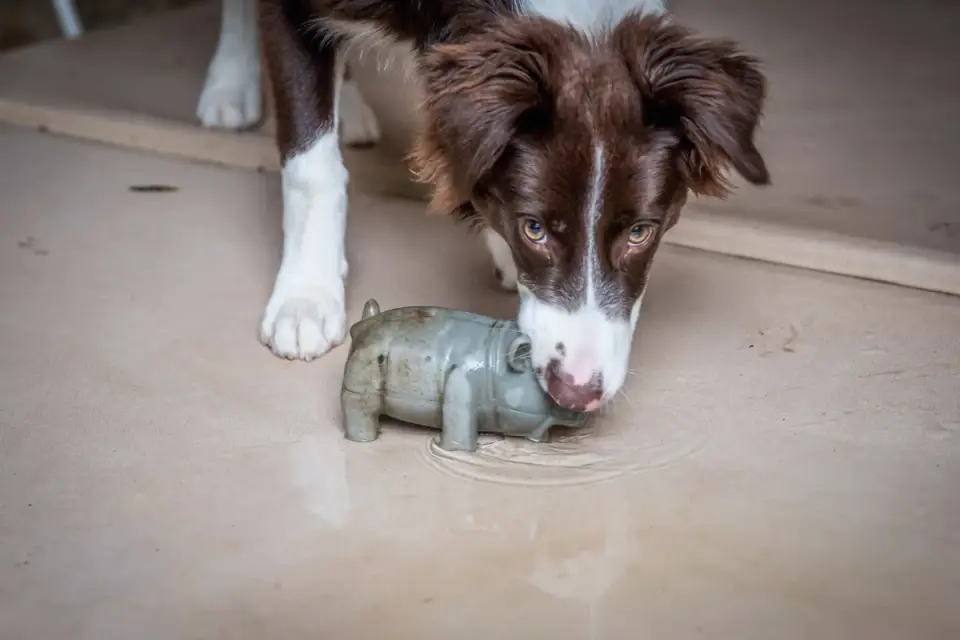
Scent games are usually first. Scatter feeding on grass, snuffle mats, and cardboard boxes with crumpled paper let the nose lead. Sound toys come second, but choose ones that stay close and make continuous noise, like a soft toy with a crinkle core or a treat dispenser that rattles. Touch matters too. Slow massage, brushing, and licking mats can settle a shaky evening without asking for movement at all. The American Kennel Club describes scent work and food puzzles as core mental stimulation for dogs, and for blind dogs I would put them at the center rather than the edges.
If meals have become the main game, this field guide to Treat-Dispensing Toys for Mealtime Enrichment: A Vet’s Field Guide can help you size the difficulty so frustration stays low.
Short sessions protect confidence. Five to ten minutes, then rest.
Keep confidence up day by day
A small routine often helps more than a new toy. Same morning sniff walk on a short leash, same afternoon puzzle, same evening wind-down.
For a 15-pound senior terrier in a busy house with two younger dogs, sound was the problem more than sight. By day 10 on a new plan, her family fed her separately behind a baby gate so she did not have to guard while sniffing, gave the younger dogs a frozen chew in another room, and let her do a two-minute box search in the quiet bedroom. The edge case was this. She did not need harder puzzles. She needed a protected space to fail safely and try again. Once she had it, her search time lengthened and her startle at doorways softened.
Watch for signs to pause. Lip licking, turning away, or leaving the game means the puzzle was too hard or the room too loud. Make the next round easier and end while interest is still there.
You are not trying to replace vision. You are helping your dog trust the senses that remain, one small success at a time.
Frequently asked questions
Should I rearrange furniture for a blind dog?
Usually no. Keep the layout steady, mark key spots with texture runners, and pad sharp edges while your dog relearns the map.
What type of toy works best without sight?
Start with scent-based puzzles like snuffle mats and scatter feeding, then add close-range toys that crinkle or rattle continuously.
Sources
- Senior Pet Care — American Veterinary Medical Association