On this page
Small dogs carry big engines. A six-pound Chihuahua can tear three laps around the couch, slam on the brakes, and be snoring in your lap ninety seconds later. That leaves a lot of owners guessing at 11pm: was that enough, or too much? The zoomies read like pent-up energy. The slowing senior looks like she is just getting round. Here is the unhurried version. Small breeds do not need less thought than big dogs. They need different thought. Good exercise ideas for small breed dogs favor short, frequent, low-impact play over one long daily walk.
The physiology that shapes the plan
A toy dog is not a Labrador scaled down. Stride frequency runs higher, so one city block costs a Yorkie far more steps than it costs a retriever, and fatigue arrives sooner than the leash-holder expects. Two anatomical facts drive the rest of this guide. The first is the kneecap. Medial patellar luxation, the kneecap sliding toward the inside of the leg, turns up far more often in small and toy breeds than in large ones, most commonly in Toy Poodles, Yorkshire Terriers, Chihuahuas, and Pomeranians. The second is the windpipe. Tracheal collapse, a softening of the cartilage rings that hold the airway open, clusters in those same breeds, and extra body fat makes the cough worse. Read those two together and the plan almost writes itself: spare the knees, spare the neck, keep the dog lean. Everything below is a version of that one sentence.
Puppyhood: coordination first, impact last
In toy and miniature breeds the growth plates, the soft cartilage zones at the ends of the long bones, generally finish closing around six to eight months, earlier than the year-plus timeline of a giant breed. Until they do, repeated hard landings can bruise those plates. So the puppy’s job is not distance. It is coordination. Think short, frequent play on grass or carpet, gentle recall games, and a lot of sniffing, which tires a puppy’s brain as thoroughly as a run tires the body. Skip the deliberate jumping: the daily leap off the back of the sofa, the sprint up and down a full flight of stairs, the fetch session that ends in skidding stops. A ramp up to the couch is not coddling. For a young Dachshund or Frenchie, it is cheap orthopedic insurance.
The adult years: little sessions, often
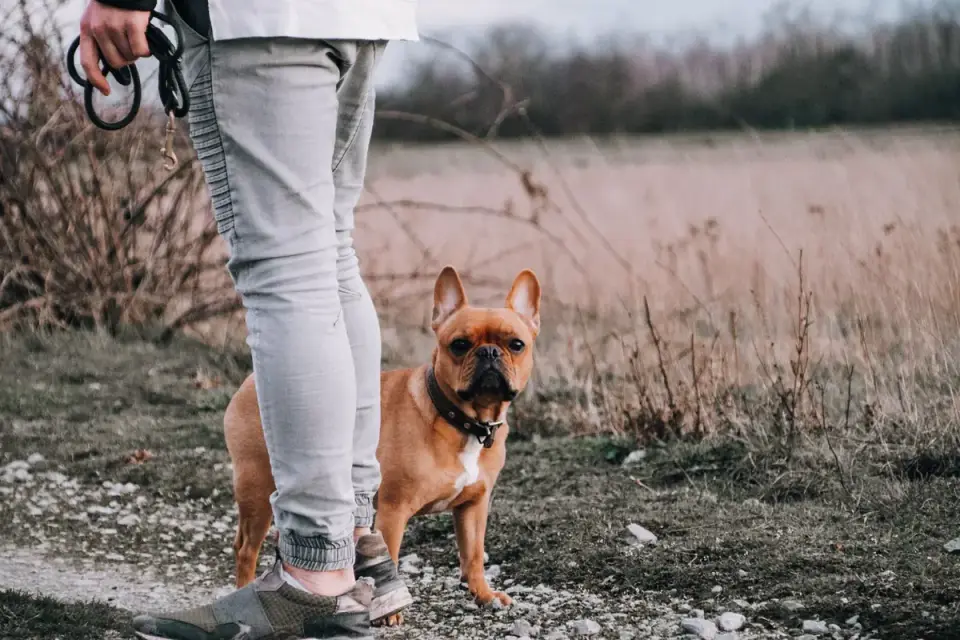
Most healthy small adults do well on roughly thirty to forty-five minutes of activity a day, and the American Kennel Club’s own guidance is telling here: several short walks or play sessions are a safer choice than one long march. So split it. A morning sniff walk, a hallway fetch game after work, five minutes with a flirt pole, a food puzzle at dinner. That adds up to a satisfied dog without pounding one set of joints all at once. Two equipment notes earn their keep. Walk a small dog on a harness rather than a neck collar, so leash pressure lands across the chest instead of the vulnerable trachea. And watch the waistline like a clinician: the WSAVA look-feel-look check (feel for the ribs, look from the side for a tuck, look from above for a waist) keeps you honest, with a 4 to 5 on the 9-point body condition scale as the target.
This is where nutrition earns an honest mention instead of a sales pitch. For a breed genetically set up for a loose kneecap, the most dependable joint protection is a lean body and steady, low-impact muscle work. A supplement is an adjunct, not a substitute. Chondroitin sulfate, one of the most studied joint ingredients in the dog, facilitates water retention in cartilage and supports healthy synovial fluid homeostasis. Weigh that claim for exactly what it is: it will not re-seat a slipping patella or undo a weight problem, but for a small dog already showing intermittent lameness, glucosamine-and-chondroitin nutrition may help support the same joint your exercise plan is built to spare.
Senior small dogs: keep the engine warm
Age is not a reason to stop; it is a reason to change gears. Arthritic small seniors do best on shorter, more frequent outings with a genuine warm-up, a slow first block before any brisk stretch, rather than a weekend-only blowout. Keep the ramps. Trade the tile-floor sprint for traction. Swimming or an underwater treadmill, where a rehab veterinarian is available, lets a stiff dog build muscle with almost no joint load. Do not retire the brain, either: scent games and food puzzles hold cognition together, and the AKC is blunt that exercise stays as important for a senior as it ever was for the puppy. The muscle a senior keeps is the muscle holding those wobbly kneecaps in their groove.
A weekly rhythm you can actually keep
Aim for daily movement in small denominations, mostly on soft surfaces, always on a harness, with the dog’s ribs findable under your fingers. Bottom line: for small and toy breeds, the winning plan is not more exercise, it is smarter, gentler, more frequent exercise that protects the knees and airway they were born with.
Frequently asked questions
How much exercise does a small breed dog need each day?
Most healthy small adults do well on about 30 to 45 minutes of daily activity, ideally split into several short walks and play sessions rather than one long outing. Puppies and seniors usually need shorter, more frequent bursts. Adjust to the individual dog and check with your veterinarian.
Are stairs and furniture jumps bad for small dogs?
Repeated hard landings can stress developing growth plates in puppies and aggravate loose kneecaps or arthritis in adults and seniors. Occasional careful stair use is fine for most healthy dogs, but a ramp up to the couch or bed is sensible insurance for breeds like Dachshunds, French Bulldogs, and toy breeds prone to patellar luxation.
My small dog makes a honking cough on walks. What should I do?
A goose-honk cough, especially when the dog pulls against a collar, can signal tracheal collapse, which is common in toy breeds. Switch to a harness, keep the dog lean, avoid hot and humid conditions, and have your veterinarian evaluate the cough.
Can indoor games replace walks for a small dog?
Partly. Hallway fetch, a flirt pole, scent games, and food puzzles cover a lot of a small dog's physical and mental needs, which is why indoor play suits apartment life. Most dogs still benefit from outdoor sniff walks for enrichment and gentle conditioning.
Sources
- How Much Exercise Does a Dog Need? — American Kennel Club
- Patellar Luxation — Cornell University College of Veterinary Medicine, Riney Canine Health Center
- Patellar Luxation in Dogs and Cats — Merck Veterinary Manual
- Tracheal Collapse — Cornell University College of Veterinary Medicine, Riney Canine Health Center
- Tracheal Collapse in Dogs — VCA Animal Hospitals
- Body Condition Score (Dog) — World Small Animal Veterinary Association (WSAVA) Global Nutrition Committee
- Protective effects of turmerosaccharides rich extract of Curcuma longa L. in osteoarthritic dogs — Frontiers in Veterinary Science