
On this page
You watch the bowl empty in forty seconds and wonder if anything was even tasted. That is the fork every owner of a gulper reaches.
Do you change the food, or do you change how the food is offered?
I reach for both the imaging study and the acupuncture needle in my own work, which means I want mechanics and the whole dog at once. For fast eaters, the evidence-bounded answer is steady: keep a balanced diet stable, and redesign delivery first. The strongest counterargument is that a different kibble shape or size alone will fix gulping, and I take it seriously because texture can change bite rate a little. It still loses, because the bowl, the portion rhythm, and the body position drive intake speed far more than the recipe.
The night this clicked for me was not dramatic, just loud. A three-year-old Labrador, 68 pounds, lean and sweet, finished two cups in under a minute while his owner stood with the empty scoop in her hand. By day 10 of gulping like that he was burping after dinner, passing gas at midnight, and skipping his morning interest in food. She was weighing a full diet switch, grain-free to fresh, limited-ingredient to high-fiber. The choice she was really weighing was whether faster food meant wrong food, and whether starting over would settle his gut.
What should you change first?
Start here, in this order:
- Keep the current balanced diet for now unless your veterinarian has named a medical reason to switch
- Split the daily amount into two to three smaller meals on a steady clock
- Slow the physical intake with a wide shallow bowl, lick mat, or puzzle feeder
- Soak kibble briefly or spread wet food thin so licking replaces gulping
- Weigh portions for a week so speed does not hide drift in amount
- Track stool, vomit, cough, and energy for seven days before you change anything else
This checklist does the most good with the least disruption. Dogs thrive on predictability, and the nervous system settles when meals arrive at the same time, in the same place, at the same calm pace.
That steadiness is also why I lean on mechanism over promises. Rapid ingestion swallows air, stretches the stomach quickly, and may help support discomfort after meals rather than true satiety. Slowing the rate may help support a calmer post-meal period, which is structure and function language for a mechanical problem.
Is the food itself the problem?
Usually not. Most fast eaters will gulp any palatable diet, which tells you the behavior is about arousal, competition memory, hunger interval, or learned rhythm rather than flavor.
Resist changing protein, fiber level, and kibble brand all at once. When you change three variables and the vomiting stops, you learn nothing about what helped. When signs continue, you have muddied the timeline your veterinarian needs.
There are exceptions. As noted in the Journal of the American Veterinary Medical Association, “EPI is treated by pancreatic enzyme replacement therapy, nutritional management (low-residue diets with moderate fat content), and supplementation of cobalamin.” That sentence matters here because relentless hunger with weight loss and loose stools is not simple fast eating. That same review cautions that “Future studies are needed to further understand the causes of persistent dysbiosis in animals with EPI following initiation of pancreatic enzyme replacement therapy and assess the efficacy of treatments to ameliorate these abnormalities.”
In plain terms: do not chase gulping with enzyme powders, probiotics, or high-fiber swaps on your own. If appetite looks frantic and unquenchable, let your veterinarian rule out medical drivers first.
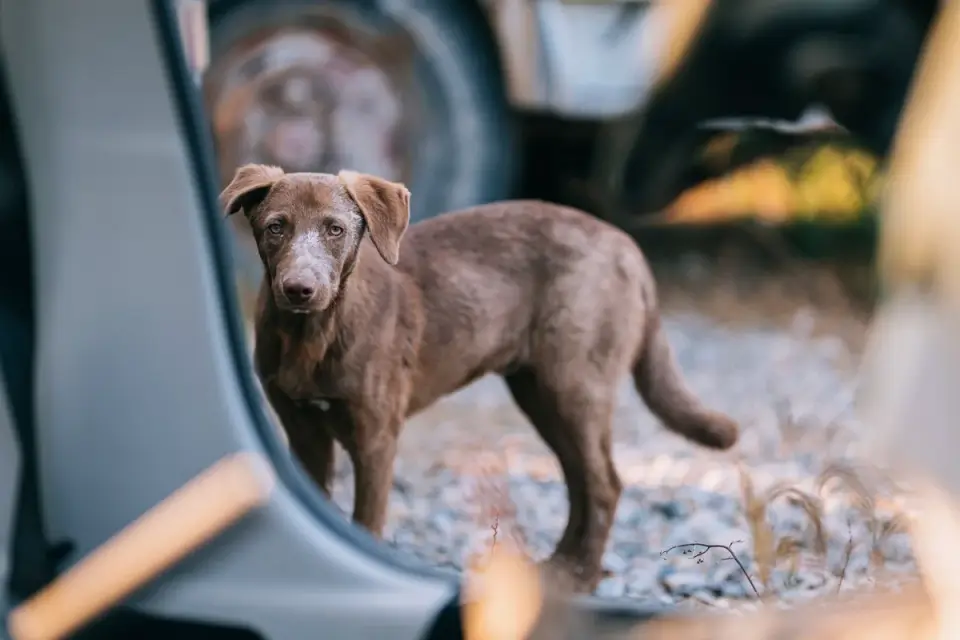
We tried the obvious fix first and watched it fail, which taught us more than success would have. A four-year-old beagle mix, 32 pounds, had graduated from a standard bowl to a deep puzzle with tall ridges. Three weeks in, her owner reported longer mealtimes but louder frustration, pawing at the feeder, flipping it over, then gulping the spilled pile from the floor. The timed marker was mealtime length: up from one minute to nine minutes, but vomiting twice a week after dinner. The tradeoff was clear. Too much difficulty raised arousal instead of lowering it. We stepped back to an easier slow feeder, split her evening cup into two half-portions ten minutes apart, and added a short sniff walk before dinner.
How do you slow the meal without stressing the dog?
Think friction, not frustration.
Low-friction ideas that tend to hold:
- Scatter half the kibble on a large sheet pan so the nose has to work
- Smear wet food in a thin layer on a lick mat rather than piling it deep
- Feed in two short courses, like a first and second serving with a pause
- Feed dogs separately and pick bowls up between courses so there is no race
- Keep water available but do not elevate the bowl unless your veterinarian advises it for a specific condition
For more step-by-step slowing ideas, see How to Slow Down a Dog That Eats Too Fast. If stools are soft during the transition, the principles in The Best Way to Feed a Dog With a Sensitive Stomach pair well with a steady, unchanged recipe.
A short sentence helps here.
Calm feeding supports calm digestion.
On supplements, stay modest. A Frontiers in Veterinary Science trial reminded us that “Diversity metrics did not distinguish non-responders from responders.” I read that as humility about the microbiome: we cannot predict who benefits from a gut product by a simple diversity score. So hold the base diet steady, change delivery, and let any added fiber or probiotic be a separate, veterinarian-guided trial, not a simultaneous overhaul.
When is fast eating not just fast eating?
Pause the feeder experiments and call your veterinarian promptly if you see repeated vomiting, retching without producing food, a hard or rapidly swelling belly, labored breathing, coughing or choking during meals, weight loss despite a big appetite, or a puppy who cannot keep any meal down.
Senior dogs deserve special care. Appetite, teeth, and swallowing can shift with age, and a sudden change in speed can reflect pain or nausea rather than enthusiasm. The approach in How to Change Food for a Senior Dog: A Vet’s Step-by-Step Guide is useful if your veterinarian does recommend a diet change: slow, weighed, and tracked.
The edge case that changed my own counseling involved an eight-year-old shepherd mix, 74 pounds, a lifelong slow eater who suddenly began gulping. By week two the owner noticed nighttime restlessness and softer morning stools, and assumed a new bag of kibble was at fault. On exam the issue was dental pain on the left side; she was rushing food to the right and swallowing whole to avoid chewing. Once the mouth was treated, her old unhurried pace returned with no diet change at all. Sudden speed, especially in an older dog, deserves a mouth and body check before a menu rewrite.
So where do I land? Keep the nutrition stable, slow the delivery in small doable steps, weigh what you feed, and track for a week. That quiet kitchen-table routine settles more stomachs than any hurried switch.
Reviewed by Roger Clemmons, DVM, PhD, DACVIM (Neurology and Neurosurgery), CVA, CVFT.
Frequently asked questions
Should I switch foods because my dog eats too fast?
Usually no. Keep a complete and balanced diet stable and change delivery first — smaller, scheduled meals with a slow feeder or lick mat — then track stool and comfort for seven days before considering a recipe change with your veterinarian.
Does soaking kibble help a gulper?
A brief soak or spreading food thin can slow intake for many dogs because licking replaces gulping. Use fresh water, serve promptly, and discard uneaten moistened food rather than leaving it out.
When should fast eating prompt a vet visit?
Seek prompt care for repeated vomiting, unproductive retching, swollen belly, trouble breathing, choking, weight loss with ravenous appetite, or any sudden change in eating speed in a senior dog.
Sources
- Exocrine Pancreatic Insufficiency Review — Journal of the American Veterinary Medical Association
- Canine Probiotic Response Study — Frontiers in Veterinary Science