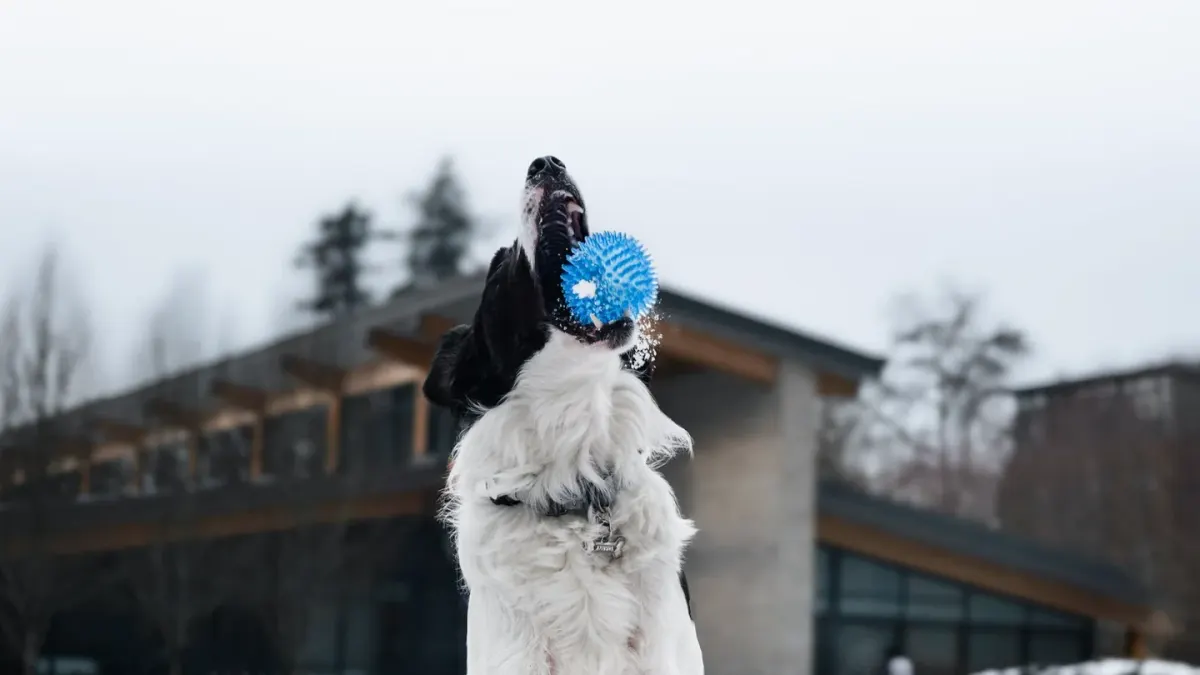
The worry often shows up at night, when a big dog cannot settle and the floor creaks under every turn. For giant breeds, gentle enrichment works best when it asks for nose and brain work first, and hard running or jumping last. A useful starting checklist looks like this:
- Keep feet on the ground: sniff walks, scatter feeding, and snuffle mats on non-slip rugs
- Offer long, quiet chews that let the jaw work while hips rest
- Train one small skill in three-minute sessions, with food rewards placed low
- Rotate textures and scents instead of adding height, speed, or slippery floors
- End while your dog still wants more, then protect rest in a soft, supported spot
A common question is whether large dogs need more intense play to feel tired. In most aging or heavy dogs, intensity brings stiffness the next day, while calm nose work brings sleep the same night.
An eight-year-old Great Dane, 148 pounds, had started pacing the hallway between 9 p.m. and 11 p.m. after his evening meal. His family worried the pacing meant pain, but he still rose cleanly and ate with interest. They replaced the post-dinner backyard chase with a ten-minute scatter of half his kibble across a low-pile rug, plus a warm bed in the corner where he could see the kitchen. Within six nights, the pacing shortened from nearly two hours to about twenty minutes, and he began choosing the bed on his own.
Sniffing is the kindest place to begin. The American Veterinary Medical Association describes enrichment as a normal part of canine welfare, and nose work fits giant bodies because it tires without pounding. Try a slow loop around the block where your dog chooses the direction, pausing at every tree. Indoors, hide three or four small piles of kibble at nose height, all on the same floor to avoid stairs.
Chewing comes next, offered with care for teeth and stomachs. Choose a size-appropriate rubber toy or a long-lasting chew that cannot be swallowed whole, and always supervise. Place it on a mat so your dog can lie with elbows tucked and hips open. If chewing leads to gulping or guarding, the chew is too exciting or too small, and a softer option is better.
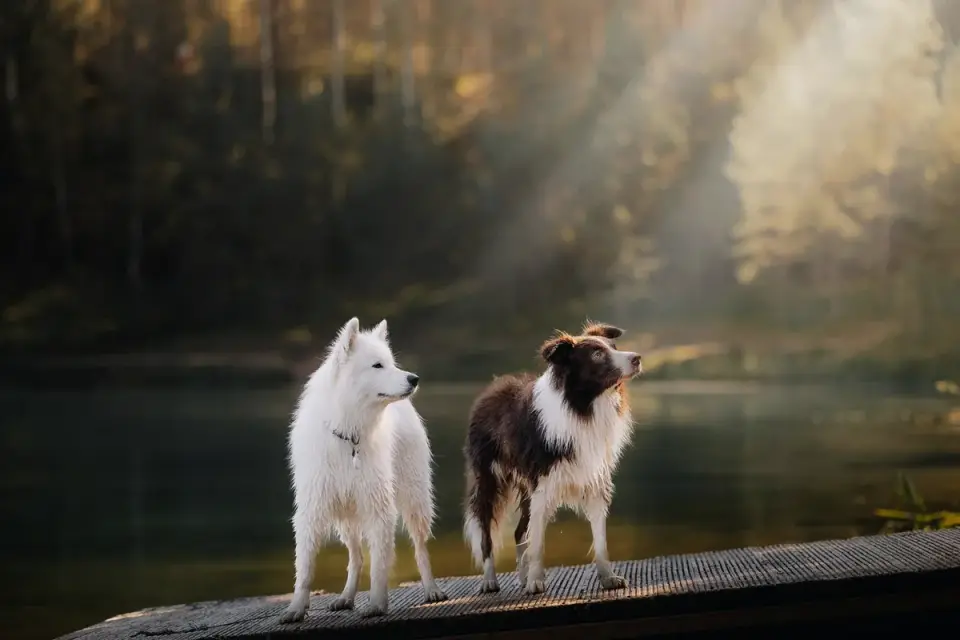
A five-year-old Newfoundland, adopted four months earlier, learned to steal dish towels and run laps through the living room. The family tried a tall puzzle feeder, and she pawed it over, then skidded eight feet across the kitchen tile and refused to play again. They set the same feeder aside and moved to a towel rolled with treats on carpet, unrolling one turn at a time while they sat beside her. After three sessions she began lying down to unroll it herself, and the towel stealing faded when the game became predictable.
Training can stay gentle when rewards stay low and sessions stay short. Ask for a chin rest on your palm, a step onto a bath mat, or a soft touch to your hand. Reward at chest level so a large dog does not jump or rear. Three minutes is enough, twice a day, with rest between.
Older giants often need the plan to bend. Cornell University College of Veterinary Medicine notes that large and giant breeds age earlier and benefit from joint-aware routines, a point echoed in practical guides like Giant-Breed Ownership: What to Know Before You Commit. For stiff dogs, raise snuffle mats onto a low cot so the neck stays level, and keep walks under fifteen minutes on grass.
A ten-year-old Saint Bernard, 172 pounds, could no longer stand through meals and would lie down halfway through a short hallway walk. Her owner worried enrichment was over. Instead they moved all games to her orthopedic bed: two muffin tins with kibble tucked under tennis balls, placed within a two-foot reach, plus five slow hand touches for a treat. Over two weeks she stayed engaged for about twelve minutes a day without needing to stand, and evenings grew quieter.
Rest is part of enrichment. Big dogs need space to stretch, non-slip footing, and a predictable close to play. Ideas for smaller dogs often rely on lifting or lap games, so read Best Toys for Small-Breed and Toy Dogs for contrast rather than direct choices, and keep giant-breed toys large, washable, and easy to carry without leaping.
Short days still count.
Choose comfort first, and let energy settle on its own time. When pacing, panting at rest, limping, or loss of appetite lasts more than a day, ask your veterinarian to check pain and mobility before adding new activities.
Frequently asked questions
How much gentle enrichment does a giant breed need each day?
Most large dogs do well with 15 to 30 minutes total of sniffing, chewing, and short training, split across the day, with free rest between. Sore or senior dogs often prefer two brief sessions over one long one.
What should I avoid with a giant breed?
Avoid repeated stairs, slippery floors, jumping for toys, long fetch on hard ground, and puzzles that tip and cause chasing. Stop any game that brings limping, heavy panting at rest, or reluctance to play the next day.
Sources
- Canine enrichment resources — American Veterinary Medical Association
- Veterinary care and aging guidance — Cornell University College of Veterinary Medicine