On this page
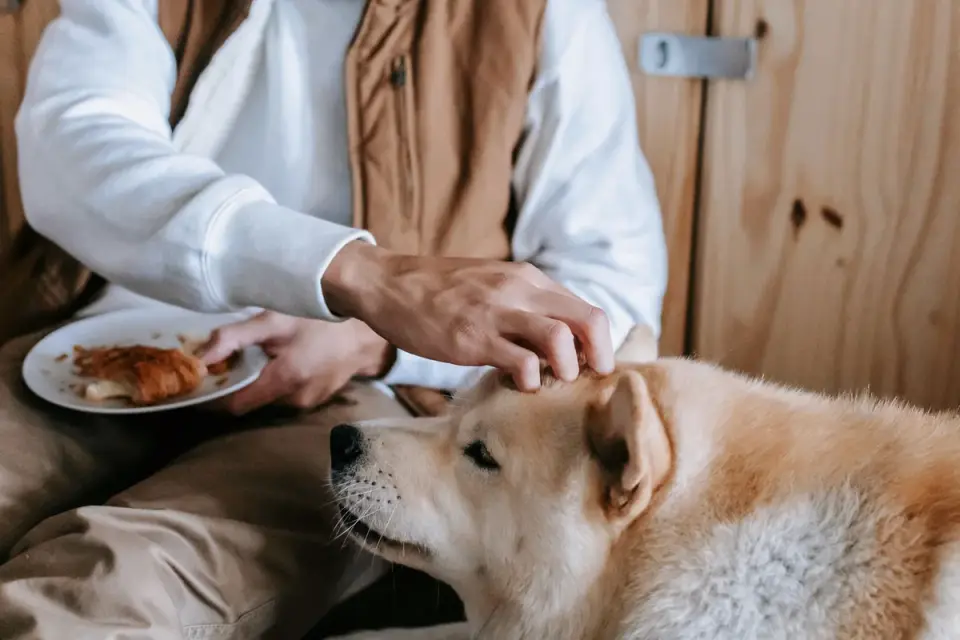
You reach down to rub the same spot you’ve touched a thousand times, and this time there’s a low rumble under your hand. Your stomach drops. It’s easy to read that sound as defiance, or to worry that something has shifted between you and your dog.
Take a breath. A growl is almost never a betrayal, and it’s rarely the first sign of a “bad dog.” It’s language — one of the clearest sentences your dog can say. He’s telling you that something about this exact moment doesn’t feel good. Our job isn’t to silence the rumble. It’s to listen to what it’s pointing at.
Is a growl actually a bad thing?
A growl sounds alarming, so the instinct is to shut it down — a sharp “no,” a hand pulled back with a scold. That instinct tends to backfire. A growl is a warning label. It sits early on the ladder of things a dog does long before he ever considers using his teeth.
If you punish the growl, the discomfort underneath it doesn’t go anywhere. You’ve only taught your dog that warning you is what gets him in trouble. Veterinary behavior experts have made this point plainly: suppressing the outward signs of fear can produce a dog who skips the warning next time and moves straight to a snap. The American Veterinary Society of Animal Behavior notes that using force to stop a fearful reaction tends to make an animal more fearful while masking the growl, which can lead to sudden aggression with fewer warnings. The rumble, in other words, is on your side. It buys everyone time.
So why does your dog growl when you pet him?
Petting isn’t one thing to a dog. It’s a specific spot, a specific pressure, a specific moment — and any of those can be the problem. A handful of reasons come up again and again.
He hurts somewhere your hand is going
This is the one to rule out first, because it’s common and it’s often fixable. Pain changes behavior. A 2020 review in the journal Animals found that a conservative estimate of about a third of dogs referred for behavior problems had some form of painful condition — and across some clinics that figure reached nearly 80%. Sore hips, an aching back, an ear infection, dental pain, an itchy or inflamed patch of skin: a hand landing near any of these can earn a growl that has nothing to do with mood.
A separate study of pain-related aggression in dogs found hip dysplasia to be the single most common source. So if your dog growls when you stroke his lower back, lift him, or touch a particular leg or ear, treat that as a medical question before a behavioral one.
The spot, or the pressure, is just too much
Plenty of dogs simply don’t enjoy being petted the way people like to pet. A flat hand coming down over the head, a firm rub along the spine, an arm draped across the shoulders in a hug — these can feel like restraint rather than affection. A dog who happily accepts a chest scratch may still growl at a pat on the head, and both things can be true of the same gentle dog.
He’s tipped over into overstimulation
Sometimes the petting starts out welcome and then curdles. Arousal builds under a repetitive hand, and a dog who was leaning in thirty seconds ago is now overstimulated and ready for you to stop. The growl here reads less like “go away” and more like “that’s enough for now.”
He’s guarding the couch, the bed, or a person
Pay attention to where the growling happens. A dog who only rumbles when he’s up on the sofa, curled on the bed, or pressed against a favorite person may be guarding that resource, not objecting to your hand itself. Your touch is just the thing that interrupts him.
Hands have been unpredictable before
Dogs with a rough handling history — or ones who’ve been grabbed, startled, or squeezed by well-meaning kids — can carry a real wariness about hands moving toward them. The growl becomes a learned “please be careful,” and it earns patience, not correction.
How do you figure out which one it is?
Watch the whole body, not just the mouth
The growl is loud, but it’s usually the fourth or fifth thing your dog said. Ahead of it come quieter lines: a lip lick, a quick yawn, a freeze, a head turning away from your hand, a half-moon of white at the corner of the eye. Learning to catch those means you can ease off before anyone reaches a growl at all.
Notice when it started
Timing is one of your strongest clues. A dog who has happily accepted petting for years and suddenly starts growling is, until proven otherwise, telling you that he hurts. A pattern that’s been there since puppyhood or since adoption day leans more toward preference, past experience, or how touch was first introduced — though pain still deserves a look.
What should you do the second he growls?
Stop. Not with a scold — just soften, draw your hand back, and give him room. Then play detective: which spot, which position, what else was happening in the house. Those small details are the map to the cause.
From there, a gentler pattern rebuilds trust: pet for a few seconds, pause, and let your dog decide whether to lean back in for more. If he does, carry on. If he shifts away or goes still, he’s answered you. This kind of reward-based, choice-forward handling is exactly what behavior professionals recommend over any form of correction.
When should you loop in a vet or a behaviorist?
A sudden or brand-new growl deserves a vet exam before any training plan — pain is too common a cause to skip. Book a check-up if the growling appeared out of nowhere, keeps getting worse, comes alongside any limp, flinch, or change in appetite or sleep, or has already escalated toward snapping. If there are young children in the home, don’t wait it out.
Once pain has been ruled out or treated, a board-certified veterinary behaviorist (look for the letters DACVB after the name) or a qualified reward-based trainer can help you read your particular dog and shape a plan that fits him.
So the next time that low rumble rises under your palm, maybe the better question isn’t “how do I make this stop?” — but “what is he trying to tell me, and can I hear it before he has to say it louder?”
Frequently asked questions
Should I punish my dog for growling when I pet him?
No. The growl is an early warning. If you punish it, the discomfort behind it stays put and your dog may learn to skip the warning next time — which can mean a bite with less notice. Stop petting, give space, and work on the cause instead.
My dog suddenly growls when I pet him but never used to — what does that mean?
A sudden change in a previously tolerant dog most often points to pain. Sore hips, back, ears, teeth, or skin are common culprits, so start with a vet exam before assuming it's a behavior problem.
How can I tell if it's pain or just his personality?
Watch for other signs — a limp, a flinch, a specific spot he protects, or changes in appetite and sleep — and note when it began. Sudden onset leans medical; a lifelong pattern leans preference. When in doubt, rule out pain first.
Where should I avoid petting a dog that growls?
Many dogs dislike a hand over the head, a hug across the shoulders, or firm strokes down the spine. Offer a chest or side scratch instead, keep it brief, and let your dog choose whether to come back for more.
Sources
- Pain and Problem Behavior in Cats and Dogs — Mills et al., Animals (Basel), 2020 (doi:10.3390/ani10020318)
- Position Statement on the Use of Punishment for Behavior Modification in Animals — American Veterinary Society of Animal Behavior (AVSAB)
- Position Statement on Humane Dog Training (2021) — American Veterinary Society of Animal Behavior (AVSAB)
- Pain-related aggression in dogs: 12 clinical cases — Camps et al., Journal of Veterinary Behavior, 2012
- A Review of Medical Conditions and Behavioral Problems in Dogs and Cats — Camps, Amat & Manteca, Animals (Basel), 2019 (doi:10.3390/ani9121133)