
On this page
It’s 11pm, and you’re standing in the kitchen wondering if you’ve been doing this wrong the whole time. Maybe the bowl’s been out all day, or maybe you’ve been feeding once at 6am and calling it done. Either way, something’s nagging at you — the vomiting before breakfast, the begging at 4pm, the vet tech who raised an eyebrow at the weight chart. Let’s sit with that for a second before we fix it.
The short version, if you’re deciding right now:
- Most healthy adult dogs do best on two meals, spaced roughly 8–12 hours apart.
- Puppies under six months usually need three to four smaller meals; that’s a different conversation than this one.
- Free-feeding (bowl always full) makes weight and appetite changes almost impossible to catch early.
- Once-daily feeding isn’t dangerous for every dog, but it raises the odds of bile-reflux vomiting and begging behavior in smaller or leaner dogs.
- Dogs with a diagnosed digestive condition — pancreatitis, EPI, IBD — often need a schedule built around their enzyme and gut chemistry, not the general rule.
- Consistency matters more than the exact clock time. Same two windows, most days, beats a perfect schedule you can’t sustain.
Now let’s walk through why I land where I do, and where I’d push back on my own advice.
The Three Ways Owners Actually Split the Bowl
In my practice, and in the neurology cases I see plenty of aging dogs for, owners tend to fall into one of three camps: the bowl-is-always-full crowd, the one-big-meal-in-the-morning crowd, and the two-meals-a-day crowd. I don’t think this is a trivial preference question. Feeding rhythm touches gut motility, blood sugar, and — in dogs prone to seizures or metabolic swings, which is a fair chunk of my patient list — it touches neurologic stability too.
Free-feeding sounds convenient, but it erases the single best early-warning system you have: appetite. A dog who skips one scheduled meal is telling you something. A dog grazing from a bowl that’s never empty tells you nothing until the weight’s already dropped or a mass is already big enough to feel. Once-daily feeding, meanwhile, tends to work fine for a food-motivated, mid-size adult dog with a calm gut. It tends to work poorly for small dogs and dogs prone to bilious vomiting syndrome, where an empty stomach for 20+ hours invites bile back up around 4 or 5am.
Two meals, spaced about 8 to 12 hours apart, threads that needle. It keeps the stomach from sitting empty too long, it gives you two daily checkpoints on appetite, and it’s flexible enough to survive a late work meeting without derailing the whole day.
Picture a 6-year-old Labrador, 58 pounds, whose owner had free-fed since puppyhood because it was easy with two working adults in the house. By her annual exam she’d put on 9 pounds in a year, and nobody could say when the weight gain actually started because the bowl was never a signal. We switched her to two measured meals, 7am and 6pm, and within three weeks the owner could tell me, unprompted, that “she’s eating fast at breakfast and slower at dinner” — the exact kind of detail free-feeding had been hiding from both of them.
Why Twice a Day Wins for Most Dogs — and Where I Push Back on Myself
Here’s my honest bias: I reach for the evidence-bounded, structure-and-function answer, and I also reach for the whole-patient view a schedule this simple deserves. Twice-daily feeding is boring, it’s not flashy, and it’s still the answer I give most owners, because it matches how a healthy canine gut is built to work — regular gastric emptying, regular bile flow, regular blood sugar. That’s not a dosing claim; it’s a rhythm claim, and rhythm is something TCVM food therapy has always paid closer attention to than conventional practice tends to.
The honest counterargument is real, though: some owners and even some integrative colleagues make a legitimate case for once-daily feeding in lean, active adult dogs, pointing to intermittent time-restricted eating patterns as potentially supportive of metabolic health. I take that seriously. I just don’t think the current evidence in dogs is strong enough to override the practical downside — more vomiting, more scavenging, more begging — for the average pet in a home, not a research colony. So I land on twice a day as the default, with once-daily reserved for the specific dogs where an owner and their own vet have actually watched it work.
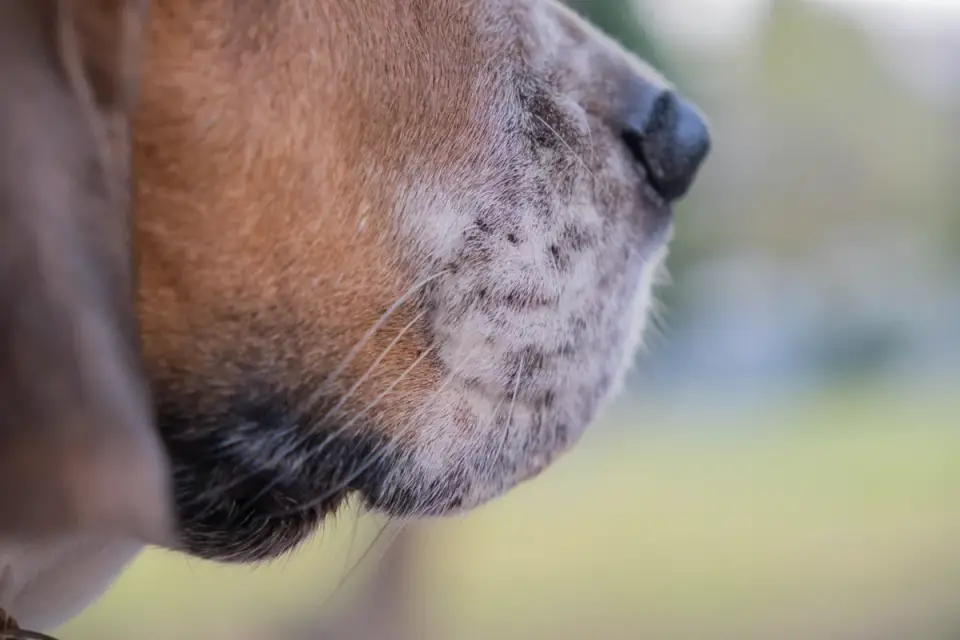
If your dog has a sensitive stomach, the twice-daily rhythm matters even more, since a gut that’s already reactive doesn’t handle long empty stretches or sudden volume well.
When the Schedule Itself Needs a Vet’s Eye
Not every dog gets to follow the general rule, and this is where I think a lot of well-meaning advice gets people into trouble. A dog with exocrine pancreatic insufficiency, or EPI, isn’t just “a dog who needs to eat twice a day” — the underlying enzyme deficiency changes what a meal has to accomplish. According to a review in JAVMA, “EPI is treated by pancreatic enzyme replacement therapy, nutritional management (low-residue diets with moderate fat content), and supplementation of cobalamin.” That’s a three-part treatment plan, not a feeding-frequency tweak, and it usually means smaller, more frequent meals rather than a clean twice-daily split.
I had a 12-year-old terrier mix, 31 pounds, referred to me for what looked like a gait issue but turned out to be weakness tied to chronic weight loss from undiagnosed EPI. Her owner had dutifully kept her on two meals a day for years, which was the right instinct for a healthy dog and the wrong fit for hers. Once her regular vet started enzyme replacement and split her food into smaller portions across the day, her weight stabilized within about six weeks, and the “gait issue” resolved right along with it. The same review notes that “future studies are needed to further understand the causes of persistent dysbiosis in animals with EPI following initiation of pancreatic enzyme replacement therapy” — meaning even with the right treatment, the gut doesn’t always snap back to baseline on a predictable timeline, and frequency of feeding stays a moving target for these dogs, not a set-it-and-forget-it schedule.
That same humility about the gut applies more broadly than EPI. A 2025 study in Frontiers in Veterinary Science looking at digestive health found that “diversity metrics did not distinguish non-responders from responders” — a reminder that we can’t always predict from a gut microbiome snapshot which dogs will settle quickly on a new schedule and which won’t. I mention that not to make feeding sound complicated, but because it’s the honest reason I tell owners to watch their own dog’s stool and energy over two to three weeks rather than trust a general timeline.
Making the Switch Without a Stomach Ache
Transitions are where twice-daily feeding goes sideways, even for otherwise healthy dogs. I’ve watched owners try to jump a puppy or a free-fed adult straight into two firm meals in a single day, and it rarely goes smoothly.
One case sticks with me: a 9-month-old mixed-breed puppy, about 45 pounds, whose family switched him cold-turkey from three small meals to two larger ones the same week they started obedience class. Within four days he was having loose stool and refusing the evening meal outright — not because two meals was the wrong long-term goal, but because the volume jump and the timing shift landed on the same week as a stressful new routine. We backed off to a gradual, week-long taper of portion sizes instead of a single hard switch, and by day 10 he was eating both meals reliably again. The lesson wasn’t “don’t do two meals.” It was “don’t do it all at once, and don’t stack it on top of another big change.”
If you’re moving off free-feeding or shrinking down from three meals, do it gradually over 7 to 10 days, and keep meal times as close to identical as your schedule allows — same two windows, most days. If loose stool shows up during a transition, our guide on bland diet alternatives when you’re out of chicken is a reasonable bridge while things settle. And if you’re using fruit or vegetable add-ins to make the new schedule feel like less of a loss for a food-motivated dog, our piece on what’s actually safe with bananas covers the portion math so a treat doesn’t undo the schedule you just built.
Where I Land at Midnight
Two meals, spaced 8 to 12 hours apart, is the answer I give almost every owner who asks — not because it’s exciting, but because it matches how a healthy dog’s gut, appetite, and blood sugar actually work, and because it keeps you watching your dog closely enough to catch trouble early. Once-daily can work for the right lean adult dog under a vet’s eye. Free-feeding rarely earns its convenience back. And if your dog has a diagnosed digestive condition, the schedule isn’t yours to guess at alone — that’s a conversation with your vet, not a rule from an article. Give any change a couple of weeks before you judge it, and trust what you’re actually seeing in the bowl and the yard over what the calendar says you should be seeing.
Frequently asked questions
How many hours apart should a dog's two meals be?
Roughly 8 to 12 hours apart works well for most adult dogs — for example, 7am and 6pm. The exact hours matter less than keeping them consistent day to day.
Is it bad to feed my dog only once a day?
Not automatically, but it raises the risk of bile-reflux vomiting and scavenging behavior in smaller or leaner dogs, since the stomach sits empty for a long stretch. Talk with your vet before settling on once-daily feeding, especially for a dog under 20 pounds.
My dog has EPI — does the twice-daily rule still apply?
Usually not in the standard form. Dogs with EPI are typically managed with pancreatic enzyme replacement, a low-residue moderate-fat diet, and cobalamin supplementation, and often do better on smaller, more frequent meals under veterinary guidance.
How long should I take to switch my dog to two meals a day?
Plan on 7 to 10 days of gradual portion and timing adjustment rather than a same-day switch, especially if your dog is a puppy or has been free-fed.
Sources
- Exocrine Pancreatic Insufficiency in Dogs and Cats — JAVMA
- Digestive Health Study — Frontiers in Veterinary Science