On this page
The house feels too still at 2 p.m., the blinds half-closed, and your dog is pacing between the door and the water bowl because the walk you both love is not safe today.
That worry makes sense. Dogs hold heat in a different way than we do, and an older or heavy-coated dog can slip from panting hard to overheating faster than most families expect. I think of comfort first here, not exercise minutes, and I would rather see a dog nap through a heatwave afternoon with two small moments of brain work than push through any outdoor activity at all.
She was a 12-year-old, 68-pound Labrador-type, settled on the kitchen tile while her family debated a sunset walk. By day three of the heat advisory, her panting had stayed shallow and fast well after breakfast, her water intake was up, and her evening restlessness had grown. The choice they were weighing was familiar: skip movement entirely and feel guilty, or risk a short loop around the block. We chose a third path instead, ten quiet minutes of sniffing and licking indoors at midday, then permission to do nothing at all through the hottest hours.
Why heat changes the plan
Dogs release most excess heat through panting and a small amount through paw pads, which is far less efficient than human sweating across skin. When air temperature approaches body temperature, panting moves hot air rather than cooling air, and humidity makes that exchange even less effective. That is why shade and water help but do not make a midday walk safe once heat and humidity climb.
The American Veterinary Medical Association advises never leaving dogs in parked cars and watching closely for heavy panting, difficulty breathing, and lethargy during warm weather, with prompt cooling and veterinary care when heatstroke is suspected. The Centers for Disease Control and Prevention describes a similar strain in people during extreme heat, when the body cannot cool itself normally and illness can develop quickly. VCA Hospitals notes that dogs with heatstroke may show excessive panting, drooling, red gums, vomiting, and collapse, which is why prevention matters so much more than treatment.
Cool air supports calmer learning.
That single sentence guides the whole afternoon. A dog whose body is working hard to stay cool has less room for frustration, problem-solving, or excitement. Keep arousal low, sessions short, and rest long.
Trade the walk for two small windows
Think in windows, not in a schedule. One brief enrichment moment in the early afternoon and one in the early evening is plenty. Each can last five to ten minutes, followed by water and a cool resting spot.
He was a 4-year-old, 42-pound cattle-dog mix, and his family had tried a frozen stuffed Kong at noon during a 102-degree stretch. He licked for three minutes, then carried it to the rug, panted over it, and gave up while the filling melted into a puddle. The tradeoff was clear: a rich, exciting food puzzle had raised his frustration just as his body needed stillness. By day 10 of that hot spell, we had simplified everything. A snuffle mat with four or five scattered kibbles, a damp towel to lie on, and no expectation to finish. He sniffed, sighed, and slept, which was the outcome we wanted.
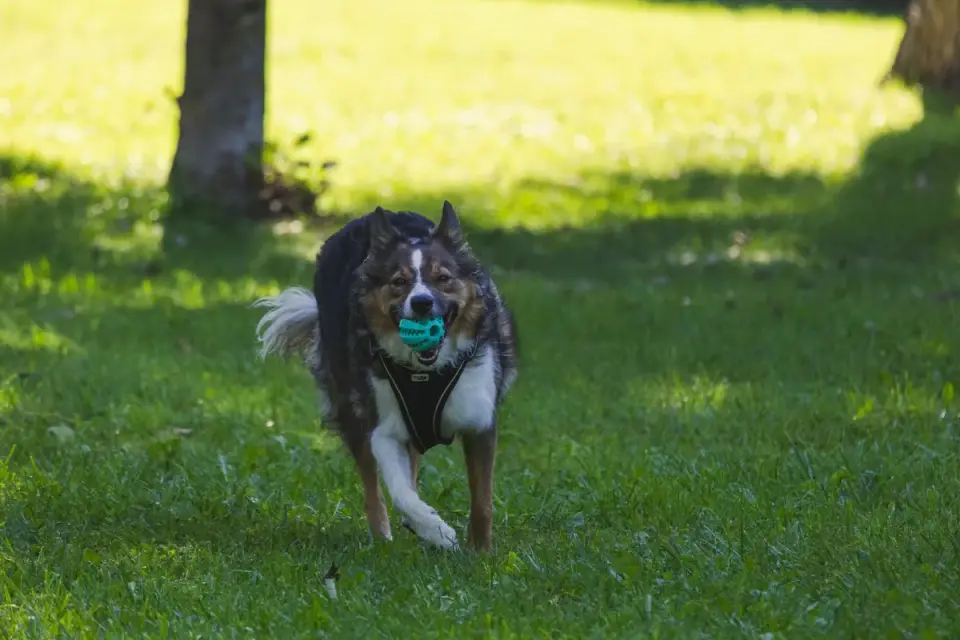
Low effort is the point on a hot day.
Ideas that tend to fit well include sniffing a few treats in a folded towel, licking a thin smear from a mat, watching the world from a cool window, or practicing two familiar cues for soft treats. For more texture on toy choices, Enrichment Toys for Mental Stimulation: What Actually Helps a Bored Dog walks through what tends to settle dogs rather than wind them up, and Treat-Dispensing Toys for Mealtime Enrichment: A Vet’s Field Guide explains how to keep food-based play calm and readable.
Keep water nearby, keep portions tiny so the stomach stays settled, and end while your dog is still interested. A dog who walks away has told you enough.
Watch comfort, not the clock
The strongest counterargument I hear is that a tired dog is a good dog, and that skipping exercise will create worse behavior by evening. There is truth in it. Movement does support sleep and mood, and some young dogs genuinely struggle without an outlet.
I still land on rest first during extreme heat, because overheating can harm quickly while restlessness can be eased gently. Panting that does not settle in cool air, thick drool, bright red gums, vomiting, wobbliness, or sudden lethargy deserve prompt veterinary attention rather than another activity. Cooler hours can hold the longer walk. The hot middle of the day is for steadiness.
She was a 14-year-old, 18-pound terrier blend with early kidney changes, and her family worried most about nighttime pacing. Three weeks in to a summer of afternoon advisories, they noticed she drank deeply after indoor play, then needed three outdoor breaks in two hours and seemed more unsettled, not less. The edge case was water and sodium balance plus urgency in a senior dog. We shortened licking time to three minutes, offered room-temperature water rather than ice-cold bowls, placed a non-slip mat near the door for easy outings, and moved her second enrichment window to after her evening potty. Her afternoons grew quieter once the plan fit her body, not just the temperature.
A gentle heatwave-afternoon rhythm
Early afternoon: close blinds, offer cool flooring, set out fresh water. Invite five minutes of sniffing or licking, then clear it away.
Late afternoon: quiet company. Light grooming strokes if your dog enjoys touch, a calm chew for some dogs, or simply sitting nearby. No training marathons, no wrestling, no balcony sunbathing.
Evening, once air cools: a short, shaded sniff walk if local guidance says it is reasonable, with water and an easy turn-home plan. If panting rises fast, head in. The walk can wait another day.
If you use calming support during stormy summer weather, The 5 Best Calming Supplements for Dogs, Reviewed by a Vet (2026) may help you talk with your veterinarian about what may help support relaxation alongside routine, not as a replacement for cooling and rest.
Comfort is the enrichment.
Frequently asked questions
How long should indoor enrichment last on a very hot day?
Five to ten minutes at a time is often enough, followed by water and rest on a cool surface. End while your dog is still interested rather than tired.
Is it ever okay to walk during a heatwave?
Save longer outings for cooler morning or evening hours and keep midday activity indoors. If panting rises quickly, gums look bright red, or your dog seems wobbly or lethargic, cool gently and seek veterinary care promptly.
What are the calmest enrichment choices for heat?
Quiet sniffing in a towel, a thin lick-mat smear, window watching from a cool room, and two or three familiar cues for tiny treats. Keep arousal low and portions small.
Sources
- Warm Weather Pet Safety — American Veterinary Medical Association
- About Heat and Health — Centers for Disease Control and Prevention
- Heat Stroke in Dogs — VCA Hospitals