
On this page
If your dog finishes exercise and still paces, you do not have a fitness problem. You have an unmet thinking need.
A restless cattle-dog mix adopted during college now spends weekdays in a small rental with a shared yard. Mornings meant a three-mile jog along the river path, followed by breakfast gulped quickly while pacing between windows and whining toward the door. The owner wondered whether to extend the run or replace road miles with thinking games, worried that added running was building stamina without easing restlessness after dinner. After trading part of the jog for scattered kibble in tall grass and quick hide-and-seek with a tug toy, the dog circled softly and folded onto a mat near the couch with a long sigh.
That fork — more miles or more mind work — is where most high-energy evenings turn.
Should you add miles or add thinking?
Running builds endurance. Thinking builds satiety. For herding breeds, terriers, and sporting adolescents, physical exercise without a decision to make often leaves the brain still buzzing.
From a nutrition and rehab lens, I weigh what a supplement can realistically do for diet, mobility, and recovery, and the same test applies here: food, rest, and conditioning may help support normal recovery, but they cannot replace a job for the nose and brain. Groups like the American Veterinary Medical Association remind owners that enrichment and behavioral health are part of routine care, not extras.
Thinking work tires faster than road work.
Try swapping a portion of the walk for work: scatter half of dinner in grass, hide a toy behind a chair leg, ask for two known cues before each toss. You are looking for yawning, soft blinking, and a choice to lie down — not panting for more.
Sniff, chew, and solve without the frantic edge
Cornell University College of Veterinary Medicine describes enrichment as letting dogs perform normal behaviors like sniffing, chewing, and problem-solving in safe ways. In practice that means rotating through three textures in an evening, not stacking them all at once.
Start with sniffing because it lowers arousal. A snuffle mat, a cardboard box with kibble tucked in paper, or a short trail of treats along a hallway lets the shoulders drop. Follow with chewing — a long-lasting chew held between paws helps maintain calm jaw activity after excitement. Finish with brief training, keeping sessions easy enough that your dog succeeds often.
If evenings feel tight in an apartment, the same principles in The Real Test for an Apartment Dog Isn’t Size apply: quiet nose work beats loud fetch down a hallway. When baseline anxiety stays high despite routine, some owners also read our The 5 Best Calming Supplements for Dogs, Reviewed by a Vet (2026) to understand what calming support may — and may not — do alongside training.
When harder puzzles backfire
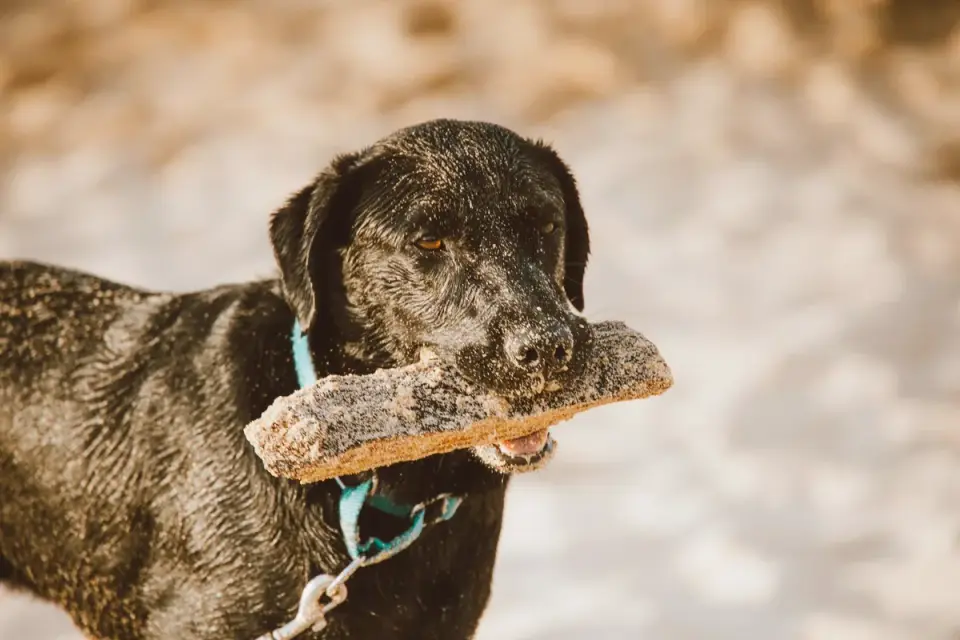
The lanky adolescent Lab living upstairs in an apartment with thin walls had started chewing baseboards after sunset. Hoping to tire the mind, the owner bought four spinning puzzle feeders and offered them after dinner with high-value treats tucked inside. For a short stretch the Lab nosed eagerly, then began pawing hard, flipping each board over and barking down the hallway when kibble stuck under the edges. The owner worried about noise complaints and sore paws, wondering whether thinking work was supposed to look this frantic. The frantic finish signaled arousal climbing rather than settling, and the routine needed softer sniffing instead of harder puzzles.
That tradeoff is common. A puzzle that is too hard or too wobbly can raise frustration vocalizing, paw slamming, and guarding rather than fatigue. Reset to easier wins: loosen lids, use a muffin tin with tennis balls laid loosely on top, feed from a lick mat between searches.
Skeptical friends often ask whether this is just tiring the owner instead. Fair question. The answer is dose and observation — if breathing stays fast and eyes stay fixed, you added stress. If you see sniff-pause, sigh, and disengagement, you added satiety.
What a settled evening actually requires
The gray-muzzled shepherd mix weighing sixty-eight pounds had grown stiff on slick kitchen floors and anxious when left to solve standing puzzles alone. Usual advice called for longer search games across the house, yet slipping and missed finds left him panting near the doorway. The owner bent the plan, placing low hides along the living-room rug and couch edge where footing felt secure, letting him sniff while lying down and delivering praise calmly between finds. With secure footing and shorter searches, breathing slowed, shoulders dropped, and he rested through evening sounds without circling toward the door.
Bend the plan for your house: seniors and worried dogs do better with short, findable searches on secure footing, puppies do better with naps protected between games, and noise-sensitive dogs do better with licking and shredding than with clattering plastic.
Looking ahead, aim for a repeatable loop you can keep: sniff first, chew second, train last, lights low. When that loop ends with your dog choosing rest on their own, you have tired the mind enough.
Frequently asked questions
How long of mental enrichment does a high-energy dog need daily?
Most adolescent sporting and herding dogs settle with 15-30 minutes of sniff work, chewing, and training split across the day, plus regular walks. Watch for soft eyes and voluntary lying down rather than clock-watching.
Why is my dog more hyper after a puzzle toy?
The puzzle was likely too hard, too long, or offered when arousal was already high. Drop difficulty, shorten the session, and start with sniffing or licking before problem-solving.
Can sniff walks replace a run for a high-energy dog?
For many dogs, yes in part. A slower walk with ample sniff breaks often settles better than a fast march, though young athletes still need safe aerobic exercise for conditioning.