
On this page
Sitting with the worry at 11pm is familiar — the ribs you cannot feel anymore, the slower climb onto the couch, the bag that promised help and did not change much.
Weight-management kibble is built to support a calorie deficit without leaving a dog hungry all evening. That means lower energy density, added fiber to help maintain fullness, and protected protein to help maintain lean muscle while weight comes off. Stay anchored to how the formula is thought to work, not what it might cure: it may help support steady loss only when the measured intake stays below what the dog burns.
The kitchen-table fork: new bag or smaller scoop?
Most owners hit the same choice. Keep the current food and feed less, or switch to a weight-management recipe and feed exactly as directed.
Feeding less of a maintenance food often cuts vitamins and protein along with calories. A weight-management recipe is formulated to keep those nutrients steadier per cup while calories drop.
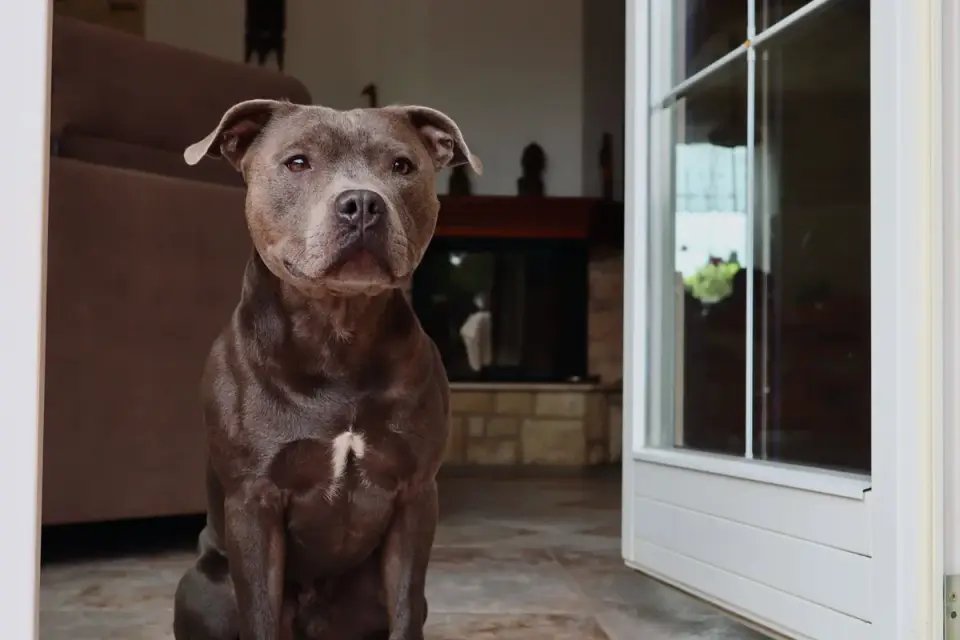
Randy in West Valley City lives this fork with Uma, a 6-year-old spayed female Staffordshire Bull Terrier who gained 4 pounds in five months after a knee strain cut her walks to one short block. The bag changed, the begging did not, until the scoop did.
What this kind of formula is built to do
Compare the labels side by side and the contrast is plain. Weight-management diets are typically lower in fat, modestly higher in fiber, and fortified so a smaller calorie portion still delivers complete nutrition.
Fiber slows the bowl-to-begging interval, a fermentation role explored in laboratory work described by Journal of Animal Science. Protein helps maintain muscle during loss. L-carnitine and adjusted minerals are often added to help support fat metabolism and steady body condition. None of this burns weight on its own.
That is the mechanism to hold onto.
The measure that matters more than the brand
Set the cup down and pick up the scale.
Weigh meals in grams for two weeks. Feed for ideal weight, not current weight — your veterinarian can set that target weight and daily calorie number. Split food into two measured meals, keep treats under 10% of daily calories, and log every extra. Vets often see a dog hold weight simply because one unmeasured scoop adds 20% more kibble.
When you change recipes, do it slowly. A 7- to 10-day blend prevents the midnight vomiting that undoes progress, a point covered in How to Change Food for a Senior Dog: A Vet’s Step-by-Step Guide and useful for any adult dog. If stools loosen during the switch, plain guidance like Bland Diet Alternatives When You’re Out of Chicken can steady the week without adding mystery calories.
Movement that fits a heavy dog
Food creates the deficit. Movement protects it.
Start with two 10-minute leash walks, then add five minutes every third day if breathing stays easy and soreness fades by morning. Hills and fetch can wait until the body-condition score drops one point. Weighing every two weeks beats watching the bowl.
Cyrus, a 5-year-old neutered male Miniature Dachshund mix in Huntsville, shows the other side: owner Cathy kept portions perfect for three weeks with no walks, and the scale did not move until they added a 15-minute evening loop.
When this path is the wrong call
Reach for both the imaging study and the acupuncture needle — and know when food is not the lever.
If weight gain came with heavy thirst, hair loss, panting, limping, or sudden appetite change, pause the diet plan and call your veterinarian first. Thyroid disease, Cushing disease, joint pain, and some medications change what safe loss looks like. Puppies, pregnant dogs, and very thin seniors should not eat a calorie-light adult formula without direct veterinary direction.
For dogs that inhale meals and wake asking for more, a steady evening routine sometimes matters as much as fiber, a pattern explored in Is It Okay to Rotate Dog Food Proteins? A Vet Nutritionist’s Take.
Small steps hold.
Weigh the food. Walk the block. Recheck in 14 days, then adjust with your veterinarian. That is how a weight-management bag finally earns its place.
Frequently asked questions
Will Royal Canin weight management work without measuring?
Not reliably. The recipe supports fullness and lean muscle, but loss still needs weighed portions for ideal weight and daily movement.
How fast should my dog lose weight?
Ask your veterinarian for a safe weekly target with a recheck every 2 to 4 weeks. Faster loss is not better.
Sources
- Fiber fermentation and bacterial diversity — Journal of Animal Science