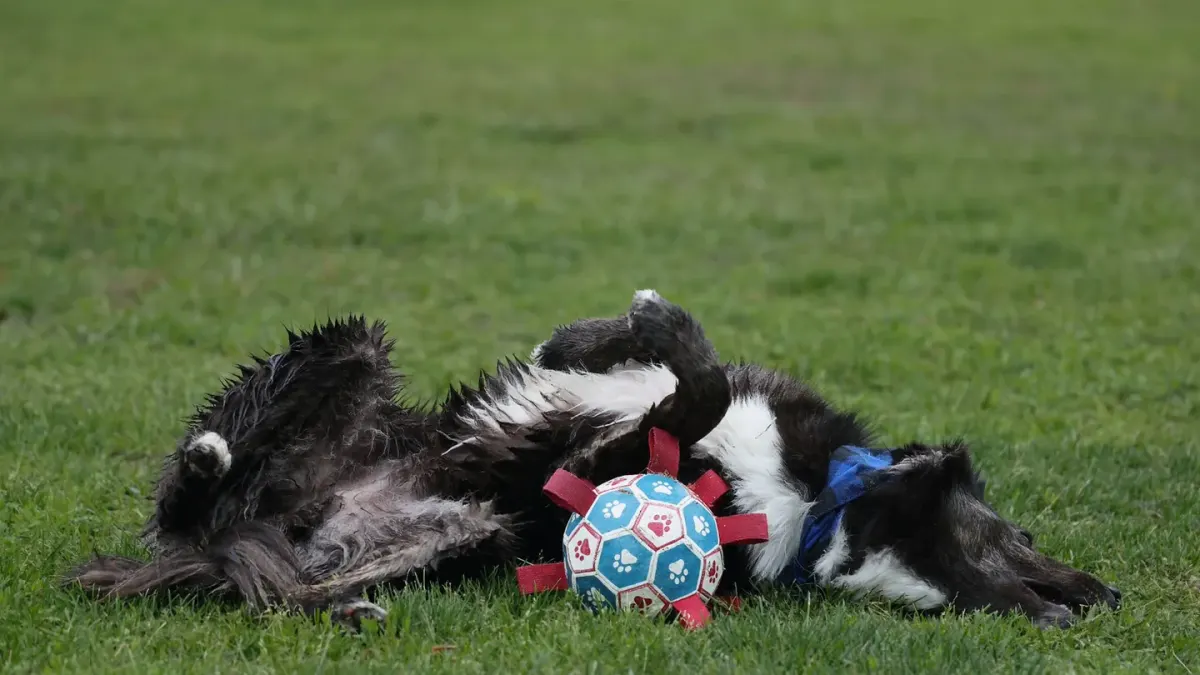
When your dog guards the puzzle from another dog, separate calmly and rebuild comfort with enrichment that feels safe.
It was a rainy Tuesday evening, and Maya had set down two stuffed puzzles in the kitchen, one for each dog. Her 4-year-old, 62-pound lab mix, Bodhi, froze over his puzzle as her younger shepherd mix trotted closer. His body stiffened, his head dropped low, and a low growl rolled out while the other dog paused mid-step. Maya felt her stomach tighten. She had bought the puzzles to create calm, not tension, and in that moment she had to decide whether to grab the toy, scold, or quietly create space.
That decision fork matters more than the puzzle itself. Take the puzzle away by force and you confirm the worry that good things disappear when another dog appears. Leave them to work it out and arousal can climb fast. The comfort-first choice is to pause the session without punishment, give each dog their own safe spot, and let enrichment happen apart for now.
Resource guarding is normal canine communication about a valued item, not spite or dominance. The ASPCA describes common early signals like stiffening, hard staring, hovering with the body over the item, gulping faster, and moving away with the object, with growling, snapping, or biting if those whispers are ignored. Puzzles are especially guardable because they combine food, novelty, and effort in one spot that is hard to share.
Split the Room Before You Fix the Feeling
Three weeks in, Maya tried again with both dogs loose in the same room, hoping they would learn to share if she just supervised closely. Her 2-year-old, 38-pound shepherd mix finished first and drifted toward Bodhi’s half-finished puzzle. Bodhi swallowed hard, clamped his paws around the toy, and air-snapped as she reached in to block. No one was hurt, but her hands were shaking and Bodhi paced away from his puzzle entirely. The failed approach was not lack of supervision. It was proximity without a barrier, plus a high-value filling that made walking away feel impossible.
Closeness does not teach generosity when a dog already feels tight.
Give each dog a station with distance and a visual break — separate rooms, crates with the doors open, or opposite corners with a baby gate between. Each dog gets an identical, low-pressure puzzle at the same time so there is no reason to wander. Stay nearby and quietly pick up both puzzles when time is up, then return to free living together without props. For ideas on lower-arousal options that work well for solo stations, see Enrichment Toys for Mental Stimulation: What Actually Helps a Bored Dog.
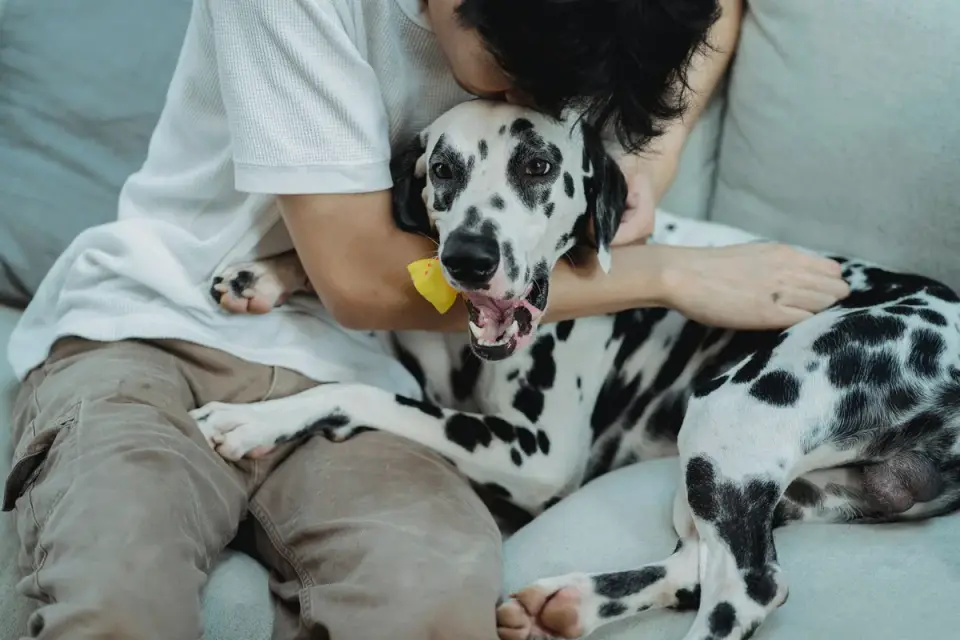
Read the Body, Not Just the Growl
Growling is information, and punishment for growling can suppress the warning without changing the worry underneath. The American Veterinary Society of Animal Behavior advises against confrontational methods and favors humane, reward-based approaches that address underlying emotional state, a position that fits guarding especially well.
Watch for the earlier chapter. Eating faster when the other dog looks over, shifting to place shoulders over the puzzle, showing a hard eye, lip licking, or carrying the puzzle to a corner are all requests for space. If you see them, calmly call the other dog away for a treat, slide a barrier closed, or toss a few treats away from the puzzle to help the guarder lift his head and move off without a grab. The Merck Veterinary Manual similarly frames guarding as anxiety about loss and recommends management with desensitization rather than forced removal.
When Separate Feels Better for Everyone
By day 10 of separate stations, Maya noticed something unexpected with her 9-year-old, 54-pound senior dog visiting for the weekend. He showed no interest in guarding his own lick mat, but he froze and left the room entirely when the younger dogs crunched and nosed loudly at their puzzles nearby. His edge case was not guarding, it was sound sensitivity and slower chewing that made nearby puzzle pressure feel unsafe. For him, comfort meant a quiet bedroom with a soft snuffle mat while the others worked in the kitchen, then a short group sniff walk after all toys were put away.
Some dogs will always prefer to chew alone, and that is a complete solution.
Keep sessions short, put puzzles away between sessions so the house does not feel like a guarded landscape, and match value to tolerance. Use easy, lick-based or scattered feeding for the dog who worries, which you can learn more about in Treat-Dispensing Toys for Mealtime Enrichment: A Vet’s Field Guide. Save the long-lasting, high-value bones and complex puzzles for solo, closed-door time. If guarding extends to resting spots, doorways, people, escalates to bites, or a dog cannot relax even when separated, ask your veterinarian for a referral to a board-certified veterinary behaviorist or certified applied animal behaviorist for an individual plan.
Your next step is simple tonight: feed the puzzles apart, doors or gates closed, no sharing required.
Frequently asked questions
Should I take the puzzle away to show who is in charge?
No. Forced removal and scolding for growling can increase anxiety about loss and suppress warning signals without changing how the dog feels. Calmly separate, manage with barriers, and work on positive associations apart.
Can my dogs ever do enrichment together again?
Many can share space again with management, but together does not have to mean sharing the same toy. Parallel stations with distance, barriers, and matched value often keep the peace better than expecting dogs to trade or take turns.
When should I call a professional?
Call your veterinarian promptly if guarding is escalating in intensity, involves bites or hard snaps, generalizes to many items or people, or if a dog remains stressed even with separation. A veterinary behaviorist can tailor a desensitization plan to your home.
Sources
- Position Statements — American Veterinary Society of Animal Behavior