
On this page
It is 6 on a Tuesday and your dog is already circling the rug, and you are weighing whether a longer morning walk or ten minutes of nose work will buy you a quieter workday in a 650-square-foot apartment.
I see this fork constantly, and my bias is clear: for most apartment dogs, I prioritize short, sniff-forward mental work plus protected rest over trying to tire them out in the hallway. Food puzzles and training have limits, movement and recovery set the ceiling, and no chew or powder replaces sleep. That is the lens I bring as a nutritionist and rehab clinician — weigh what diet, mobility, and recovery can realistically do, then build enrichment around it.
Milo’s household is a composite I hear often. A three-year-old, 48-pound mixed breed in a second-floor one-bedroom, barking at hallway noise by 7 a.m., chewing baseboards by noon, then wired again at 9 p.m. His owner had thirty minutes before work and worried a quick leash loop was not enough. We swapped one rushed loop for a ten-minute scatter feed down a hallway runner plus a five-minute sit-touch-down chain with kibble, then curtains closed and a chew on a mat. By day 10 she reported fewer midday zoomies and a dog who chose the bed by 10 p.m., which told me arousal, not fitness, was the driver.
Start where the apartment pinches: noise, space, and rest
Apartments compress everything. Footsteps overhead, elevator dings, cooking smells in 400 square feet, and nowhere to sprint it off. Dogs do not need a yard to cope, but they do need a predictable rhythm that lowers startle and gives the brain a job.
Try this criteria-first filter before you buy anything:
- Can you do it in 4x6 feet without hitting furniture?
- Is it quiet enough for neighbors at 10 p.m.?
- Can the dog quit and nap without you taking it away?
- Does it end with slower breathing, not faster pacing?
If an activity fails two of those, save it for the park. For small-space ideas that fit those filters, this roundup of Best Toys for Apartment Dogs with Limited Space is a useful starting point, and this explainer on Enrichment Toys for Mental Stimulation: What Actually Helps a Bored Dog helps sort calm work from hype.
That last question matters most. Enrichment that supports recovery should leave the dog drowsier. If your dog paces, whines, or guards afterward, the challenge was too high or the day lacked rest.
Sniff first, then chew, then train
I stack apartment enrichment in that order for a reason. Sniffing lowers tempo, chewing settles jaws and eyes, and brief training spends the last bit of focus. Reverse it and many dogs get too aroused to sniff well.
Sniffing needs no gear. Scatter a quarter of breakfast down a bath mat, along a hallway, or in a cardboard box of crumpled paper. Hide three kibble piles behind chair legs. Let an older dog snuffle a snuffle mat for five minutes instead of trotting stairs. You are feeding the nose, not testing obedience.
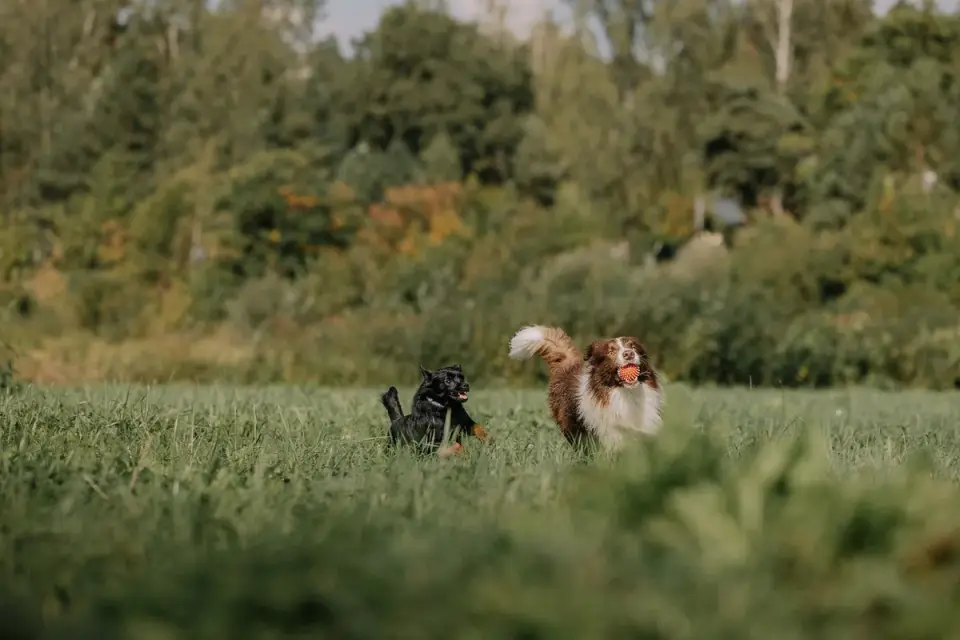
Chewing comes next. A long-lasting chew, a frozen lick mat, or a stuffed food toy on a washable rug gives a 15- to 30-minute settle, especially after the evening walk when apartment dogs often surge. For mealtime-based options that do not turn dinner into frustration, this field guide to Treat-Dispensing Toys for Mealtime Enrichment: A Vet’s Field Guide lays out flow rates and when to quit.
Training caps it. Two minutes of hand touches, place work, or name that toy between meetings beats a 20-minute drill session. Keep treats pea-sized, keep criteria easy, and stop while your dog still wants more.
One deliberately short truth: tired is not the goal. Settled is.
When more puzzle means more pacing
June, a composite case, shows the tradeoff. A one-year-old, 22-pound terrier mix in a studio, brilliant with puzzles, terrible afterward. Her owner stacked a level-three sliding puzzle, then a bobble feeder, then fetch down the hall, hoping for a nap through Zoom calls. Three weeks in, the pattern was clear: faster solving, louder barking at doors, no nap until 2 p.m.
We pulled back. One easy scatter feed in the morning, one frozen Toppl at lunch, puzzle toys shelved for two weeks. The failed approach was not lack of difficulty; it was lack of off-switch. High-challenge food toys can raise frustration in sound-sensitive apartments, and frustration barks. When we lowered difficulty and added a covered crate nap with white noise from 12 to 2, daytime barking thinned within a week. That is recovery doing work no supplement can shortcut.
This is where I am decisive, even though friends disagree. Some trainers argue apartment dogs need harder puzzles to compensate for less running. I respect that for confident adolescent sport mixes with solid rest. For most city dogs living wall-to-wall with triggers, I land on easier, sniffier, shorter work plus fiercely guarded sleep, because arousal carries over in small spaces.
Supplements sit inside that same boundary. I get asked about longevity powders with nicotinamide riboside, quercetin, and resveratrol as indoor energy fixes, and my answer stays food-first and narrow. The nutritional evidence does not position them as calm-down tools. For context, researchers reporting in Pharmaceuticals noted “QF and unformulated Q, as well as NAC and ascorbic acid, at the concentrations used, did not affect the feeding behavior of the worms,” which reminds me not to read broad behavioral effects into antioxidant ingredients. Work in Phytomedicine that “Embryonic exposure to ER50 accelerated pupation and adult emergence but shortened adult lifespan” is a different species and life stage entirely, and it reinforces why I do not extrapolate longevity or energy claims to apartment dogs from early lab models.
The edge cases: seniors, night barkers, and shared walls
Ruthie is the scenario that changes the template. A nine-year-old, 61-pound Labrador in a third-floor walk-up with sore hips, sleeping 18 hours a day, startling at midnight plumbing clanks. Her owner wanted more enrichment to keep her young. More movement would have been wrong.
We did less, softer. Morning sniff trail of five kibbles to the water bowl, afternoon massage and three gentle cookie stretches, evening chew for eight minutes while the owner watched TV. By week two she was choosing her orthopedic bed over the cold tile by the door, and night startles eased because daytime naps were less fragmented. For aging dogs in apartments, enrichment may help support routine and comfort, but joint comfort, traction rugs, and uninterrupted rest matter more than novelty.
A few apartment-specific rules help across ages:
- Rotate, do not accumulate. Keep three options out, store the rest.
- Mind quiet hours. Save squeaky, bouncy, or rolling feeders for midday.
- Make quitting easy. Leave water, a bed, and a chew station in the same corner so arousal has somewhere to land.
- Track sleep, not scores. Note bedtime, wake-ups, and morning energy for seven days before adding difficulty.
If you share walls, breed tendencies matter less than trigger load. A calm greyhound next to a slamming stairwell may struggle more than a terrier over a quiet courtyard. If size worries you, this piece on The Real Test for an Apartment Dog Isn’t Size reframes the question helpfully.
Looking forward, aim for a week that feels almost boring: same sniff breakfast, same midday chew, same two-minute training snack, same protected nap. Apartment dogs settle when the pattern holds, not when the toy box grows.
Frequently asked questions
How much daily enrichment does an apartment dog need?
Most do well with 20 to 30 minutes total split across sniffing, chewing, and 2-minute training moments, plus a long walk and guarded naps. Watch for slower breathing and voluntary rest as signs you hit the right dose.
What is the quietest enrichment for thin walls?
Scatter feeding on a rug, snuffle mats, frozen lick mats, and soft chews on a bed are usually quietest. Save rolling feeders, squeakers, and hallway fetch for daytime or outdoor spaces.
Sources
- Quercetin formulation and feeding behavior in worms — Pharmaceuticals
- Embryonic resveratrol exposure and lifespan in model organism — Phytomedicine