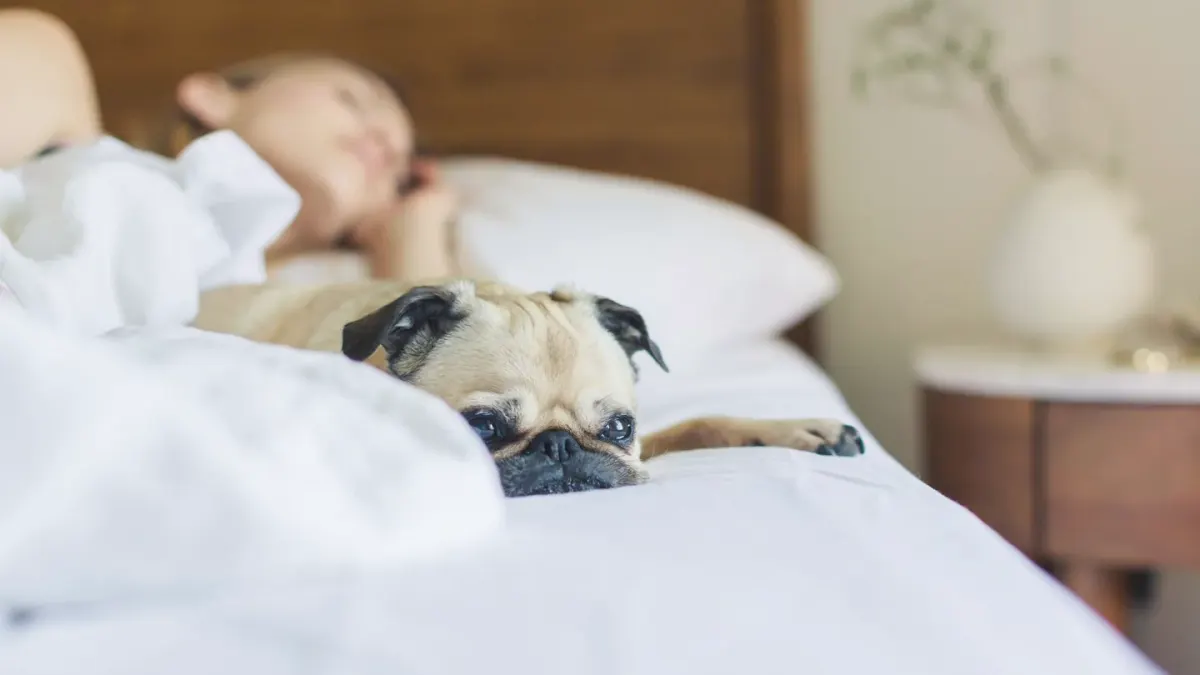
If you have ever felt small paws kneading your shoulder at 2 a.m., you know the question is less about permission and more about rest for both of you.
Chihuahuas do not have to sleep with you, though many prefer it. What they do need is warmth, closeness, and a predictable pattern for settling, which a cozy bed placed near yours can provide just as well. As an integrative veterinarian, I view this as a balance of comfort and circulation, a small body that cools quickly settling best when its sleeping spot holds steady warmth through the night.
According to the American Kennel Club, Chihuahuas are devoted companion dogs that bond closely with their people and enjoy burrowing under blankets. That burrowing is normal self-warming behavior, not a sign of illness on its own. In a cool house, a thin-coated, two-to-six-pound dog will naturally seek the warmest shape in the room, which is often you.
Why Your Chihuahua Wants Your Blanket
Small dogs lose heat faster than larger dogs, so cool air, tile floors, and drafts register more strongly for them. Add in a companion-breed temperament that was shaped for lap time and close contact, and your bed feels like food therapy in blanket form, warm, familiar, and settling to the nervous system.
Separation distress can add to the pull. Dogs that whine, pace, or cannot settle when apart at night may be showing early signs of nighttime anxiety rather than simple preference. The team at VCA Animal Hospitals notes that dogs with separation-related behavior do best with gradual training for alone time paired with consistent routines, not punishment. If your Chihuahua only sleeps when touching you and panics in a pen or crate, ask your own veterinarian to rule out pain, urinary urgency, cognitive change in seniors, and anxiety before you retrain sleep location.
Shared sleep also affects you. In a study published in Mayo Clinic Proceedings, researchers found that having a dog in the bedroom could support rest for some owners, while having the dog on the bed itself was more likely to disturb sleep. For light sleepers, that distinction matters.
Bed-Sharing Is A Choice, Not A Requirement
There is no health rule that says a Chihuahua must be under your duvet to stay well. The decision rests on safety, sleep quality, and household pattern.
Bed-sharing may help maintain calm when an older or newly adopted Chihuahua settles faster with body contact, and you sleep soundly through it. It may be less supportive when anyone in the bed wakes often, when the dog guards pillows, when allergies or limited mobility make night lifts risky, or when a tiny puppy could fall from a high mattress or slip between headboard slats.
This is similar to other night-settling questions we see in older dogs. If sound sensitivity keeps your dog pacing, the approach in Why Your Senior Dog Startles at Sounds He Used to Sleep Through walks through pain checks and softer evening routines. If restlessness seems tied to age rather than habit, Biological Age vs. Chronological Age in Dogs: What Actually Predicts How Your Dog Is Aging can help you track which signs matter most between exams.
Give Warmth And Nearness Without Your Pillow
Think in patterns. A cool, restless pattern needs warming and grounding. A clingy, wakeful pattern needs closeness plus a clear place of its own.
Set up a nest bed at your bedside, at mattress height if you can do it safely with a sturdy step or sidecar sleeper. Choose a small cave or bolster bed with a washable self-warming pad or a low-sided blanket nest, kept away from vents and drafts. Add one worn shirt that smells like you, laundered often enough to stay clean.
Keep the evening pattern steady. Last potty break, dim lights, brief Tui-na style stroking along the shoulders and back, then cue words such as bedtime. Offer the same blanket tuck each night. For seniors like Nettie, a 10-year-old spayed female German Shepherd I once supported through restless nights with her owner Mary in Toledo, that repeatable tuck and low lighting settled her more than any new bed alone, and the lesson holds for tiny breeds too.
If you are moving a Chihuahua off your bed, move in small steps. Start with their bed on your bed for a few nights, then on a nightstand-level platform, then on the floor beside you with your hand resting in the nest until breathing slows. Reward quiet settling in the morning, not midnight bargaining. Most dogs adjust within one to two weeks when daytime exercise, evening potty timing, and wake times stay consistent.
Call your veterinarian promptly for new night waking with panting, crying, increased thirst or urination, limping, coughing, or confusion. Those signs point to medical causes that no bedding change will resolve.
You can love the midnight cuddle and still teach a nearby nest. Warmth, nearness, and a steady closing pattern may help support restful sleep for a small companion dog, whether the nest sits beside your pillow or a few feet away.
Frequently asked questions
Do Chihuahuas have to sleep with you to feel secure?
No. They need warmth, closeness, and routine. A cave bed beside your bed with a familiar blanket and steady bedtime pattern often provides the same security.
Why does my Chihuahua burrow under blankets?
Burrowing helps a very small dog stay warm and settled. Provide a safe burrow bed and keep room temperature comfortable rather than letting them overheat under heavy covers.
How do I move my Chihuahua off my bed kindly?
Shift in stages over one to two weeks, from a bed on your bed to a bedside nest, with the same tuck cue nightly. Keep potty, light, and wake times steady and reward calm settling.
Sources
- Chihuahua Dog Breed Information — American Kennel Club
- Separation Anxiety in Dogs — VCA Animal Hospitals
- The Effect of Dogs on Human Sleep in the Home Sleep Environment — Mayo Clinic Proceedings