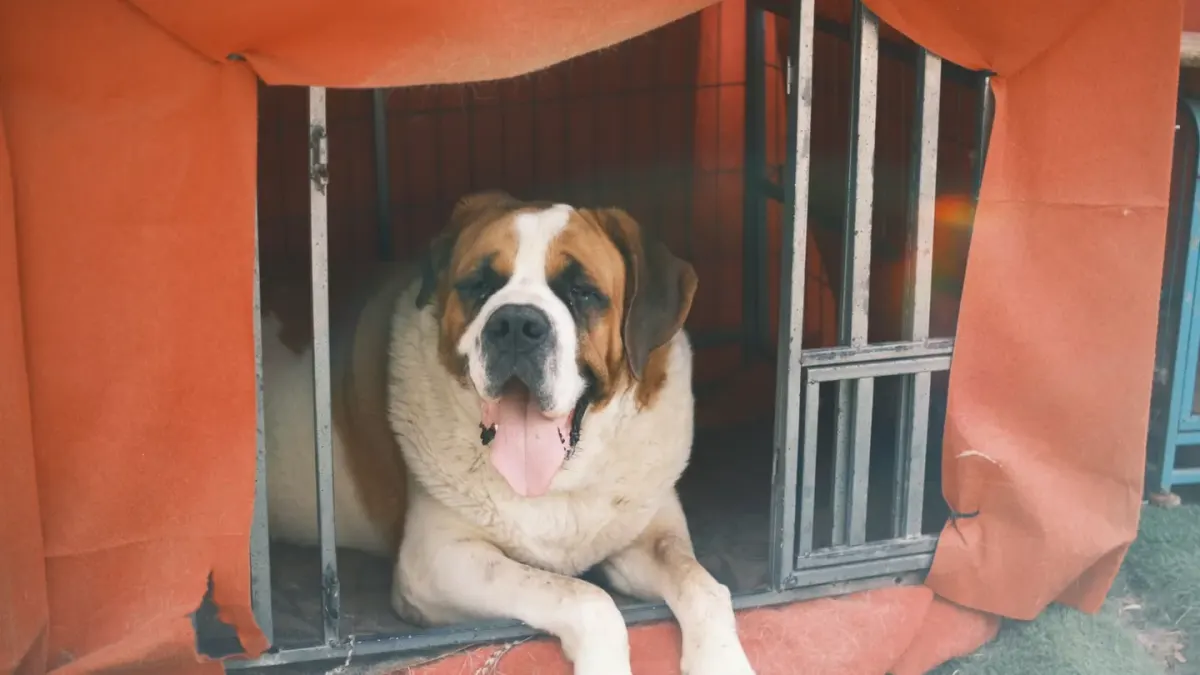
A common question is whether a dog needs a strict rest period after eating before it’s safe to run. The honest answer is more interesting than the folk wisdom: the “wait an hour” rule most owners grew up with was built to prevent gastric dilatation-volvulus, better known as bloat, and the research on that specific question doesn’t say what most of us assumed it said.
In my exam room, I reach for both the imaging study and the acupuncture needle before I commit to a recommendation — I want the mechanism and the evidence lined up before I tell an owner to change a routine that’s been working. That habit is exactly what this question deserves, because a lot of the “common sense” here turns out to be inherited rather than tested.
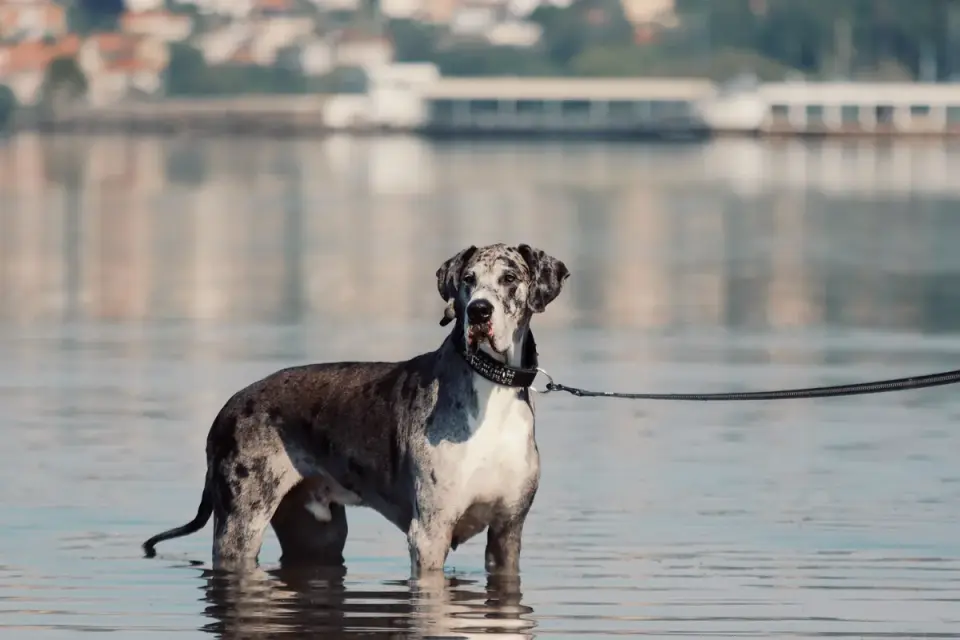
The dog that changed how I think about this one was a seven-year-old Great Dane, sixty pounds heavier than most of my patients, whose owner kept him crated for a full ninety minutes after every meal because a breeder had told her bloat would “definitely” follow if she didn’t. He was anxious in the crate — pacing, panting, drooling on the bars — every single time. When she finally asked whether that restriction was actually protecting him or just making him miserable, I had to tell her the truth: the largest study on this exact question found the opposite of what she’d been taught. We changed nothing about his food, but we let him move, calmly, after eating instead of confining him. His anxiety around mealtime dropped within two weeks, by her report, and there was no bloat event in the years I followed him afterward.
The rule that doesn’t hold up
Here’s the criteria that actually matters, in the order the evidence supports it:
Deep-chested, large or giant breeds carry the real risk — Great Danes, Saint Bernards, Weimaraners, Irish Setters, and similar builds. VCA Animal Hospitals notes that dogs weighing over 100 pounds carry roughly a 20% lifetime risk of bloat, and that predisposed breeds are disproportionately deep-chested. A small or medium dog eating before a jog is working with a fundamentally different risk profile than a Great Dane doing the same thing.
Restricting exercise after a meal is not the protective move it was assumed to be. This is the part that surprises most owners. Research following large-breed show dogs found no advantage to restricting activity after eating, and in large-breed dogs specifically, restricting exercise after meals was associated with higher GDV risk — not lower — while dogs allowed to play or run after eating showed decreased risk, according to reporting on the Purdue-led cohort work summarized by The Farmer’s Dog. That doesn’t mean sprint immediately after a full bowl — American College of Veterinary Surgeons: ACVS still lists exercise after a large meal or after drinking large amounts of water as a risk factor worth respecting — but it does mean the blanket “confine for an hour” instruction isn’t supported the way it was once taught.
Feeding pattern and eating speed matter more than the clock does. ACVS lists feeding only one large meal a day and rapid eating as independent risk factors for bloat, alongside a fearful or anxious temperament. A dog who eats fast, once daily, and then gets crated and stressed is arguably worse off than a dog who eats a moderate meal and goes for a relaxed walk twenty minutes later.
What I actually tell owners
For a small or medium dog with a normal chest depth, I don’t ask for a rigid waiting period at all. A brisk walk twenty to thirty minutes after eating is fine, and honestly probably better for digestion than crating an anxious dog. Save the truly vigorous exercise — hard running, fetch, agility — for an hour or so after a full meal, not because the science demands exactly sixty minutes, but because a stomach working through a large meal doesn’t need to also manage a hard cardio session.
For large and giant, deep-chested breeds, I’m more conservative, but not for the reason most owners expect. I’m not worried about a moderate walk or a gentle jog. I’m worried about the combination that shows up again and again in the risk-factor literature: one large meal, eaten fast, followed by either intense exertion on a full stomach or by anxious confinement. Split the meal into two smaller feedings if you can, slow the eating down with a puzzle bowl, and let the dog move calmly rather than forcing stillness it clearly doesn’t want.
One of the recurring conversations I have with owners of anxious eaters is about what to offer as a light pre-run snack rather than a full meal, since a smaller portion lowers the specific risk factors we actually have evidence for. A few slices of banana or a spoonful of plain cooked sweet potato sit easily and don’t compound the “one large meal” problem the way a full bowl does — our guide on sweet potato covers the fiber and portion side of that in more depth, and the banana guide covers how much actually fits into a day without tipping a dog into GI upset. What I steer people away from, every time, is treating any of that as license to skip the bigger-picture habits — the same caution applies whether we’re talking about a fast run or something as basic as avoiding onions in table scraps a dog might grab on a walk.
That Great Dane I mentioned earlier is a good example of where this actually lands. His owner wasn’t wrong to take bloat seriously — deep-chested giant breeds deserve that seriousness. She was wrong about which lever to pull. Confinement and anxiety weren’t protecting him; a slower feeding routine and calm, permitted movement were the pieces actually supported by the evidence. That’s the shift I’d ask most owners of at-risk breeds to make: worry less about the clock, more about meal size, eating speed, and whether your dog is stressed.
Where this actually lands
The strongest counterargument to loosening the “wait an hour” rule is that GDV is genuinely catastrophic — a true surgical emergency with meaningful mortality if it’s not caught early, which is why ACVS is unambiguous that this condition “requires immediate medical attention.” I take that seriously, and I’m not telling owners of giant breeds to stop thinking about meals and activity together. But being cautious about the wrong variable isn’t caution — it’s superstition wearing a lab coat. The evidence points toward feeding practices and temperament as the levers that matter, not a rigid post-meal timer. For most dogs, a sensible gap before hard exercise, a calmer feeding routine for the deep-chested breeds who actually carry the risk, and skipping the anxious crating are the three things worth doing. Everything else is inherited advice that never had the data behind it.
Frequently asked questions
Is it true that dogs can die from running right after eating?
The real danger isn't running itself — it's the combination of a large, fast-eaten meal with intense exertion or with an anxious, confined dog, especially in deep-chested large and giant breeds. A moderate walk after eating is not the same risk as a full sprint on a stomach stretched from a big meal.
How long should a large-breed dog wait before hard exercise after eating?
There's no exact number backed by strong evidence, but giving a large meal roughly an hour to settle before vigorous exercise is a reasonable, conservative habit — while a calm walk well before that hour is up appears to carry little added risk based on current research.
Does crating a dog after meals prevent bloat?
There's no good evidence that it does, and forcing an anxious dog into stillness may be counterproductive, since anxious temperament is itself a recognized risk factor for GDV.
Sources
- Bloat: Gastric Dilatation and Volvulus in Dogs — VCA Animal Hospitals
- Gastric Dilatation-Volvulus — American College of Veterinary Surgeons
- How Long Should My Dog Wait to Exercise After a Meal? — The Farmer's Dog