
Alexander in Tyler, Texas, needed a safe spot for Oden, his 5-month-old West Highland White Terrier, while dinner cooked. Oden paced, nipped at shoelaces, then barked at the baby gate for a full 10 minutes before flopping down.
That fork — settle or stir up — is the whole decision with a puppy play pen. From a nutrition and recovery view, I weigh what the pen can realistically do for diet, mobility, and recovery. It can protect rest and support learning to be alone for short periods. It cannot raise a calm puppy by itself.
Should the pen be for settling or for play?
Choose settling. A pen works best as a small safe zone with a bed and chew, not as a place to park a puppy for hours. Longer confinement without a break builds frustration, vocalizing, and climbing, and it works against house training.
The American Veterinary Society of Animal Behavior emphasizes short, positive early experiences for socialization, and the same logic applies at home. Brief wins beat long ordeals.
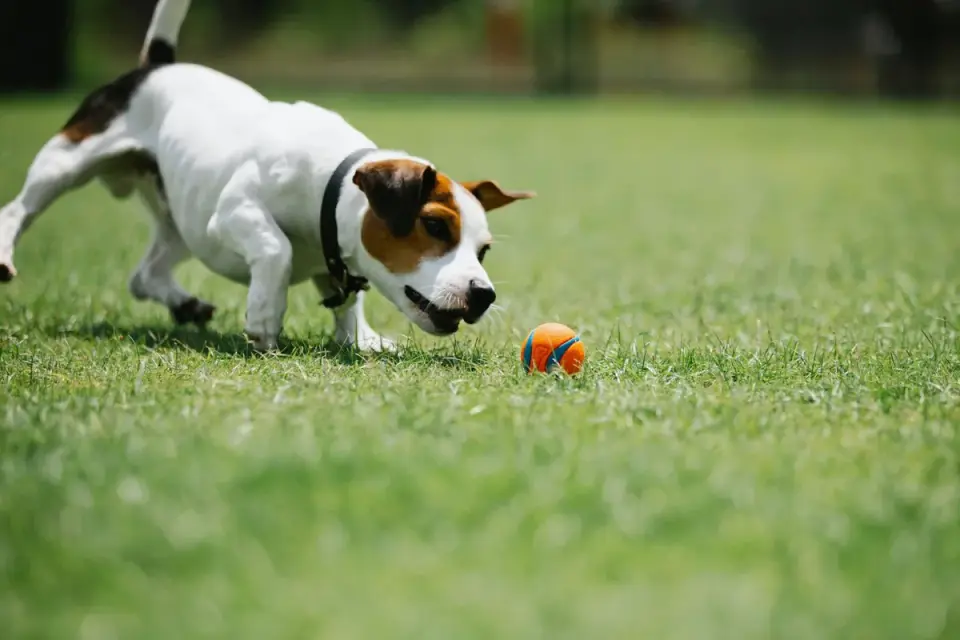
Vets often see the opposite setup: a large pen packed with squeaky toys where the puppy laps for an hour and never lies down. Keep it boring on purpose.
What goes inside a calm pen?
Less than most checklists suggest. A washable bed in one corner, a spill-proof water bowl in the opposite corner, and one safe chew. That is enough for most puppies under six months.
Leave fetch and wrestling for outside the pen. Balls, tug ropes, and noisy toys raise arousal and teach the puppy to expect action in the place meant for rest. For ideas that fit better outside the pen, see Best Fetch Toys for Dogs: How to Choose Balls, Bumpers, and Launchers and Enrichment Toys for Mental Stimulation: What Actually Helps a Bored Dog.
Food enrichment can help, within a balanced diet. A thin smear on a lick mat or a kibble-stuffed chew may help support quiet mouth activity, but it does not replace meals or fix an overtired puppy. Ground an integrative claim in the nutritional evidence here: chewing and licking add minutes of occupation, not nutrients beyond what is already in the daily ration, so subtract training treats from meals to keep growth steady.
Keep it safe and washable.
How long should a puppy stay in?
Shorter than people expect. For an 8- to 16-week-old puppy, aim for 20 to 30 minutes of quiet pen time while you are nearby, then a potty break, then either company or a crate nap. For older puppies like Oden, stretch to 45 to 60 minutes only if the puppy lies down within a few minutes and stays relaxed.
Watch the body, not the clock.
Settle looks like sighing, curling on the bed, and slow chewing. Struggle looks like continuous barking, pawing at panels, climbing, or chewing the pen itself. If struggle lasts more than 3 to 5 minutes without easing, reset with a potty trip and a calmer time of day. The American Kennel Club notes that puppy learning works best in brief sessions paired with rest, which matches what calm pen training needs.
Small pens settle faster.
How do you set it up step by step?
Place the pen against a wall in the room where you spend evenings, away from stairs and cords. Anchor panels so they do not walk, lay a non-slip mat under the bed, and keep the center open so the puppy can turn and stretch.
Practice in daylight first. Toss a treat in, let the puppy walk in and out, feed one chew inside, then close the door for one minute while you sit beside it. Build slowly across days.
Pair the pen with the right companions for apartment life. Best Toys for Small-Breed and Toy Dogs and Easy DIY Dog Toys You Can Make at Home can help you rotate one quiet chew without filling the pen with clutter.
Stillness is the skill.
When should you skip the pen?
Skip it when the puppy is overtired, urgently needs to eliminate, or has not had movement and potty first. A wired puppy put straight into confinement rarely learns calm. Take a short potty walk, offer water, then try again.
Also skip free access all day. Leaving the door open with the bed inside lets the puppy choose rest without pressure, and closing it only for those short practice windows keeps the association kind.
My recommendation stays narrow: small pen, bed plus one chew, brief sessions tied to potty breaks. The best reason to choose differently is a puppy who panics alone even for a minute — then choose company and a smaller separation step first, and rebuild pen time later.
Frequently asked questions
Where should I put a puppy play pen at night?
Put it where you can hear stirring, with a bed and water, and keep overnight stretches short for young puppies with a planned potty break.
What should I put in a puppy play pen for calm?
A washable bed, spill-proof water, and one safe chew. Keep balls, tug toys, and piles of plush outside the pen.
How long can a puppy stay in a play pen?
Most young puppies do best with 20 to 30 minutes while you are near, then a potty break. Extend time only when the puppy settles within minutes.
Sources
- Position Statements — American Veterinary Society of Animal Behavior
- Puppy Socialization — American Kennel Club