
On this page
Which one is actually in front of you — the friendly lap dog leaning into every stranger’s hand, or the watchful one holding back by the door? That question, more than coat color or size, is usually how I sort a Shih Tzu from a Lhasa Apso in the exam room.
I’ve had owners bring in a dog they’d adopted as a “Shih Tzu mix” only to watch it bark once at a stranger and then retreat under the exam bench for the rest of the visit — classic Lhasa Apso behavior, not Shih Tzu at all. One client, a woman with a 6-year-old, 14-pound dog she’d had since it was a stray, was stunned when I pointed out the longer muzzle and the guarding instinct toward her mail carrier. She’d been treating separation anxiety for a year assuming she had a clingy Shih Tzu. Once we reframed the dog as Lhasa-typical — territorial, independent, slower to warm up — her expectations shifted, and so did how she handled greetings at the door.
What separates the two breeds physically
Both descend from small, long-coated companion dogs bred in Tibet and refined in China and Tibet respectively, and both carry the flowing double coat people associate with “mop dog” looks. But the skull and face are where a careful look pays off. The Shih Tzu standard describes a broad, round head with a documented underbite and a very short muzzle — closer to true brachycephalic proportions — while the Lhasa Apso Dog Breed Information page from the American Kennel Club describes a heavier fall of hair over the eyes and a somewhat longer, less flattened muzzle than the Shih Tzu’s. That muzzle length difference isn’t cosmetic — a shorter airway means more turbulent, harder-working breathing, especially in heat, after exertion, or under stress.
Size overlaps almost completely: the Shih Tzu Dog Breed Information page lists mature weight around 9 to 16 pounds, and Lhasa Apsos run a similar 12 to 18 pounds with a slightly taller frame. Neither breed is going to tell you much on a scale alone.
Temperament is the fork most owners actually need
Here’s the decision point I’d push a first-time small-dog owner toward if I had to pick one: prioritize temperament fit over coat or face shape, because it determines daily quality of life more than anything else on this list. Shih Tzus were bred purely as palace companions — outgoing, affectionate, indiscriminately friendly is the AKC’s own description, and it plays out that way in practice. Lhasa Apsos were bred as indoor sentinels, watchdogs for monasteries, and that job never fully left them. They tend to bond tightly with one or two people, treat strangers with reserve, and bark at things a Shih Tzu would ignore entirely.
The strongest counterargument I hear is that individual variation swamps breed averages — and it’s true, I’ve met standoffish Shih Tzus and gregarious Lhasas. But when a family with young kids or frequent visitors asks me which breed statistically makes the easier first dog, I land on Shih Tzu almost every time, because the baseline sociability gives you more margin for error during those first few months of training and socialization.
Grooming and coat care differences
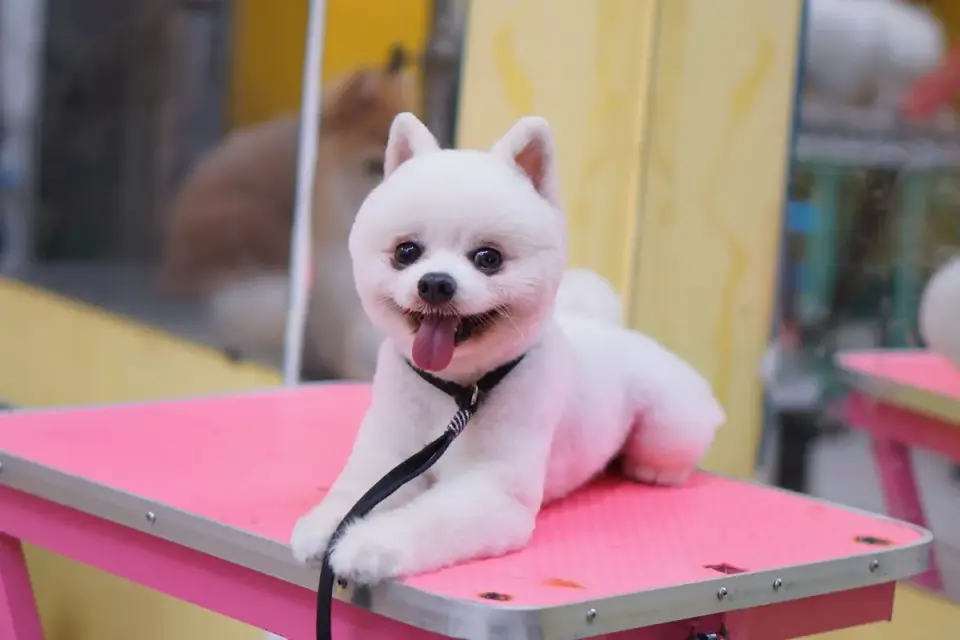
Both coats mat if neglected, but owners who’ve kept both tell me the Lhasa’s coat is coarser and a touch more resistant to tangling day to day, while the Shih Tzu’s softer undercoat mats faster around the ears and armpits. Neither difference changes the bottom line: daily or near-daily brushing and a trim every 6 to 8 weeks if you’re not keeping the coat long. Many owners of both breeds opt for a shorter “puppy cut” specifically to cut grooming time, which is a completely reasonable trade against the show-length coat.
The joint and airway risks worth screening for
This is where the comparison gets clinical, and it’s the part I think gets skipped too often in casual breed-comparison content. Patellar luxation — the kneecap sliding out of its groove — is common in both breeds, and a review in Veterinary Medicine: Research and Reports (Dove Medical Press): Patellar Luxation in Dogs notes it’s inherited as a polygenic trait with no DNA test currently available, which is exactly why an orthopedic exam and an OFA patella evaluation on breeding stock matter more than pedigree paperwork alone. If you’re evaluating a puppy from either breed, ask the breeder directly whether the parents have OFA patella clearances — a hesitant answer is itself useful information.
The Shih Tzu’s shorter muzzle also puts it closer to the brachycephalic airway problems seen in French Bulldogs and Pugs, though less severely. Watch for loud snoring that continues while awake, exercise intolerance in warm weather, or gagging after eating — these may point toward airway resistance that a vet should evaluate rather than dismiss as “just a flat-faced dog thing.” Lhasa Apsos, with their comparatively longer muzzle, tend to breathe more normally, though their heavier eye furnishings can trap debris and irritate the cornea if not kept trimmed back.
For either breed, joint-support conversations come up early — often before a dog shows any visible limp — and that’s a reasonable time to talk with your vet about what actually has evidence behind it versus what’s marketing. Our guide on whether hyaluronic acid actually works for dog joints walks through what the research does and doesn’t support for small-breed patellar issues specifically.
One thing I’ve noticed across a decade of seeing both breeds: the dogs whose owners get ahead of nail and coat maintenance, keep them lean, and screen the knees early tend to stay mobile and comfortable well into their teens. I had a 13-year-old Lhasa Apso in my practice, still doing short neighborhood walks twice a day, whose owner had kept her at a lean 15 pounds her whole life and never let a limp go more than a day without a call. That’s not a guarantee for every dog, but it’s the pattern I’d bet on.
Anxiety and reactivity patterns differ too
Because Lhasa Apsos default toward wariness, they’re more prone to reactive barking at doorbells, delivery trucks, and unfamiliar dogs on walks — not true separation anxiety necessarily, but hypervigilance that can look similar from the outside. Shih Tzus lean more toward genuine attachment-based anxiety when left alone, given how strongly they’re bred to want a person nearby. If either pattern is disrupting your household or the dog’s own comfort, our review of the best calming supplements for dogs covers what’s actually backed by evidence for situational stress, separate from a full behavioral workup, which I’d still recommend starting with your own vet.
So which one fits your household?
If you want a dog that greets every visitor like an old friend and settles happily into a routine household, the Shih Tzu’s temperament makes it the easier first small dog for most families. If you want a more independent, watchful companion that bonds fiercely with one or two people and doesn’t mind being left to nap in a sunbeam, the Lhasa Apso earns its keep. Either way, ask about OFA patella clearances before you commit, and budget for the grooming — that part isn’t optional with either breed.
Whichever one ends up curled on your lap, the next few years of decisions — how you screen the knees, how you manage the coat, how you read the barking — matter more to that dog’s comfort than which name is on the papers.
Frequently asked questions
Can you tell a Shih Tzu and a Lhasa Apso apart by coat color alone?
No — both breeds come in nearly every color and pattern, so coat color won't reliably distinguish them. Muzzle length and temperament are more consistent clues.
Are Shih Tzus or Lhasa Apsos better with children?
Shih Tzus generally tolerate the noise and unpredictability of young children better, since they were bred for indiscriminate friendliness. Lhasa Apsos can do well with older, calmer kids but tend to need more careful introductions.
Do both breeds need the same amount of grooming?
Both need frequent brushing to prevent matting, though many owners of either breed keep the coat trimmed short specifically to reduce daily grooming time.
Sources
- Shih Tzu Dog Breed Information — American Kennel Club (AKC)
- Lhasa Apso Dog Breed Information — American Kennel Club (AKC)
- Patellar Luxation in Dogs — Veterinary Medicine: Research and Reports (Dove Medical Press)