
On this page
Start here: the two-year mark isn’t the finish line
If you’re standing in your kitchen at midnight wondering whether your Lab will ever stop bouncing off the walls, here’s the honest answer: it’s coming, just not on the schedule most people expect. Physical growth wraps up somewhere around 12 to 18 months. Emotional and behavioral maturity — the part that actually makes a dog feel “settled” — takes longer, and for a lot of Labs it isn’t really finished until three or four.
That gap between “grown” and “grown up” is where most of the frustration lives. Your dog looks like an adult, eats like an adult, and still steals socks like a six-month-old. That’s normal, and it’s worth understanding instead of just white-knuckling through it.
In my practice, one of the calls I get most often is from a Lab owner around the 18-month mark, usually sounding a little defeated. I remember a yellow Lab named Otis, about 62 pounds, who’d started counter-surfing again after months of being pretty reliable — his owner had noticed it start the week she went back to working from the office and he was alone more. We talked through his schedule: two 20-minute walks had turned into one rushed one, and his midday mental stimulation had quietly disappeared. We didn’t change anything dramatic. We put a snuffle mat back into his lunch routine and added a second short walk before dinner. Within about three weeks, the counter-surfing dropped off. It wasn’t a training failure — it was an adolescent brain with too much unstructured time on its hands.
What actually predicts when a Lab settles
A few things move the needle more than birthday candles do.
- Size and sex. Larger dogs generally mature more slowly than smaller ones, and Labs sit solidly in the “large breed, later maturity” category.
- Daily exercise and mental work. A tired, mentally engaged dog looks calmer well before true maturity — but that’s management, not maturity itself.
- Consistency of routine. Dogs who get predictable structure through adolescence tend to settle with fewer behavioral detours than dogs on an inconsistent schedule.
- Individual temperament. Some Labs are simply wired calmer from puppyhood; littermates can mature at noticeably different paces.
None of these guarantee an exact date. They shift the odds.
The adolescent stretch nobody warns you about
Somewhere between six and eighteen months, most Labs go through what trainers and behaviorists call canine adolescence — and it can genuinely feel like backsliding. A study published on PMC analyzing owner comments about dogs between 12 weeks and 2 years old found that people frequently described this stretch using language similar to how parents describe teenagers: more testing of boundaries, less predictable responses to known cues, and a real dip in what felt like “good behavior” compared to the puppy months.
That’s not your Lab forgetting his training. Adolescent dogs go through a period where impulse control and stress regulation are genuinely less reliable — the wiring for it is still coming online. Preventive Vet: PreventiveVet describes this teenage phase as a normal developmental stage, not a regression, and recommends treating it with the same patience and consistent structure you’d use with a much younger puppy, even though the dog in front of you looks fully grown.
Here’s the part I tell every client: don’t loosen the rules just because the dog looks like an adult. That’s exactly when structure matters most.
Where I land, and the counterargument I take seriously
My honest recommendation is to plan your training and expectations around 3 to 4 years old as the real finish line for behavioral maturity, not 12 months. I’ve had plenty of clients push back on this — understandably, since a lot of breed pages and forums cite “Labs calm down at two.” The Labrador Site, a resource dedicated specifically to the breed, notes that many Labs do show a noticeable jump in self-control around the two-year mark, and I don’t disagree that two is a real turning point — I just don’t think it’s the whole story.
The counterargument has merit: dogs absolutely show meaningful behavioral shifts at two, and for owners who need a practical milestone to hold onto, that’s a fair one. Where I push back is on treating two as “done.” I’ve watched too many two-year-old Labs backslide during a move, a new baby, or a change in routine — because the underlying emotional regulation was still developing, even if the day-to-day behavior looked settled. Building your expectations around three to four gives you a buffer instead of a disappointment.
Living with the in-between years
Structure and predictable exercise matter more here than any single training trick. A dog who gets his physical and mental needs met consistently through adolescence tends to arrive at maturity with fewer bad habits baked in, simply because he had less opportunity to practice the wrong ones.
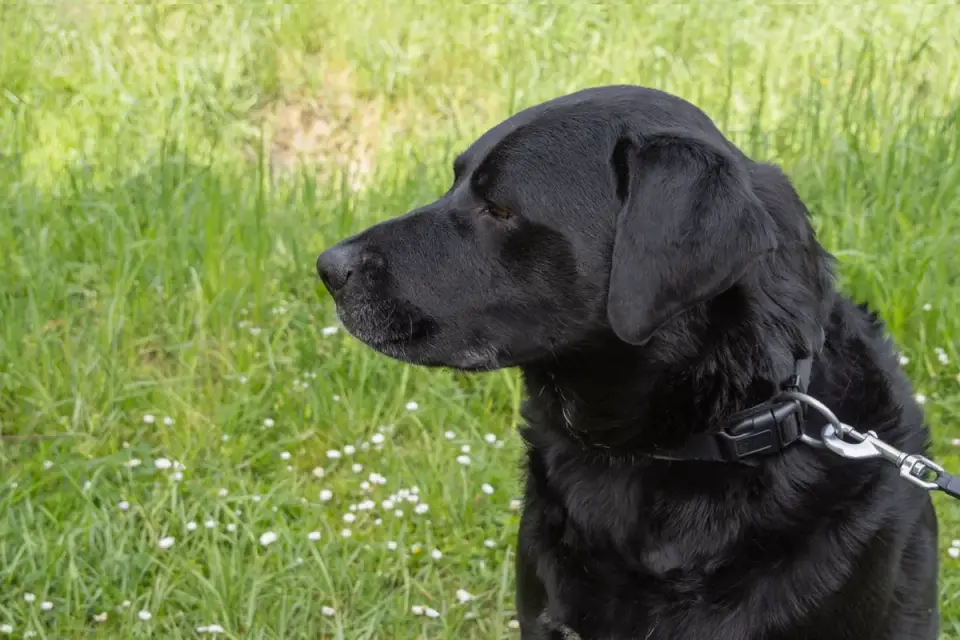
This is also a good window to think honestly about fit — I get a version of this question from owners weighing whether a high-energy Lab even suits their space and schedule, and it’s worth reading through what actually predicts a good match before adolescence tests it, covered well in The Real Test for an Apartment Dog Isn’t Size. If you’re still deciding between a Lab and another active breed, the tradeoffs mapped out in Border Collie vs Australian Shepherd cover a lot of the same energy-and-structure questions from a different angle.
I think back to an older client of mine, a woman with a five-year-old chocolate Lab named Daisy, who told me she almost rehomed Daisy at eighteen months because she was convinced something was wrong with her. Daisy was jumping the back fence, chewing through leashes, ignoring recall she’d known since puppy class. We talked about what adolescence actually looks like in a Lab that size and energy level, adjusted her exercise timing to before the fence-jumping window in the late afternoon, and asked her to just hang on. By three, Daisy was, in her words, “a completely different dog.” She wasn’t a different dog. She’d finished growing up.
The short version
If your Lab still feels like a lot at eighteen months, that’s not a training failure and it’s not a sign you have an unusually difficult dog — it’s roughly on schedule. Expect real behavioral settling to begin around two, with the fuller picture of maturity arriving somewhere between three and four. Keep the structure consistent through the gap, and expect the payoff on the other side rather than the week you turn the calendar page. The dogs I’ve watched come through this the smoothest were the ones whose owners kept showing up with the same routine even when it felt like nothing was working — and then, one ordinary Tuesday, it was.
Frequently asked questions
At what age do Labradors calm down the most?
Most owners notice the biggest shift in self-control around age two, with fuller emotional and behavioral maturity settling in between three and four years old.
Is it normal for a Labrador to get more wild before he calms down?
Yes. Many Labs go through an adolescent phase, roughly six to eighteen months, where impulse control temporarily dips before improving again.
Does neutering or spaying change when a Lab calms down?
Individual temperament, exercise, and routine consistency tend to matter more day-to-day than reproductive status alone; talk with your veterinarian about timing for your specific dog.
Sources
- "It's Like Living with a Sassy Teenager!": A Mixed-Methods Analysis of Owners' Comments about Dogs between the Ages of 12 Weeks and 2 Years — PMC (National Institutes of Health)
- Tips for Managing the Teenage Dog Phase With Your Puppy — Preventive Vet
- Labrador Behavior By Age - What To Expect, And When — The Labrador Site