
On this page
The pacing starts after the house goes dark, and you are left listening from the hallway.
If you are deciding tonight whether to leave a light on, use this short checklist first. It reflects how I think in movement, comfort, and quality of life, reviewed here in my role as Mitch McKee, DVM.
- Keep one low, warm light at floor level along the path to water and the door, not shining into the bed
- Make the footing predictable with a runner, a mat edge, and no clutter between bed, water, and door
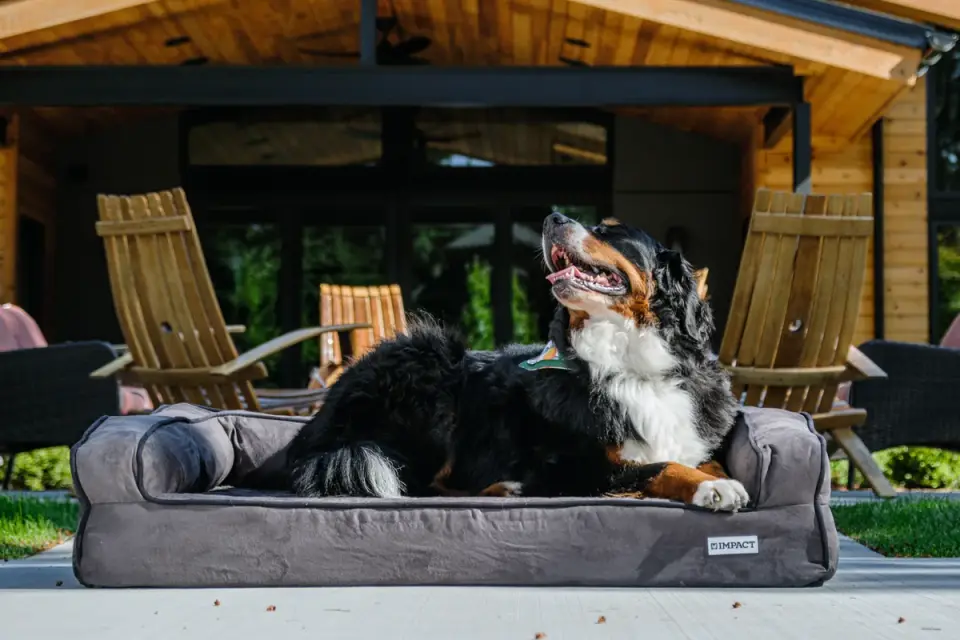
- Give the body a place to lean with a supportive bed against a wall, in a familiar spot
- Keep sound and light low and steady rather than bright or changing through the night
- Track pattern for one to two weeks before adding a calming supplement for nighttime restlessness
I am thinking of a 13-year-old, 68-pound retriever mix who started whining at 2 a.m. after his family moved his bed to a darker hallway. He would stand, shift his weight off his stiff hind legs, then take two careful steps and stop because the floor felt unfamiliar under his feet. His owner left a low, warm light near the baseboard and a non-slip runner to his water bowl. Three weeks in, the owner reported he still rose once to drink, but he laid back down without circling the kitchen. The decision was not about sedation. It was about whether he could see where his body was going.
Start with the fork: light the path or change the routine
Meet older dogs and their people where they are. Most senior dogs do not need a brighter house. They need fewer surprises between lying down and getting up again.
Aging eyes adjust more slowly to dark, depth perception narrows, and stiff hips or a sore spine make a small slip feel larger. When the dog cannot confirm where the floor ends and the rug begins, the brain stays alert. Alertness looks like pacing, whining, standing in corners, or following you from room to room.
That is why I place movement and comfort before ingredients. A nightlight may help support orientation, which may help maintain a calmer overnight routine. Light does not fix pain.
If your dog also startles more at sounds he once slept through, that overlap matters. Read Why Your Senior Dog Startles at Sounds He Used to Sleep Through for how hearing shifts and vision shifts often arrive together.
Why darkness feels rougher on an older body
During the day, an older dog uses vision, whisker and foot feedback, memory of the layout, and small sounds to move with confidence. At night, two of those supports drop away.
The result is hesitation at thresholds, missed footing on hardwood, and trouble finding the bed again after a drink. Dogs with cognitive change may also forget the sequence of stand, drink, turn, and lie down. A dim reference point gives the sequence a shape.
Another pattern stays with me. An 11-year-old, 22-pound terrier mix was waking and trembling, so his person tried a bright plug-in floodlight and a white-noise machine turned high, hoping more input would settle him. By day 10, the dog was avoiding his bed and panting near the back door instead. The light washed out the room and flattened shadows, and the sound covered the small household cues he used to orient. When they swapped to a dim amber glow at floor level and moved his orthopedic bed against a wall where he could lean, he began to stay in one place longer. The tradeoff was clear. More stimulation did not mean more comfort.
The strongest counterargument is fair. Any light can affect sleep depth, and many owners worry about melatonin and circadian rhythm. That concern is why I do not recommend a bright overhead or a cool-white bulb all night. For background on what that hormone pathway does and does not do in dogs, see Melatonin for Dogs: What It Actually Regulates, and Where the Evidence Runs Out.
I still land on a low path light because safety and orientation usually matter more for quality of life than total darkness, once the sleeping area itself stays dim. Keep the glow low, warm, shielded, and outside the direct line of sight.
What a nightlight can settle, and where calming support fits
A nightlight supports the inputs a senior dog can still use. It marks edges, shows the runner, outlines the water bowl, and keeps the trip to the door from becoming a search.
It does not replace pain care, toileting access, or a plan for confusion and anxiety. If restlessness clusters around storms, travel, vet visits, or evenings with guests, a broader calming plan may help support relaxation alongside the environmental changes. For how different formulas are built, see The 5 Best Calming Supplements for Dogs, Reviewed by a Vet (2026).
Keep expectations plain when you read labels. As summarized in MDPI, “For the remaining species, evidence is derived mainly from preclinical studies or traditional use.” As noted in Cureus, “A systematic review analyzed multiple RCTs and concluded that ashwagandha has a moderate positive impact on stress reduction and cognitive performance.” In a Molecular Psychiatry review, data were limited, “except for one study on psychotic anxiety (SMD = 0.54; 400 mg/day for 8 weeks)”.
Those lines keep me conservative. I treat botanicals as possible support for a settled routine, not as proof of sleep through the night.
When calm still does not come
Then there is the edge case I watch for. A 15-year-old, 41-pound border collie mix with advancing nuclear sclerosis would pace toward any light and then stare, restless rather than settled. Her pupils were slow to adjust, and a cool-white bulb near her bed seemed to leave her squinting by morning. Her family moved the nightlight into the hallway, kept her sleeping area dim, and added a textured mat so her feet could find the bed edge without vision. Within two weeks, the staring eased and she chose the bed on her own. For dogs like her, the light belongs on the path, not in the eyes.
Going forward, hold the plan for seven to fourteen nights. Note wake times, slips, vocalizing, and whether your dog resettles alone. Bring that pattern to your veterinarian, along with any new panting, thirst, house soiling, or daytime confusion. Comfort grows from small, steady inputs, and a quiet path through the dark is often the first one that holds.
Frequently asked questions
Should the nightlight stay on all night for a senior dog
A low, warm path light can stay on if the sleeping area itself stays dim and the dog resettles more easily. If he avoids the bed, squints, or seems more alert, move the light farther from the bed or try a dimmer position.
What color or placement works best
Most older dogs do best with a warm, shielded glow at floor level along the route to water and the door. Keep it off the face, off the bed surface, and away from reflective floors.
When should I call the veterinarian about overnight restlessness
Call promptly for sudden change, nightly vocalizing, panting, increased thirst or urination, house soiling, limping, or daytime confusion. Those signs point to pain, medical causes, or cognitive change that need direct care.
Sources
- A 2026 Biomedicines review of chamomile evidence — MDPI
- A Cureus systematic review of ashwagandha for stress — Cureus
- A Molecular Psychiatry review of L-theanine — Molecular Psychiatry