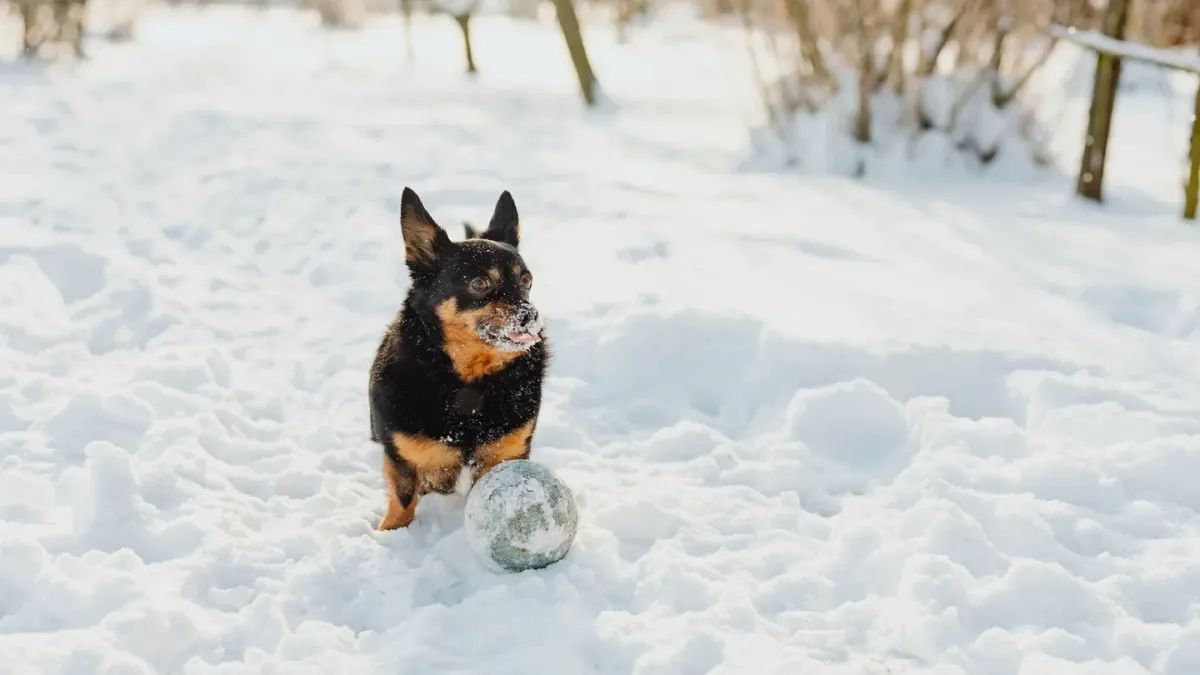
A ball gives your dog three good things at once — something to chase, something to carry, and a reason to bring it back to you.
Picture the late-evening hallway toss. Slippers on, dog already vibrating, ball dropped at your feet for one more throw. That loop holds the whole answer.
Is your dog chasing the ball, or chasing time with you?
Start here, because this fork decides how you play. If your dog lights up only when you throw, the social payoff matters more than the object. If your dog noses balls out of the basket alone, motion and mouth feel matter more.
Pick the social chaser or the solo roller first. For the social chaser, keep sessions short and person-led. Toss, pause, ask for a drop, reward with another toss. For the solo roller, offer rolling rather than throwing — push a soft ball 10 to 15 feet across carpet and let your dog pounce without a long sprint.
Both types love predictability. Same spot, same cue to start, same cue to stop. Dogs settle faster when play has an off switch.
Sabrina in Pasadena, Texas lives with Stewie, a 5-year-old neutered male Dachshund mix who would bark at the hall closet until a ball rolled out. The sign that changed things was panting after only five minutes of hard tile fetch. The choice she weighed was longer fetch versus calmer play. She switched to three 3-minute carpet rolls with rest between, about 20 feet total per roll, and Stewie started dropping the ball instead of guarding it.
For more low-impact ideas that fit that pattern, see Best Toys for Apartment Dogs with Limited Space and Enrichment Toys for Mental Stimulation: What Actually Helps a Bored Dog.
Why does a rolling ball switch on that old chase circuit?
A rolling ball looks like something worth following. Movement catches the eye, the bounce breaks pattern, and the grab-and-carry finish satisfies the mouth.
VCA Hospitals notes that regular play sessions support healthy activity and learning, including fetch-style games paired with rest and training cues. Use that frame: chase, then think. Throw, then ask for a sit or hand touch before the next throw.
Texture adds a second pull. Many dogs prefer a ball with a little give that they can grip without jaw strain. Size adds a third pull. A ball your dog can carry, but never swallow, keeps confidence high.
Food and supplement context matters here, in proportion. Weigh what a supplement can realistically do for diet, mobility, and recovery: balanced nutrition and steady conditioning may help support joints for an active dog, while no powder or chew can make up for daily marathon fetch on slick floors.
The American Veterinary Medical Association encourages matching exercise to age, breed, and health status in its dog-care guidance. That is the right filter for ball love. A young retriever mix may thrive on short retrieves with training breaks. A senior dog or a short-legged breed often does better with nose-level rolls and find-it games.
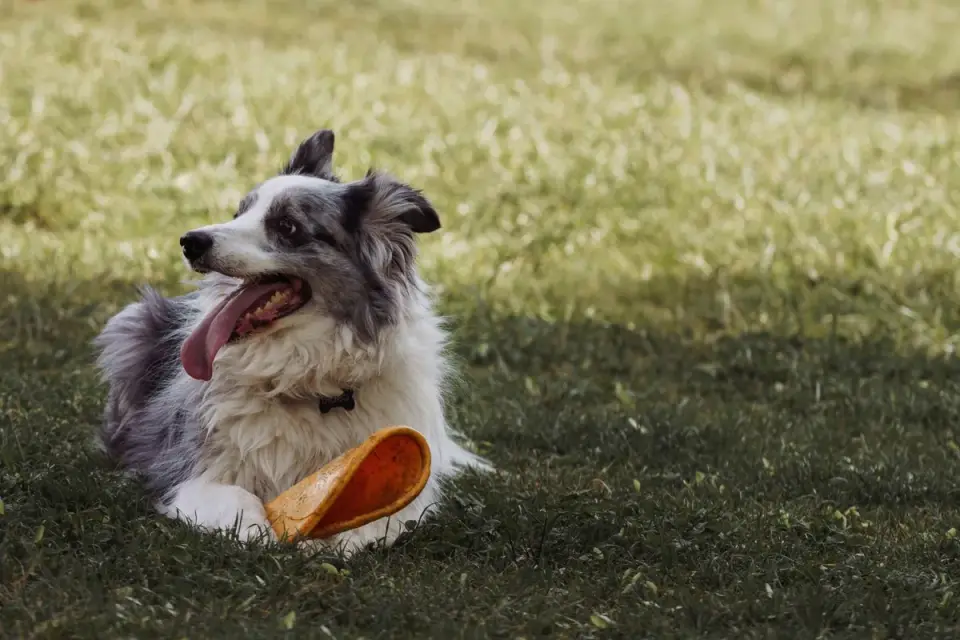
Vets often see the same sore pattern after weekend fetch binges — stiff the next morning, less eager to climb stairs. Shorter sets prevent that slide.
How do you keep ball play easy on joints and teeth?
Keep the routine doable tonight.
Choose the right ball. Pick a smooth, one-piece ball slightly larger than your dog can fit behind the canines. Skip cracked balls, peeling covers, and small racquetballs for medium and large dogs.
Set the field. Play on grass or carpet, not wet pavement. Keep throws low and short so your dog runs in a line, not leaping and twisting.
Run a calm set.
- Warm up with a 2-minute sniff walk.
- Roll or toss 3 to 5 times, then pause.
- Ask for a drop into your hand, not a chase to pry it out.
- End while your dog still wants one more.
- Offer water and a quiet chew or mat rest.
Retire the ball on schedule. If you can dent it with a thumbnail and see flakes, cracks, or a squeaker poking through, toss it. For sizing and material checks before you buy, compare notes in Best Fetch Toys for Dogs: How to Choose Balls, Bumpers, and Launchers and Best Toys for Small-Breed and Toy Dogs.
When is this advice the wrong call? If your dog coughs, limps, guards hard, or fixates and cannot disengage, stop the ball game. Choose scent work, licking enrichment, or a leash sniff walk instead, and check in with your veterinarian about pain, dental soreness, or anxiety driving the fixation.
Dogs love balls because chasing taps into predatory instinct and a bond with their people. Meet both needs in smaller doses — a little chase, a soft carry, a warm handoff back to you — and what toy will make tomorrow night feel calmer for both of you?
Sources
- Dog Care — American Veterinary Medical Association