On this page
A 18-month-old Belgian Malinois I followed up with last spring had started pacing the fence line every evening at 6 p.m., vocalizing when the household settled. His owner, a nurse working 12-hour shifts, was weighing two paths: add a second 45-minute run before dinner, or split that time into short training reps with a food-dispensing toy and a tug reward. We chose the second path for two weeks. His evening pacing dropped from roughly 40 minutes to under 10 minutes, and his body weight held steady at 68 pounds. That fork — more mileage versus more job-like work — is where most high-drive toy decisions actually get made.
Why drive needs a job, not just more motion
Working breeds were selected for sustained, sequential work: scent, chase, grip, carry, search. That circuitry runs on arousal and recovery, not just calories burned. High-intensity fetch raises sympathetic tone quickly, and without a clear off-switch it can leave a dog panting, scanning, and quicker to react rather than settled.
I weigh what any tool — food, supplement, or toy — can realistically do for diet, mobility, and recovery. A toy cannot remake a diet or rebuild conditioning, but it can shape how energy is spent and how recovery happens. The American Veterinary Medical Association frames toy selection the same way I do in practice: match size and chewing style to the toy, supervise play, and remove damaged pieces before they become ingested foreign material.
For Malinois, Dutch Shepherds, Border Collies, German Shorthaired Pointers, and similar dogs, I prioritize toys that create a beginning, middle, and end to effort.
Match the toy to the motor pattern in front of you
A Border Collie in a downtown condo tried to solve boredom with a large, very hard ball in a hallway. The owner meant well — three walks a day plus that ball — but the dog started shoulder-checking walls, mouthing the leash on night walks, and shredding the ball casing within four nights. The failure was not effort. The toy rewarded only chase and impact, in a 30-foot space, with no sniffing, carrying, or problem-solving. Once we retired the hard ball and rotated in a snuffle mat, a rubber food puzzle, and short flirt-pole sessions with a sit-to-start rule, leash mouthing eased within a week.
The American Kennel Club describes that second category well: sniffing, licking, chewing, and novel problem-solving count as mental enrichment, not just physical tiredness. In my experience that distinction matters most for herders and sporting dogs, who fatigue more completely from nose work than from repetition.
What I look for by pattern:
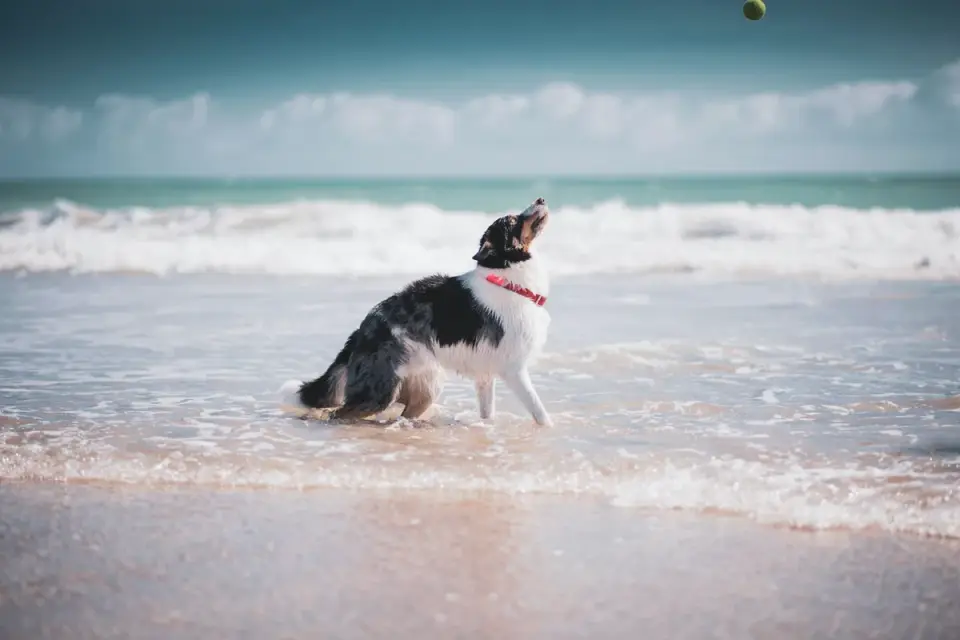
Tug and grip dogs do best with long, soft-tug toys with a handle that keeps hands clear, used in 2- to 3-minute reps with a trained out. Search and nose dogs do best with snuffle mats, scatter feeding on grass, and beginner scent boxes. Retrievers and carriers do best with soft bumpers and floating dummies rather than small, ultra-bouncy balls that encourage frantic jumping.
For ideas that translate well to small spaces, our guide to Enrichment Toys for Mental Stimulation: What Actually Helps a Bored Dog breaks down food puzzles and sniffing work, and Best Toys for Apartment Dogs with Limited Space covers low-noise rotation.
What holds up, and what I avoid for power chewers
Durability is not the same as safety. Very hard nylon, compressed bone, and heavy antler-type chews can fracture carnassial teeth in aggressive chewers, especially in young adult working dogs with high jaw pressure. I avoid anything that does not give slightly under a thumbnail, anything small enough to lodge behind the canines, and any toy with sewn-on eyes, squeakers, or rope strands that loosen.
The ASPCA guidance on safe toys emphasizes a similar filter: supervise, size up, discard torn soft toys, and avoid toys with small removable parts. I follow that closely with high-drive dogs because they dismantle faster than the label assumes.
My practical rotation is short. Keep one rubber food-dispensing toy for meals, one tug for training rewards, one sniffing option, and one retrieve object. Inspect seams and edges weekly. If you want fetch mechanics without the joint load, Best Fetch Toys for Dogs: How to Choose Balls, Bumpers, and Launchers lays out sizing and launcher tradeoffs, and Easy DIY Dog Toys You Can Make at Home has safer starter options for supervised sniffing games.
A 4-year-old, 52-pound German Shorthaired Pointer who swims most weekends shows where the usual retrieve advice has to bend. On land she could chase a bumper for a half-mile without tiring, and her owner worried she needed longer throws. In water we did the opposite: five short 20-yard water retrieves with a soft floating dummy, then a leashed walk and a frozen food toy for cooldown. Total water distance was under 200 yards, yet she settled in the car within 15 minutes instead of whining for an hour. For this dog, grip plus swimming plus chewing downshifted arousal better than extra mileage.
Where I land
Choose one toy for nose, one for structured tug, and one for calm chewing or food work. Use fetch in short, cued sets. End with sniffing or licking.
That evidence would change my mind: controlled data showing hard-chew toys reduce tooth fracture risk rather than raise it, or showing extended high-arousal fetch improves next-day rest without added impulse behaviors. The current evidence does not show that, so I stay with job-like work and supervised rotation.
Sources
- Selecting Safe Toys for Pets — American Veterinary Medical Association
- General Dog Care — ASPCA