On this page
A low set of carpeted steps by the couch can keep a stiff senior dog from taking that hard nightly jump.
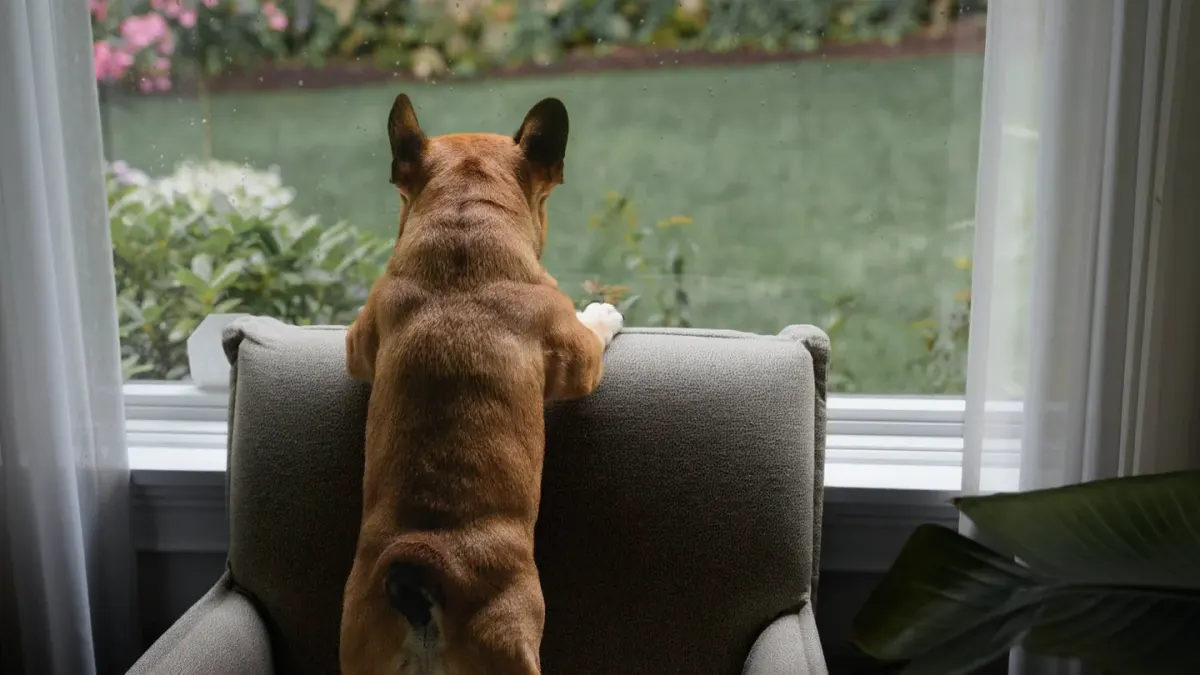
If your old dog stands at the couch and whines instead of jumping, what helps most tonight?
That pause is information. For an aging dog, a straight jump loads shoulders, elbows, hips, and spine in one sharp moment, and stiffness or weakness can make that moment feel unsafe. Shallow, steady stairs with grip on every tread may help support comfortable movement around the home.
Tonight, decide: build, lift, or block
If your dog still climbs but hesitates, slips, or thumps down hard, build low stairs for one spot and block the jump. If your dog freezes, cries, falls, newly drags toes, or cannot bear weight, skip the project and call your veterinarian first. Pain and neurologic weakness need an exam before any training.
Clayton noticed it with Goldy, his 11-year-old neutered Rottweiler mix in Oxnard, California. Goldy would pace to the bed, rest his chin on the mattress for a full minute, then walk away to the cool floor. Clayton measured the bed at 28 inches and decided to build for that one place only, rather than fixing every couch and car at once.
That single-station approach works well. Pick the surface your dog uses most, build to fit it, and teach there.
What makes homemade steps feel safe
Build for confidence, not carpentry pride. Vets often see senior dogs refuse steps that are tall, narrow, slick, or shaky, even when their joints could manage an easier design.
Do this in order:
- Keep rise shallow. Aim for 4 to 6 inches per step for most aging dogs, lower for small or very stiff dogs.
- Make treads deep. Aim for at least 10 to 12 inches deep so the whole paw can land.
- Make width generous. At least as wide as your dog’s chest, plus 2 inches.
- Add sides. A 3- to 4-inch lip or rail helps a wobbly dog feel guided.
- Remove all wobble. Set the unit against the furniture, add non-slip feet, and test it with firm hand pressure before your dog tries it.
- Cover every step. Use low-pile carpet, stair tread tape, or rubber matting. Staple or glue edges flat so no lip catches a toenail.
For context on why some seniors stiffen earlier than others, the Plooshy Aging guide explains how biological and chronological age can differ.
Build shallow steps in one afternoon
Gather 3/4-inch plywood, wood screws, wood glue, carpet or rubber tread, non-slip furniture pads, sandpaper, and a saw and drill.
Measure the landing height, then divide by your chosen rise. A 20-inch couch with a 5-inch rise means four steps. Cut two side panels as stair triangles, cut tread boards and riser boards to your width, then screw and glue each box closed.
Set the stairs in place and check three things. No rocking. No gap wider than a paw between stairs and furniture. No slick spot when you press with a socked foot.
Cover with washable material. Older dogs drool, shed, and sometimes leak urine, so choose a cover you can remove and wash. Many of the same safe-material habits from the Plooshy Home Projects guide apply here, with no exposed staples, no strong glue fumes, and no loose fabric folds.
The VCA Hospitals guidance on arthritis reminds owners to pair home changes like ramps and steps with weight control and veterinary pain planning, since joint comfort depends on the whole routine.
Teach the climb without pressure
Keep sessions short and calm. Lure up one step, reward, then step back down. Then two steps. Then the full climb.
Place a high-value treat on each tread the first day. Stand beside the stairs, not in front of them. Keep the leash off so your dog never feels trapped. If your dog jumps off the top instead of walking down, lower the reward to the second step and practice down-only trips for two minutes, twice a day.
Honeybun, a 13-year-old spayed English Springer Spaniel living with Tamara in Cape Coral, Florida, learned best this way. She would climb two carpeted steps for cheese, then hop the last 10 inches. Tamara added a fourth shallow step and moved practice to morning, when Honeybun was less tired, and within five days she walked the full set both ways.
Slow is learning.
When stairs are the wrong call, choose lifting or a ramp instead. Dogs with advanced hind-end weakness, recent surgery, vestibular signs, or uncontrolled pain often do worse with steps. In that case, block furniture access with a pen or closed door, use a supportive harness to assist, and ask your veterinarian about a low-slope ramp and a comfort plan.
Build low, grip every tread, and let comfort set the pace.
For related context, read Are Onions Toxic to Dogs? What I Tell Worried Owners at Midnight.
For related context, read Biological Age vs. Chronological Age in Dogs: What Actually Predicts How Your Dog Is Aging.
Sources
- Arthritis in Dogs — VCA Hospitals
- Biological Age vs. Chronological Age in Dogs: What Actually Predicts How Your Dog Is Aging — Plooshy Aging
- Easy DIY Dog Toys You Can Make at Home — Plooshy Home Projects