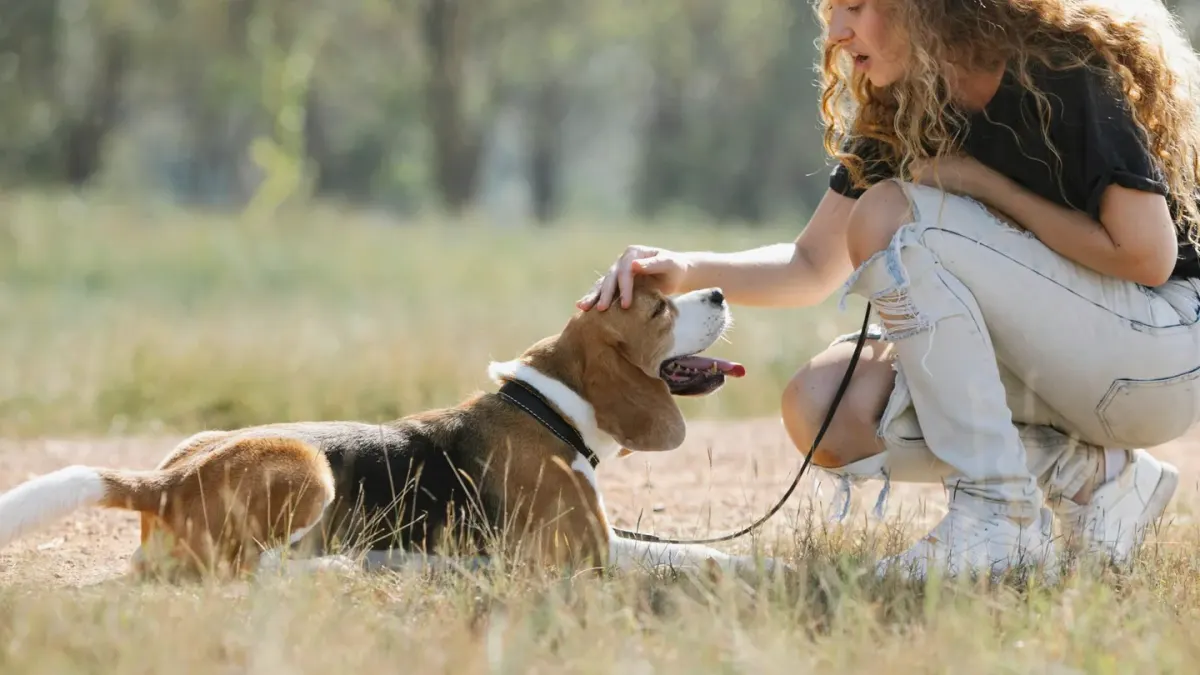
Sitting outside with an older dog on a hot afternoon can feel worrying when the panting does not settle, even after you move him into the shade.
A dog shade canopy may help support comfort, but only when it blocks sun without trapping warm air around the body. Dogs release most heat through panting and through limited sweating at the paws, so still air under a low cover holds heat close to the chest and belly. The American Veterinary Medical Association notes that shade and water help during warm weather, yet dogs can still overheat quickly when ventilation is poor or humidity is high.
Sara noticed this with Doudou, her 8-year-old neutered male Portuguese Water Dog mix in Stamford, Connecticut. He would lie under a low beach cover for about 20 minutes, then start panting faster and move back toward the sunny steps. In practice, vets often see this pattern in older dogs. The shaded spot looked cooler, but the air beneath it had gone still and damp.
Why covered air can feel hotter to an aging dog
Panting moves warm, moist air out and draws cooler air in. When the space under a canopy is low, closed on three sides, or draped to the ground, that moist breath stays near the nose and chest. Evaporation slows. Body temperature may stay elevated even though direct sun is blocked.
Aging changes the margin. Older dogs often carry more joint stiffness, carry extra weight, or have heart or airway disease that makes sustained panting tiring. Brachycephalic mixes such as Taina, a 7-year-old intact female Brussels Griffon mix from Cary, North Carolina, whose owner Neil watches her breathing effort closely on walks longer than half a mile, show the same sensitivity earlier. VCA Hospitals describes excessive panting, restlessness, drooling, and warm skin as early signs that heat is building faster than the dog can release it.
This is why open shade usually supports rest better than enclosed shade. A tree, a high sail, or a raised canopy lets rising heat escape and lets a light breeze replace it.
Setting a canopy so air keeps moving
Choose height and openness first, fabric second. The underside should sit well above the dog’s head when standing, with at least two sides fully open. A light-colored, breathable shade cloth that blocks a large share of ultraviolet light while letting air pass through tends to stay more comfortable than a dark waterproof tarp pulled tight.
Place the canopy where afternoon air already moves, not in a corner between a fence and a wall. Leave room for the dog to step fully out without touching hot pavement. Concrete and deck boards can hold heat long after the air cools, so a cot, grass, or a light mat underneath often supports steadier rest. For dogs who spend much of the day indoors, the same need for open resting space applies to choices like best toys for apartment dogs with limited space, where floor airflow and easy movement matter.
Water belongs inside the shaded edge, not in full sun. Offer small drinks often rather than one large bowl that warms through the afternoon. Short shade breaks work better than one long stay outside.
When to come inside instead
A canopy supports comfort. It does not treat heat illness.
Bring the dog inside to cool air if panting stays rapid after five to ten minutes of rest in open shade, if drool thickens, if the tongue looks very red or the gums look pale, or if walking looks unsteady. Wetting the paws and belly with cool water and calling a veterinarian promptly is safer than waiting under cover. Dogs with heavy coats or crowded airways need a lower threshold for coming in, much like the careful matching involved in best hypoallergenic dog breeds for allergy sufferers, where breathing comfort shapes daily life.
What would change this guidance is controlled evidence that a particular enclosed canopy fabric lowers a dog’s core temperature as well as open shade does. That evidence does not yet exist. Until it does, height, side openness, and the dog’s breathing remain the better guides.
A simple bottom line to carry outside: if you cannot feel a light breeze at your dog’s nose level under the cover, it is not the right resting spot for the afternoon.
Frequently asked questions
Is a dog shade canopy enough on a very hot day?
Shade alone is often not enough. Open airflow, cool water, short time outside, and access to indoor cooling support comfort more reliably, especially for older or flat-faced dogs.
What kind of canopy setup stays most comfortable?
A high cover with open sides, placed where air moves, usually stays more comfortable than a low or fully enclosed cover that holds warm, damp air near the dog.
Sources
- Warm Weather Pet Safety — American Veterinary Medical Association