
If your dog circles at midnight and sighs down hard, the bed height matters as much as the cushion.
That decision is simple to test at home. Watch how your dog gets on and off. A dog who steps up cleanly and stretches out may rest well on an elevated wood dog bed. A dog who hesitates, slips, or needs two tries to lie down is asking for a low bed on the floor.
Which dog rests well up off the floor
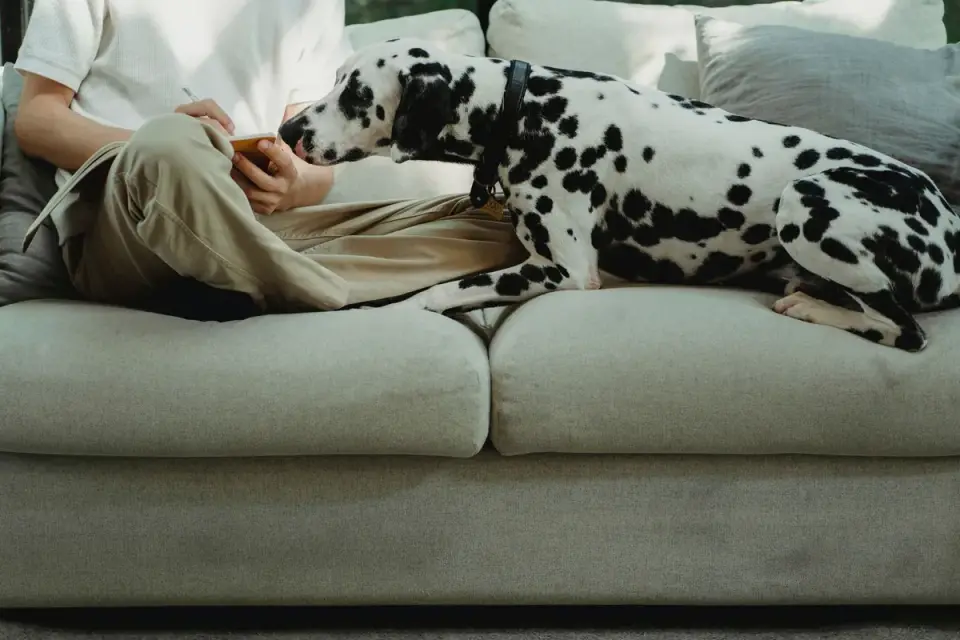
Rhoda, a 4-year-old spayed female shepherd mix living with Kristina in Portland, Oregon, tells this clearly. She jumps onto the couch in one motion, spins once, and sleeps stretched on her side for three hours. For a mobile adult dog like her, elevation brings airflow underneath, keeps bedding off a cold floor, and gives a sturdy wood edge to lean against.
Check for this fit in three steps. Measure your dog nose to tail base, then add six inches for length. Set the frame where you plan to keep it and watch three full get-ups and lie-downs. Look for quiet joints, even weight on all legs, and no panting after settling.
Why a wood frame may help support steadier rest
Wood does not hammock like fabric alone. A tight sling or low mat inside a square frame stays level, so pressure spreads across the shoulders and hips rather than pooling in the middle. Vets often see restless young and middle-aged dogs settle faster when the surface does not shift under them.
VCA Hospitals describes how arthritis can make rising, climbing, and settling painful for dogs, which is why entry height deserves as much attention as cushion thickness. Keep the frame low, sand edges smooth, tighten bolts monthly, and place a thin washable pad on top rather than a deep pillow that raises the step.
Dogs that chew benefit too. Wood rails survive teeth better than plastic legs, and cool air below may help support comfort in warm rooms. If your home stays drafty in winter, add a rug underneath and move the frame off tile.
When climbing hurts more than it helps
Nana, a 9-year-old spayed female English Springer Spaniel living with Brent in El Paso, Texas, changed her routine in about two weeks. She paused at the couch, placed her front feet up twice before lifting her hind legs, and chose the rug instead of her raised bed four nights in a row. That pattern points to stiffness, not stubbornness.
Senior dogs with reduced mobility often do better with a low-entry bed on the floor. The American Kennel Club notes that stiff joints, limping after rest, and reluctance to climb are common signs linked with arthritis, and soft low bedding can ease the effort of lying down and standing. Lower the sleeping surface to two to four inches, keep water within ten feet, and leave a clear path for nighttime bathroom trips.
Stay with floor rest if your dog slides on dismount, cries when lifting hind legs, breathes fast after settling, or sleeps less than an hour before moving. Ask your veterinarian about pain assessment and joint support, since bed choice may help support comfort but does not treat the underlying condition.
If you already love the look of wood, keep the frame for daytime lounging and place an orthopedic floor bed beside it at night. Many older dogs choose the easier option on their own.
Will your dog sleep more soundly if getting into bed takes no effort at all. For seniors like Nana, that low, stable spot is often the kindest answer.
Learn which apartment-friendly routines keep rest calm in The Real Test for an Apartment Dog Isn’t Size, and find quiet indoor play that does not strain joints in Best Toys for Apartment Dogs with Limited Space.
Frequently asked questions
Is an elevated wood dog bed good for arthritis?
Often no. The step up and down can add strain to stiff shoulders, elbows, and hips. Most seniors rest with less effort on a firm, low floor bed that lets them walk on without climbing.
What height is safe if I keep an elevated bed?
Keep it as low as practical and watch three full repetitions. If your dog cannot step on and off smoothly without pausing, panting, or slipping, move sleep to the floor and use the frame only for supervised rest.
Sources
- Arthritis in Dogs — VCA Hospitals