On this page
Late July at the lake, everything looks easy until the tennis ball sinks six inches under green water and your dog starts diving for it. That is the real decision here: do you buy for fetch on grass that sometimes gets wet, or do you buy for true swimming where the toy must stay up, stay visible, and stay kind to teeth and gut?
I weigh what a toy can realistically do for diet, mobility, and recovery the same way I weigh a supplement. A floating toy may help support safe activity and recall on water, but it cannot make open water safe by itself. Supervision, fit, and material do the heavy lifting.
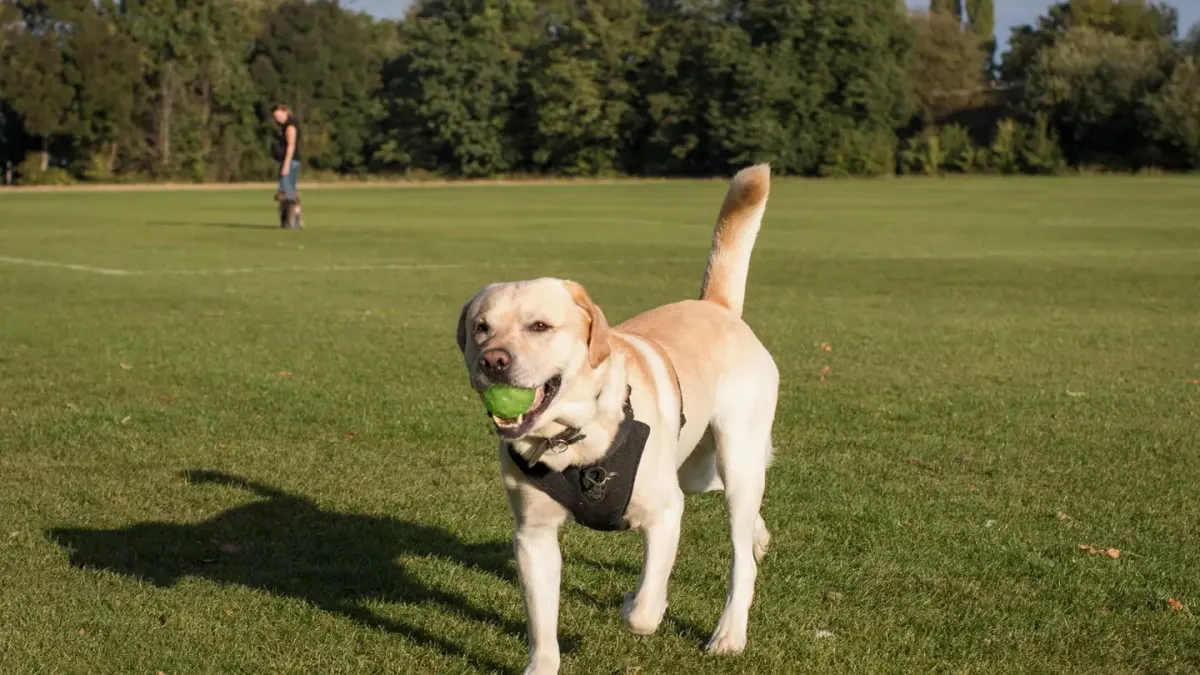
A 4-year-old 62-pound Labrador came up in conversation last summer after a weekend at a reservoir. He was a strong swimmer, and his owner had tossed a standard felt tennis ball about 15 feet offshore. The ball waterlogged in under two minutes, slipped just below the surface, and the dog made four repeated head-under dives trying to grab it. The owner worried about swallowed water and coughing afterward, and we talked through switching to a high-visibility foam bumper sized for a large mouth and limiting retrieves to short, watched sets.
Start with where you will throw it
Buy for your water first. A calm pool allows a wider, softer disc or dumbbell shape. A lake or river demands high buoyancy plus a neon color you can track in chop and glare. For moving water, keep throws short and upstream of you, and skip retrieving entirely if current, cold, or boat traffic adds risk. The American Veterinary Medical Association reminds owners that open water brings fatigue, sun, and drowning risk even for athletic dogs, so fit the toy to a swim plan you can control.
Check your fetch basics too if your dog lives for retrieving, because mouth fit and throwing distance on land carry over to water in our guide to Best Fetch Toys for Dogs: How to Choose Balls, Bumpers, and Launchers.
What actually stays up and stays seen
Test buoyancy before you trust it. Drop the toy in a tub or pool edge and watch for a full minute. You want it riding high with color above the waterline, not wallowing half-submerged. Closed-cell foam and hollow natural rubber tend to ride high; fabric-covered foam and felt tennis material tend to soak through and sink.
Choose neon yellow, orange, or bright pink with a contrasting stripe. White and blue disappear in foam and sky reflection. Favor one solid piece with no glued eyes, squeakers, or rope tails that can tear off and be swallowed. Rinse after lake or salt use and air-dry fully.
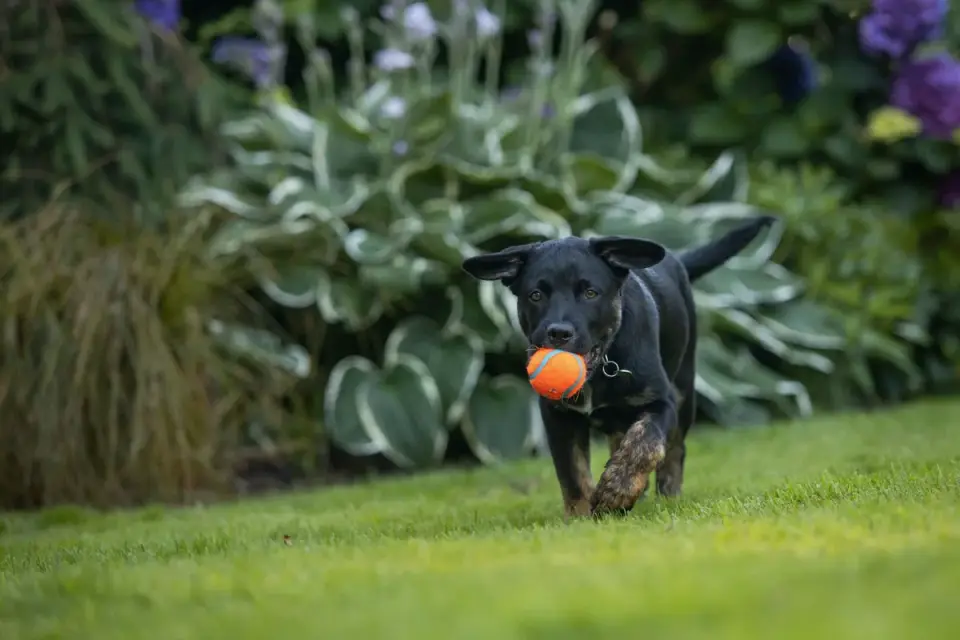
A stocky 3-year-old 38-pound mixed-breed dog showed the tradeoff well. His owner bought a heavy rope-and-plastic bumper because it floated high and was easy to see. For three retrieves it worked. On the fourth, the rope frayed, the dog chewed and swallowed several fibers, and the evening ended with gagging and a call about foreign material. We retired that design and moved to a one-piece rubber bumper that floated a little lower but had nothing to peel off, plus a rule to trade for a treat rather than play tug in the water.
Fit it to mouth, jaw, and swim style
Size the toy to the dog in front of you. Small breeds need a light bumper they can carry with the head up; an oversized toy forces the nose down and invites swallowing water. Large, hard-mouthed dogs need a thicker bumper or ball that cannot wedge behind the canines. Hard plastic protects buoyancy but punishes teeth, so favor a little give when you press with a thumb.
That sizing care matters even more for little dogs, as we outline in Best Toys for Small-Breed and Toy Dogs. And if your dog tends to lock onto one bumper and will not drop it on shore, our notes on Is It Normal for a Dog to Fixate on One Toy? can help you build a clean water drop.
Watch the swim. A dog swimming with mouth open, coughing, or tiring quickly should be done for the day. The Centers for Disease Control and Prevention notes that dogs can pick up gastrointestinal germs from contaminated water, so bring fresh drinking water, discourage drinking lake or pool water, and rinse afterward.
Keep sessions short.
A 9-month-old 21-pound spaniel puppy bent the usual advice last month. Her owner wanted long lake retrieves to burn energy, but the puppy tired after two short swims and started mouthing and gulping at the bumper instead of carrying it. We flipped the plan entirely: no distance throws for six weeks, only wading-depth tosses where she could stand, plus rest and fresh water between reps. Her carry improved because we stopped asking a young, tired swimmer to do an adult dog’s job.
Where I land — and when to skip the throw
For most pet dogs swimming in calm water with supervision, I land on a one-piece, high-floating foam or hollow rubber bumper in neon color, fitted so the dog carries with head high. It may help support safer retrieves and cleaner drops than a waterlogged ball, without pretending to fix fatigue or water quality.
Skip the water toy when the dog is exhausted, the water is rough or very cold, the shoreline has sharp shells or hooks, or the dog will dive under to chase a sunken toy. Sit that one out, leash up, and walk instead.
Frequently asked questions
Why do regular tennis balls sink for dogs?
Felt and rubber tennis balls soak up water, ride low, and slip under the surface where dogs dive and swallow water trying to grab them. Choose closed-cell foam or hollow rubber rated to float high.
What color water toy is easiest for dogs and owners to see?
Neon yellow, orange, or pink with a contrasting stripe stays visible in chop and glare. Avoid white, light blue, or clear toys that blend into foam and sky reflection.
How do I keep lake fetch safe?
Keep throws short, bring fresh water, discourage drinking lake water, rinse after swimming, and stop at coughing, open-mouth swimming, or fatigue. Supervise every retrieve.
Sources
- Warm Weather Pet Safety — American Veterinary Medical Association
- About Pet Dogs — Centers for Disease Control and Prevention