On this page
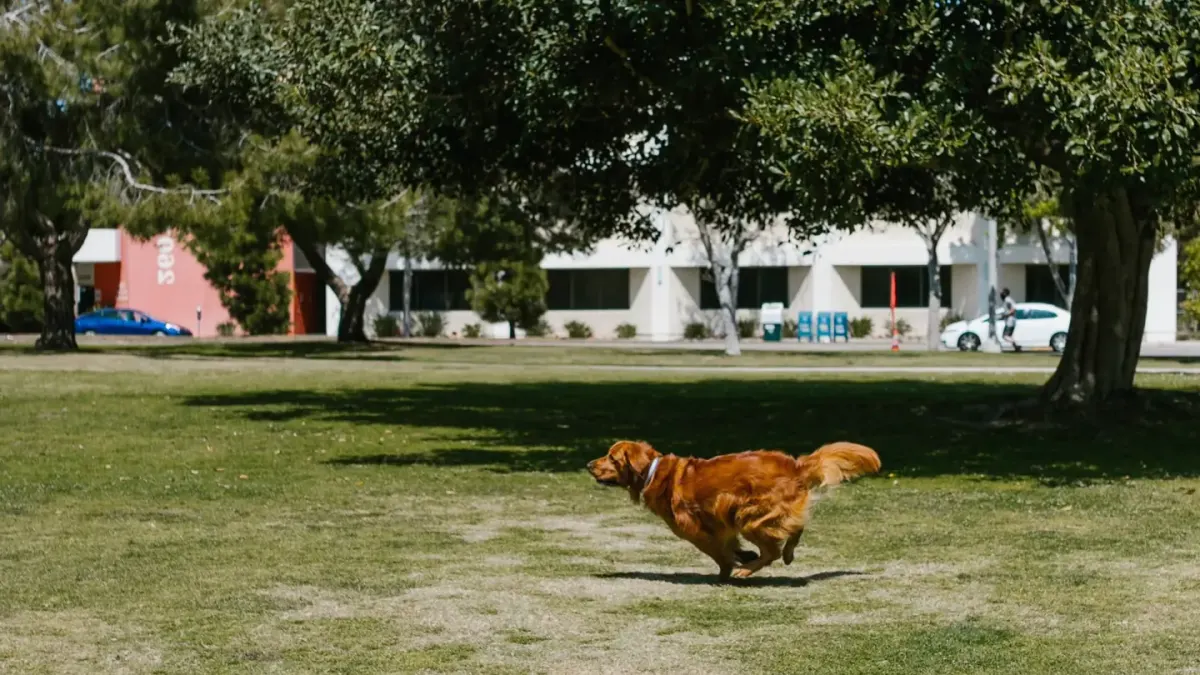
Pick the toy your dog can carry, not just chew. If your 70-pound Lab can trot around the yard with it held high and drop it on cue, the weight is right. If he lies down to gnaw it, drags his head low, or quits fetch after two throws, it is too heavy or too hard no matter what the label says large breed on it.
A 2-year-old 82-pound mixed-breed dog came in for worn canines after a winter of hard chewing. His owner, living in a second-floor walk-up, had swapped plush toys for a solid rubber block and a dense nylon bone because both were marketed for power chewers. She worked long shifts and left one toy down for 9-hour days, hoping it would last. By February the dog was carrying the toys less and grinding them in place, and his upper canines were blunted with pale brown wear spots. We kept fetch toys light for carrying and moved chewing to shorter, supervised sessions with a give-and-take trade. Within 3 weeks of that rotation he was carrying again on evening walks instead of planting to chew.
Feel weight and hardness before you buy
Hold the toy in one hand. Toss it from hand to hand. Press your thumbnail into it.
Do this in the aisle:
- Lift and carry test. Hold it at arm’s length for 10 seconds. If your wrist tires, your dog’s neck will on repeats.
- Thumbnail test. If your nail does not leave a slight dent, it is too hard for aggressive chewing and may help support dental wear rather than prevent it.
- Mouth-size test. The toy should be too large to fit behind the canines, but not so wide your dog cannot get molars around it to carry.
- Drop test. Drop it on tile from waist height. A sharp clack means cracked-tooth risk; a dull thud means safer impact.
The American Veterinary Medical Association reminds owners to match toy size to the dog and supervise play, removing toys once pieces loosen. That supervision step matters more for big mouths, because large jaws create small pieces fast.
Choose carry-light materials that still last
You do not need solid weight for strength. Strength comes from shape and flex.
Look for hollow-core natural rubber with thick walls, layered rope with tight weave and heat-sealed ends, or floating foam bumpers for water fetch. Skip solid nylon blocks, compressed composites, antler-density chews, and extra-large knotted rope with a heavy core for daily fetch. Those are the toys that tire necks and shear teeth.
For ideas on shapes that fly and float without extra bulk, see Best Fetch Toys for Dogs: How to Choose Balls, Bumpers, and Launchers.
A 4-year-old 95-pound Rottweiler mix loved a thick sailing-rope tug his owner bought at a marina shop. It survived 6 months without fraying, which felt like a win. Then the owner noticed the dog stopped shaking it and started lying down to mouth one end, and walks shortened from 2 miles to barely 1 mile before he wanted to turn home with his head low. The rope alone weighed almost 2 pounds when wet, and swinging it was loading his neck and shoulders like a kettlebell. We retired it to short backyard tugs only and switched daily play to a hollow rubber tug and a light bumper. He went back to carrying his toy to the door, which told us more than any durability claim.
That tradeoff is common. The toughest-feeling toy often fails the carry test, and nutritional support cannot undo a mechanical overload. Food therapy and rehab may help support recovery after strain, but they do not make a heavy toy light. The American Veterinary Dental College notes that hard chewing contributes to tooth fracture, which is why I weigh hardness over marketing when I advise on diet, mobility, and recovery together.
Build a light rotation that holds up
Do not leave one power-chewer toy down all day. Rotate.
Keep three bins: carry toys for fetch, tug toys for interactive play, and chew toys for downtime. Put chew toys away after 15 to 20 minutes. Trade with a treat for a clean drop so your dog does not guard a high-value toy. Wash rubber and nylon on a schedule, and check rope weekly for loosening strands.
If you live tight on space, many of these same light carriers work indoors with short tosses down a hall — see Best Toys for Apartment Dogs with Limited Space and Enrichment Toys for Mental Stimulation: What Actually Helps a Bored Dog.
A 9-year-old 68-pound senior hound with early arthritis changed the rule entirely. She still had a big mouth and loved to hold a toy on all 4 evening potty walks, but she dropped standard large bumpers after half a block and showed a stiff neck the next morning. Her owner worried she was losing interest in play. We went lighter than usual, not tougher: a soft vinyl float half the weight of her old bumper, plus food puzzles instead of long chews. She carried it the full 400 yards to the park and back without stopping, and kept that routine for 5 nights straight. For an aging dog, easy carrying supports continued movement better than any heavy-duty badge.
Where I land
Choose hollow and flexible over solid and heavy. If your big dog carries it high, drops it willingly, and wants one more throw, you found it.
Sources
- Pet Care Resources — American Veterinary Medical Association
- Home — American Veterinary Dental College