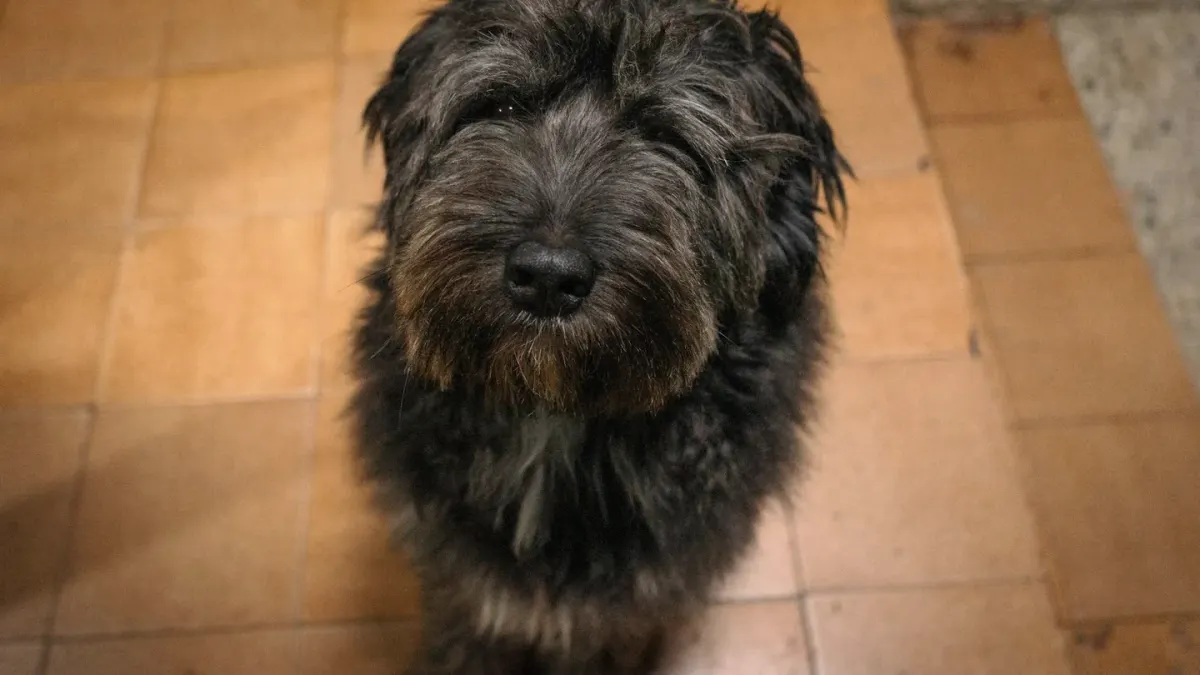
That long, buttery blink is not the same as sleepy eyes. In a relaxed dog, it is usually an appeasement signal — a polite way to say I am not a threat, and I do not need you to be one either.
It is easy to misread it as love or guilt. I would rather you read it as information about arousal. A soft body plus a slow blink means the baseline is low and comfortable. A stiff body plus staring, then blinking, means something else entirely.
You are sitting on the living room rug at 9 p.m. with your 4-year-old, 52-pound mixed breed curled against the couch. The house is finally quiet after dinner, his shoulders are loose, his mouth is slightly open, and he looks at you and lets his eyelids droop closed for a full second before opening again. You wonder if you should pet him, talk to him, or just leave him alone. Check three things first: weight shifted to one hip, ears in a neutral position, and easy breathing. If all three are present, that blink is your green light to stay quiet and keep the moment low-pressure.
Settle or step back: which does this blink want?
Do this quick fork before you reach out.
If the body is soft — loose tail or gentle wag low, relaxed jaw, weight settled — do nothing big. Breathe out, soften your own gaze, and blink slowly back. Keep your hand still or rest it on your own lap.
If the body is tight — closed mouth, forward ears, hard stare that breaks into a blink, lips licked, head turned slightly away — give space. Stop reaching, turn your shoulder a few degrees sideways, and let him look away.
That is the main decision. Soft plus slow blink means maintain. Tense plus blink means reduce pressure.
What to do in the next 30 seconds
Keep it preventive and low-stress. Small handling now protects behavior later.
- Pause your movement. Freeze your hand mid-air for two seconds.
- Soften yourself. Drop your shoulders, unclench your jaw, look slightly past him rather than straight into his eyes.
- Offer choice. Say his name once, quietly. If he leans in or nudges, pet the chest or side for three seconds, then stop. If he stays still or looks away, let him rest.
- Note the context. Was there noise, a hug, a child climbing close, another dog staring? Behavior lives in context.
You tried the opposite last week and it backfired, which is common. Your 6-year-old, 18-pound terrier mix was perched on the armchair while your toddler sang loudly two feet away, and he gave a quick tight blink with whale eye and a closed mouth. You leaned in for a reassuring head pat because it felt kind in the moment, and by day 3 of repeating that pattern he started ducking and lip-licking before you even touched him. The tradeoff was clear: comforting with pressure raised his baseline instead of lowering it. Stepping sideways, calling him to a mat five feet away, and letting him choose to settle worked better than holding him close.
The strongest counterargument I hear is that you should always answer affection with affection, or you will harm the bond. I respect that worry. My position is still that choice builds trust faster than contact. A dog that learns his slow blink earns space will offer more relaxed blinks over time.
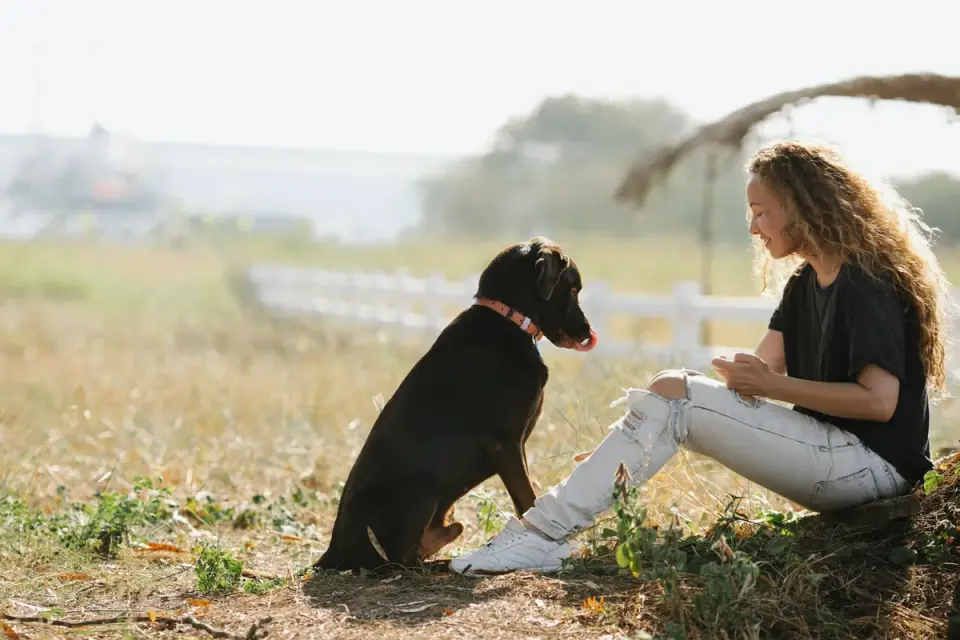
When a slow blink is not reassuring
A slow blink alone never clears a dog. Read the cluster.
Call your veterinarian promptly if blinking changes suddenly and includes squinting, pawing at one eye, discharge, redness, holding an eye shut, bumping into furniture, or new light sensitivity. Those point to eye pain or vision change, not body language. For general eye-care background, the American Kennel Club eye-care guide reviews normal versus concerning signs, and the American Veterinary Society of Animal Behavior position statements explain why punishment and forced handling raise fear rather than resolve it.
Context from other signals helps too. A growl during petting is often a distance request, as I describe in Why Does My Dog Growl When I Pet Him? What the Rumble Means. Staring between dogs needs a fuller cluster read, covered in Play Bow or Aggression? Reading Dog-to-Dog Signals. And if tension is frequent on walks, start with Reactive Dog vs Aggressive Dog: How to Tell Which One You’re Living With.
Here is the edge case owners miss. Your 11-year-old, 64-pound Labrador has started slow-blinking in the kitchen every evening around supper, and for three weeks in you assumed he was finally calm around the clatter. On closer watch his body was still, his head was low, and he blinked slowly each time the pan clanged, then moved to the hallway. That pattern was not contentment. It was an older dog using appeasement and avoidance to cope with noise and slippery floors. Adding a rug runner, feeding him in the quiet laundry room, and keeping handling brief restored his easy, loose evening rest by week four.
Look for that distinction this week.
My recommendation stays simple. Treat a slow blink as an invitation to keep pressure low. Soften, offer choice, and let the dog confirm. You will see more true relaxation, and you will catch worry earlier when it matters.
Frequently asked questions
Should I slow-blink back at my dog?
You can, softly, if his body is already relaxed. Keep your posture sideways and quiet and do not stare first. If he looks away or stays still, take that as a request for space and give it.
Is a slow blink the same as squinting in pain?
No. A body-language blink is brief, both eyes are soft, and the face and body stay loose. Squinting with redness, discharge, pawing, or holding one eye shut needs prompt veterinary care.
Why does my dog slow-blink and then look away?
Looking away after a soft blink often lowers social pressure. Give him a moment. Most relaxed dogs will settle, sigh, or re-engage on their own when they are ready.
Sources
- Position Statements — American Veterinary Society of Animal Behavior