On this page
It is a hot afternoon and your dog will not settle, pacing between water bowl and door with a fast, open-mouth pant.
That restless pant is the moment to act. Comfort-minded care means responding at early heat stress, not waiting for wobbling or collapse.
Your quick checklist — the 5 stages to watch:
- 1. Early effort: faster panting, restlessness, seeking shade or water
- 2. Building heat: thick drool, loud breathing, reluctant to walk or play
- 3. Straining: glazed eyes, unsteady posture, sore-looking gait and stiffness
- 4. Overheated: vomiting or diarrhea, dark gums, extreme lethargy
- 5. Emergency: collapse, confusion, seizures or loss of consciousness — cool gently and get veterinary help at once
Read that list once, then keep it where you can see it on warm days. What follows explains what each stage looks like and what to do.
Move inside or stay out? Make the call early
If panting does not ease within a few minutes of shade and water, move inside. VCA Hospitals notes that early heat-related signs in dogs include heavy panting, restlessness, and difficulty settling, and that progression can be fast in heat and humidity.
That is your decision fork: steady pant that softens with rest means keep cooling at home; pant that stays loud, plus drool or slowing down, means stop activity and start active cooling.
Casey in Carrollton, Texas, lives this with Helga, an 11-year-old spayed Newfoundland mix. On an 87-degree evening walk, Helga started lagging after about 10 minutes, panting wide and planting her feet at the curb. Casey cut the walk short, led her into air conditioning, and offered small sips of cool water.
No drama. Just an early stop.
Why early panting changes the whole body
Panting is how dogs release heat, and stiff muscles make that work harder. When the chest and shoulders brace with fast breathing, the stride shortens and the back tightens. An older or heavy-coated dog feels that loop first.
Act here.
Move to shade or air conditioning, offer cool — not ice-cold — water in small amounts, and wet the paws, belly, and inner ears with a damp towel. Rest the body and the breathing often steadies together.
What building heat looks and sounds like
Stage two is louder. Breathing turns raspy, drool thickens into strings, and your dog may refuse to keep walking. Some dogs whine and circle; others go flat and lie down.
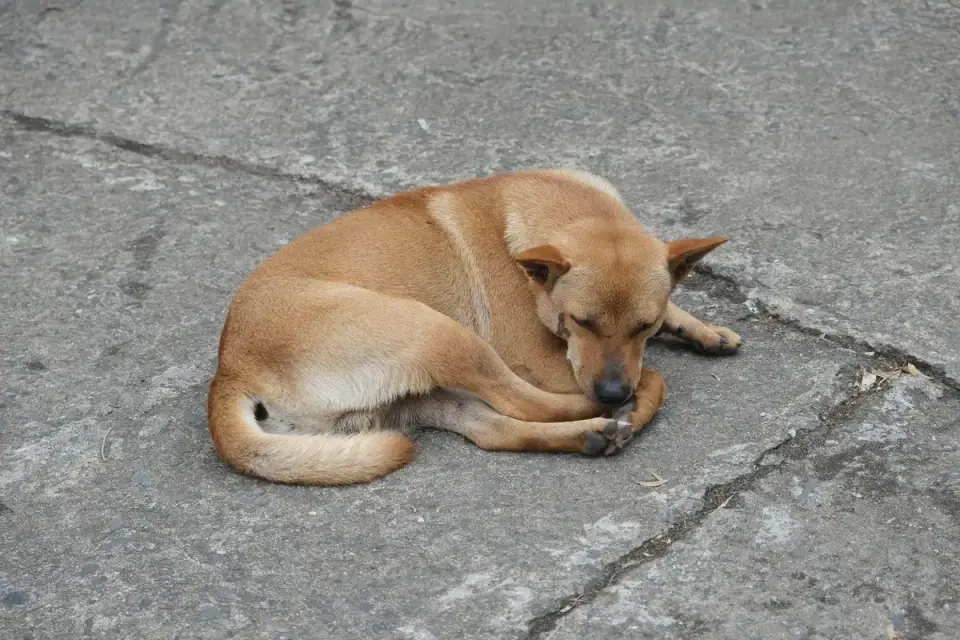
This is still a home-cooling moment, but stop all exercise. Keep the room quiet and dim, keep water close, and let the dog lie on a cool floor. Fans help. For ideas on settling a restless dog once the room is cool, see Dog Calming Chews: What Actually Helps a Nervous Dog Settle and Melatonin for Dogs: What It Actually Regulates, and Where the Evidence Runs Out.
In practice, vets often see heavy dogs and brachycephalic breeds tip from this stage faster on humid nights.
When strain shows in the eyes and legs
Glazed eyes, a wobbly rear, or a stiff, shuffling gait means the musculoskeletal picture is joining the heat picture. The dog may look worried, pant through a closed mouth for a second, then resume hard panting.
Cool steadily and call your veterinarian for guidance. Keep handling gentle — support under the chest and hips rather than pulling on the collar — and do not force water if swallowing looks hard.
Vomiting, dark gums, and extreme tiredness mean urgent care
Vomiting or diarrhea, brick-red or pale gums, and a dog who will barely lift the head signal overheating that home care cannot manage alone. Begin gentle cooling while you contact your clinic or emergency hospital: move inside, apply cool damp towels and rotate them, offer water only if the dog can drink on their own.
The American Veterinary Medical Association advises never leaving dogs in parked cars and seeking veterinary care promptly when heat-related distress does not resolve quickly, because heat injury can affect multiple body systems.
Collapse is never wait-and-see
Collapse, confusion, stumbling that does not correct, tremors or seizures are an emergency. Keep the car cool on the way, keep cooling light, and call ahead so the team is ready.
What question should you ask yourself on every summer walk? If I wait 10 more minutes, will my dog have an easier or harder time recovering?
Most dogs do best with short outings in cooler hours, shade breaks, and a calm indoor landing spot. Older dogs especially settle faster when the floor is cool, the room is quiet, and no one asks them to keep going. For small-space routines that keep evenings low-key, The Real Test for an Apartment Dog Isn’t Size has practical setup ideas.
Frequently asked questions
What is the first stage of heat stress in dogs?
Faster, open-mouth panting with restlessness and seeking shade or water. Stop activity, move to shade or air conditioning, and offer small sips of cool water.
When should I call the vet for heat stress?
Call promptly for thick drool with unsteady gait, vomiting or diarrhea, dark or pale gums, extreme lethargy, or any collapse or confusion. Cool gently while you contact the clinic.
Can I use ice or very cold water to cool my dog?
Use cool water and damp towels, shade, airflow, and rest. Avoid ice baths and forcing water, and get veterinary guidance if signs do not ease quickly.
Sources
- Heat Stroke in Dogs — VCA Hospitals
- Warm Weather Pet Safety — American Veterinary Medical Association