
Hunger is a strong signal, and in a healthy adult dog it usually brings him back to the bowl within 24 hours. The problem is what happens while you wait, and what happens when waiting turns into swapping foods every few days.
Here is the decision fork I want you to hold at midnight: if your dog is bright, drinking, and passing normal stool, you are looking at a routine problem. If he is lethargic, vomiting, losing weight, or refusing all food beyond 48 hours, you are looking at a medical problem. Vets often see the first turn into the second when owners wait too long without a plan.
Falkor, a 4-year-old neutered male shepherd mix in Coral Springs, Florida, showed the pattern clearly. His owner Lisa offered food for 15 minutes, lifted it, and stopped adding toppers after two skipped dinners. On the third morning he ate his regular portion without coaxing. That timeline — one to two missed meals, then return — is typical for learned pickiness rather than illness.
Appetite starts in the gut-brain axis, not in stubbornness. Smell drives interest, stomach stretch and nutrient sensing drive fullness, and microbes in the colon ferment fiber into short-chain fatty acids that help maintain normal motility and stool form. A stable diet keeps that fermentation steady. Repeated fasting followed by a rich new food swings the system from empty to overloaded, which is why dogs get gassy or loose after a swap.
That is also why constant rotation can disrupt the gut even when each food is complete. In Western terms, abrupt change alters substrate for microbes and digestive enzymes. In TCVM food therapy terms, it scatters Spleen-Stomach rhythm — the center that is thought to govern regular appetite and digestion. Warm, simple, and predictable meals may help support that center, which is how the modality is thought to work. I am not promising a cure for pickiness. I am describing a mechanism worth steadying.
When waiting helps, and when it hurts
Healthy pickiness is selective. The dog refuses kibble but takes treats, begs at the table, or eats after you add cheese. True inappetence is flat. Nothing appeals, energy drops, water intake changes. The first may help support learning with structure. The second needs an exam, especially in puppies, seniors, small breeds at risk for low blood sugar, or any dog with vomiting, diarrhea, belly pain, or weight loss.
The National Academies Press requirement tables remind us why completeness matters during this window. Dogs need a complete and balanced daily intake, not just calories when hungry. A few missed meals will not create deficiency, but weeks of half-portions and unbalanced toppers can. The U.S. Food and Drug Administration makes the same point from the label side: look for an AAFCO complete-and-balanced statement for your dog’s life stage before you judge whether waiting is safe.
A short, bounded wait is reasonable for a healthy adult. Offer meals for 15 to 20 minutes, then lift what remains without comment. Keep water available. Keep treats under 10% of daily calories. If intake stays very low beyond 48 hours, call your veterinarian rather than opening a fourth new bag.
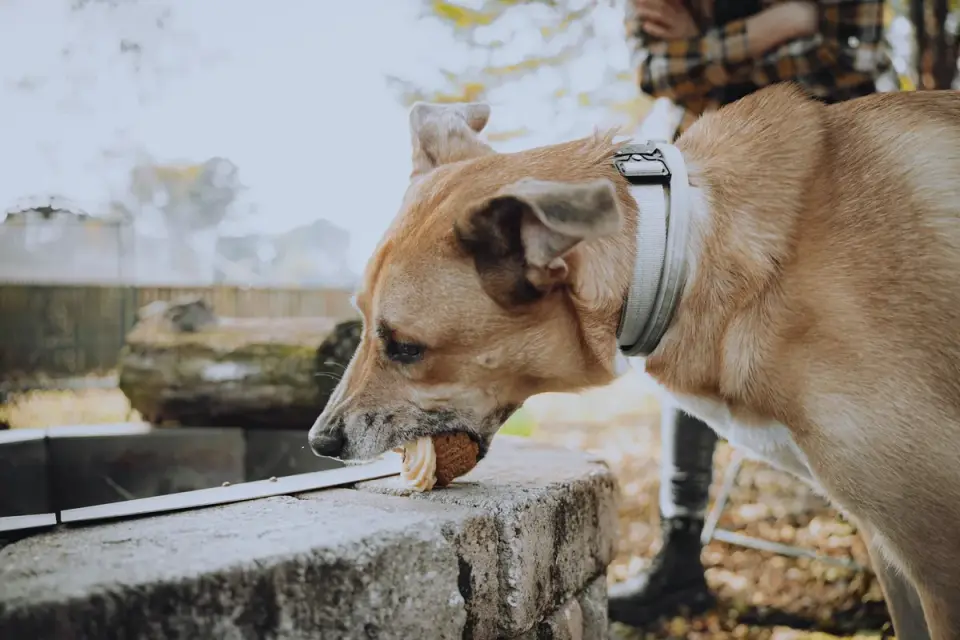
Why swapping foods keeps pickiness going
Dogs learn quickly. Refuse kibble, receive chicken, repeat. Owners also misread the gut response. A new food smells novel, so the dog eats for two days, then stool softens, then he refuses again. That is not proof the food was wrong. It is proof transition was too fast.
Fiber helps explain part of that sensitivity. In a recent fermentation study, researchers reported that “Bacterial alpha diversity metrics increased (P < 0.01) during acacia fiber fermentation and decreased (P < 0.01) during inulin and pectin fermentation,” in the Journal of Animal Science. Different fibers shape microbes differently in the lab, which is one reason steady fiber content and a 7- to 10-day transition may help maintain firmer stool than an overnight swap.
My recommendation stays evidence-bounded: pick one complete diet, hold it for at least two weeks, transition slowly, and let routine do the training. Acupuncture points used for appetite and nausea may help support comfort and vagal tone in some dogs, and that is how the modality is thought to work, alongside — not instead of — diet structure and medical workup when red flags appear.
What would change my mind is straightforward. A controlled trial showing frequent rotation improves intake without more gastrointestinal signs, or data showing prolonged fasting protects the canine microbiome, would revise this view. Current nutrition and microbiome evidence does not show that.
A steadier midnight routine that settles the bowl
Keep it small and doable.
Feed at the same times and place, with a short walk first when possible. Warm the food slightly with water to release aroma. Offer for 15 minutes, then lift. Log what he ate, stool quality, energy, and vomiting. A simple note prevents panic-swapping on day two.
Avoid onion in any topper or broth, as explained in Can Dogs Eat Onions? Why Vets Say No, Every Time. If you want a plain whole-food addition, a spoon of cored apple or a few blueberries can add interest without unbalancing the meal, as described in Can Dogs Eat Apples? A Neurologist’s Take on the Fork, the Core, and the Seeds and Can Dogs Eat Blueberries? What They Actually Add to the Bowl, and When to Skip Them.
Call your veterinarian promptly for refusal beyond 48 hours in an adult, 24 hours in a puppy or senior, any weight loss, vomiting or diarrhea lasting more than a day, drooling, belly pain, toxin exposure, or a swollen abdomen.
Your dog will likely eat again. Your job is to make the return easy on his gut.
Frequently asked questions
Will my picky dog eventually eat his food if I just wait?
Many healthy adult dogs will eat within 24 to 48 hours once extras stop and meals are offered on schedule. If refusal lasts beyond 48 hours, or energy, stool, vomiting, or weight change, stop waiting and call your veterinarian.
Is it okay to keep switching foods until he likes one?
Frequent swaps often teach selective eating and can loosen stool because fiber and fat change abruptly. Choose one complete diet and transition over 7 to 10 days before judging it.
Sources
- Nutrient Requirements of Dogs and Cats — National Academies Press
- Bacterial alpha diversity metrics increased (P < 0.01) during acacia fiber fermentation and decreased (P < 0.01) during inulin and pectin fermentation. — Journal of Animal Science