
On this page
Dustin hears Champ before he sees him, the soft pacing at 2 a.m., nails on wood, then a heavy head resting on the mattress edge. Champ is a 4-year-old intact male Rhodesian Ridgeback mix in Newark, New Jersey, too large to share the bed safely and too worried to settle across the room, and Dustin is caught between shoving over and sending him away for the third night in a row.
That is the fork this guide sits with. Banish the dog and listen to whining at the door. Invite him up and lose sleep to heat, kicks, and a 90-pound lean. Or meet in the middle with a low, stable bed attached or tucked hard against your bed frame, at mattress height, where a hand can reach down without either of you fully waking.
I favor that third option for most anxious night-wakers and stiff older dogs, because it protects contact while protecting rest. Contact matters. Dogs with separation-related distress often settle faster with smell, sound, and touch nearby, a pattern described in behavior guidance from ASPCA, and older dogs who startle more easily at night may also rest better near a familiar person. If your senior dog startles at sounds he used to sleep through, closeness at night can be part of the comfort plan.
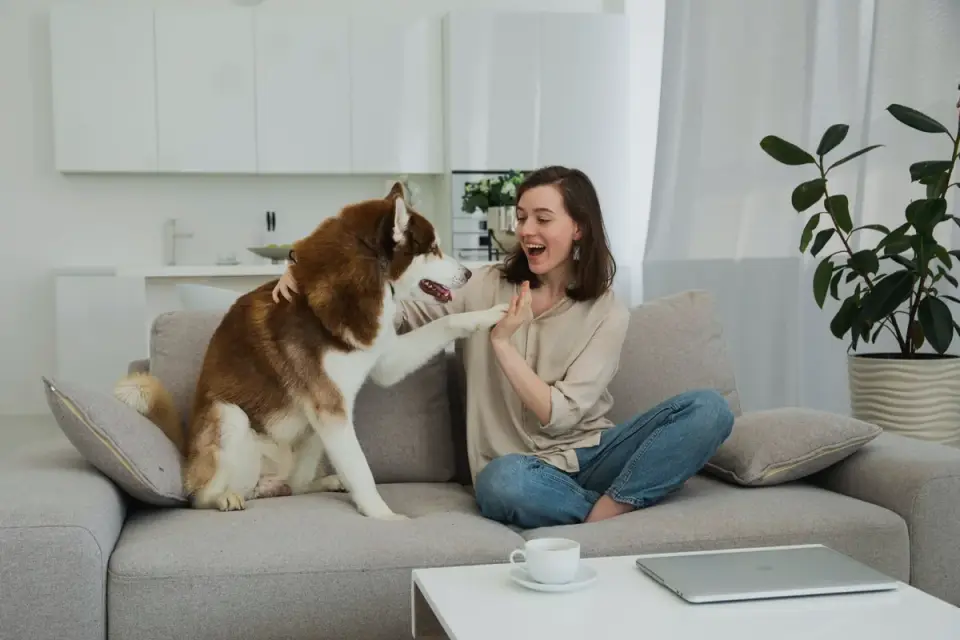
Stay on the floor, share the mattress, or meet in the middle
A floor bed across the room works for confident sleepers. It keeps human sleep clean and gives the dog a clear spot, which is why crate and station training remains a staple in guidance from the American Kennel Club. For a dog like Champ, though, distance can raise worry. Vets often see the same loop at night that owners describe in the day. The dog paces, pants, licks, or paws at the bed. The owner soothes, then finally gives in. Both wake tired.
Sharing the mattress solves the worry and creates new problems. Large dogs run hot, shift often, and crowd a partner. Older dogs may struggle to jump up and down safely, and repeated night falls can bruise confidence as much as joints. Small dogs can get pinned under blankets. Light sleepers lose deep sleep to every turn.
A sidecar bed keeps the dog’s weight on his own surface and keeps his nose within reach. He can feel your hand, hear your breathing, and smell the sheets without being under the covers. You can settle him with a quiet touch without sitting up, turning on a lamp, or restarting the whole bedtime routine.
Why closeness may help support steadier rest
Dogs read the night through the body next to them. Rhythmic breathing, a low voice, and a familiar hand on the ribs give the nervous system something steady to match. That does not cure anxiety or arthritis. It may help support calmer settling, which is often enough to carry an anxious dog through the first restless twenty minutes after lights out.
The same closeness helps aging dogs for a different reason. Night vision fades, hearing shifts, and joints ache after a still day. A low bed at your side shortens the distance to comfort when they wake confused. Guidance on aging changes from American Veterinary Medical Association notes that older dogs may become clingier, more restless at night, and more sensitive to routine change, all reasons to keep the sleep spot predictable and near.
This is also where expectations stay honest. A sidecar will not hold a dog who has never learned to lie still, and it will not replace daytime work on alone-time, pain care, or noise fear. Think of it as comfort that may help maintain rest while you address the larger pattern with your veterinarian.
How to set the sidecar so both of you sleep
Match height first. The dog’s sleeping surface should sit just below the top of your mattress so he can rest his chin near your hand without climbing. A low platform, a firm crib mattress on the floor, or a bolster bed pushed hard against the frame all work. Anchor it so it cannot drift. A yoga mat underneath, furniture straps, or the bed legs pinning the dog pad in place prevents the slow midnight slide that wakes everyone.
Keep the surface firm and washable. Older dogs rise more easily from thin, dense foam than from deep, soft fill, and anxious chewers do better without loose bolsters to nurse. Choose a cover you can strip in under two minutes. Keep a spare blanket with your scent on it, unwashed for a night or two, draped over his spot.
Build the habit in daylight. Feed a stuffed Kong on the sidecar bed for five quiet minutes in the afternoon. Practice a simple settle cue, reward four paws on his bed, then release. At night, keep your response small. Hand down, slow stroke along the shoulder, soft praise, then stillness. If he stands to climb up, guide him back without talk and wait. Most dogs learn the boundary within a week when the rule never changes after midnight.
Mind safety details that matter more at night than they do at noon. Leave a six-inch gap free of cords, keep medications and water glasses off his edge of the nightstand, and make sure a heavy dog cannot trap a leg between his platform and your frame. For apartment sleepers where space is tight, measure before you buy. The real test for a small bedroom is walkway width, a lesson familiar from guidance on The Real Test for an Apartment Dog Isn’t Size.
One short paragraph holds the whole method.
Hand down beats getting up.
When sharing the mattress is still the kinder choice
There are nights when the sidecar is not enough. A dog in new pain, a recently adopted dog in the first frightened week, or a dying dog who only rests skin-to-skin may need full contact for a short season. In practice, comfort comes before training when suffering is sharp and time is short. If night waking comes with panting, circling, house soiling, or sudden clinginess, ask your veterinarian about pain, cognitive change, and nighttime anxiety rather than assuming it is habit. You can read more about age-related startling and what to track before that visit in Why Your Senior Dog Startles at Sounds He Used to Sleep Through.
Dustin chose the middle path. He wedged Champ’s old foam bed against his side of the bed, leveled it with a folded quilt so the top sat two inches below the sheet, and left a worn T-shirt on top. The first night took three quiet resettles. By night four, Champ walked to his spot on his own when the lamp went off and slept until the 6 a.m. alarm through most of the week.
Closeness without crowding is the goal. Keep him near enough to feel you, on a bed that holds his weight, with a rule you can keep at 3 a.m.
Frequently asked questions
What is a dog bed attached to your bed?
A low, stable dog bed pushed hard against or strapped to your bed frame at near-mattress height, so the dog sleeps on his own surface within touch.
Will a sidecar bed help an anxious dog sleep?
It often reduces night pacing because the dog can feel and smell you nearby, paired with daytime alone-time training and vet guidance for true separation distress.
Is it safe for older dogs?
A floor-level or low-platform sidecar is often safer than jumping on and off a tall bed, with firm foam for easier rising and no gaps where legs can trap.
Sources
- Separation Anxiety — ASPCA
- Senior Pets — American Veterinary Medical Association