On this page
Does this toy need to survive the jaws, or protect the teeth? That is the fork every owner of a powerful chewer stands at around 11 p.m., picking stuffing off the rug.
A two-year-old, 68-pound bully mix came in as a composite case I hear often: sweet, ball-obsessed, and able to peel a standard squeaky plush in about 12 minutes flat. His owner stood in the aisle weighing two carts — one full of soft plushies he loved but shredded, one full of rock-hard “indestructible” bones that promised to last. She did not want another midnight cleanup, and she did not want a cracked tooth either. That tension is the whole guide in miniature.
What does she actually need to weigh first?
Jaws are strong, teeth are fragile
Dogs can generate remarkable bite force, especially large molosser and terrier types, yet their chewing teeth are still living tissue with pulp inside. From a nutrition and whole-patient view, I weigh what food and chewing can realistically do for diet, mobility, and recovery — and hard chewing does not strengthen teeth the way exercise strengthens muscle.
The American Veterinary Medical Association notes in its pet dental care guidance that fractured teeth are painful and often need professional care, which is why veterinary dentists urge caution with objects that do not give. I ground that integrative claim in the nutritional evidence this way: a balanced diet may help support normal tooth and gum maintenance, but no chew or supplement rebuilds enamel once it is fractured.
Give is protective.
The thumbnail test that settles most aisles
Forget the packaging muscle. Press your thumbnail into the toy.
If it dents slightly and rebounds, it likely has enough give for most chewers. If your nail slides off with no indentation — hard nylon, dense antler, marrow bone, hard compressed rawhide — assume it can damage a chewing tooth, especially for an aggressive, sustained chewer. Veterinary dentists often phrase it as: if you would not want to be hit in the kneecap with it, do not let a determined dog grind on it.
This is where the U.S. Food and Drug Administration warning on bones is useful context. The agency describes risks from bone chewing including broken teeth, mouth injuries, and intestinal blockage, a reminder that natural does not mean gentle on teeth or gut.
He loved the hardest bone on the shelf, and that was the problem. One owner I talked with described a four-year-old, deep-chested shepherd mix who ignored rubber and plush and fixated only on a dense nylon wishbone. For 5 straight nights she let him grind for an hour to settle before bed, relieved the house was finally quiet. On night six he dropped the bone, pawed at his muzzle, and left a spot of blood on the rug from a slab fracture of an upper premolar. The quiet had cost a tooth. Harder had not meant safer, only slower to fail.
Supervise, and retire toys early.
Match the toy to the chew style, not just the size
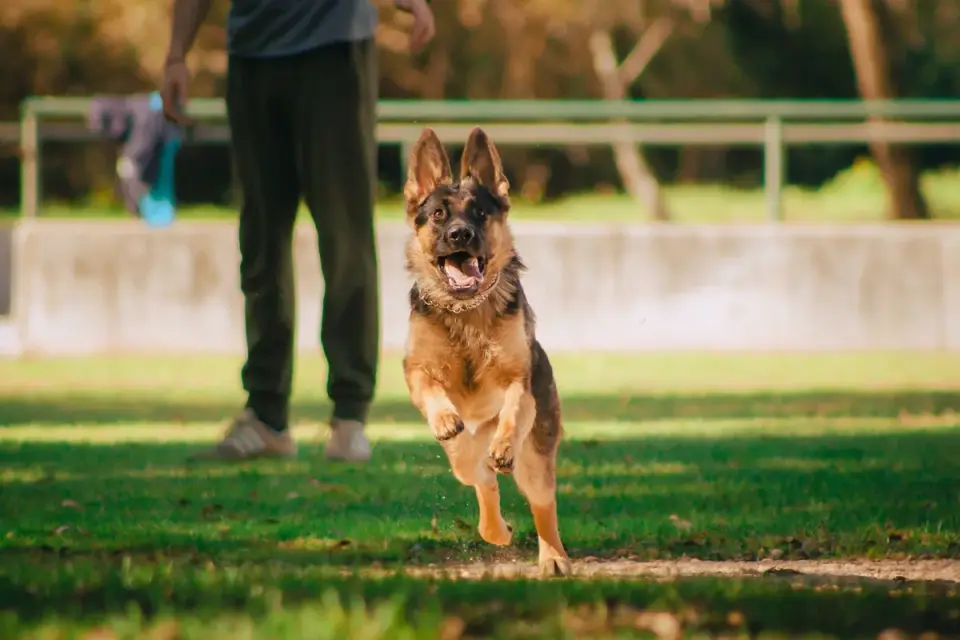
Watch for ten minutes. Does your dog lick, mouth, and carry? Gnaw steadily with back teeth? Or bite down with full force and try to shear pieces off?
Carriers and lickers do well with plush, soft vinyl, and light rubber, rotated often. You can learn more about washing and retiring those soft toys in Can You Wash Dog Toys in the Washing Machine? A Vet’s Honest Fork-in-the-Road, and about why some dogs lock onto one object in Is It Normal for a Dog to Fixate on One Toy?.
Steady gnawers need thick-walled rubber with hollow centers for stuffing, which deforms under load. Full-force shearers need only supervised, deformable rubber, plus non-toy outlets for that energy — sniff walks, training, food puzzles. For context on ingestible chews versus toys, see Is Rawhide a Toy or a Choking Risk?.
The VCA Hospitals chewing behavior resource frames chewing as normal exploration and stress relief, which helps explain why withholding all chewing backfires. We are not trying to stop chewing. We are giving it a safer shape.
When the usual toughness rules have to bend
An 11-year-old lab-type with gray around the muzzle changed how I talk about durability. He had worn canines, early gum recession, and arthritis that made him rest after a half-mile loop around the block. His owner wanted a tougher toy because he still shredded plush in minutes, but his mouth could no longer handle the hard rubber that had worked at age four. We bent the rule: instead of scaling up hardness, we scaled down piece size and scaled up supervision, using small, soft, freezable rubber feeders for 10-minute sessions and then putting them away. His teeth stayed intact, and the ritual still settled him.
Older dogs, toy breeds, and flat-faced dogs often need that softer path. Small jaws concentrate force on tiny teeth, a point worth revisiting in Best Toys for Small-Breed and Toy Dogs.
So where do I land?
Choose the softest toy your dog will enjoy that still survives supervised play, and let supervision — not hardness — do the safety work.
What would you pick if lasting forever stopped being the goal?
Frequently asked questions
How do I know if a toy is too hard for a strong chewer?
Press your thumbnail in. If it does not dent, assume it can crack a chewing tooth for a determined chewer and save it for gentle mouthing only under supervision, or skip it.
Are “indestructible” toys safe because they last?
Not necessarily. Long-lasting hard materials concentrate force on teeth and can cause slab fractures. Deformable rubber that gives under pressure is usually the safer toughness level.
What should I do when my dog starts tearing pieces off?
Trade for a treat, remove the toy, and either repair, retire, or size up in deformable rubber. Ingested stuffing, squeakers, and shards are a blockage and choking concern.
Sources
- Pet Dental Care — American Veterinary Medical Association