
On this page
Most hand licking starts as information gathering, then stays because we answer it. Dogs live through nose and mouth, and your hands carry salt, scent, and a record of everywhere you have been. When licking earns eye contact, laughter, or a treat, the behavior is reinforced and repeated.
My expectation for families is simple: watch the rest of the body first, then decide. A loose, wiggly dog asking for connection needs a different response than a tense dog trying to settle itself.
Start here: soft ask or stressed lick?
Pause for five seconds and scan nose to tail. Soft eyes, loose ears, mid-level wag, and easy weight point toward social licking — greeting, affection, or keep petting me. Lip licking with no food present, yawning, turning away, pinned ears, tucked tail, or trailing you from room to room to lick point toward appeasement, anxiety, or nausea.
This fork matters because the response is opposite. Social licking can be redirected calmly. Worried licking needs less pressure first, not training in the moment.
The Merck Veterinary Manual describes licking, face investigation, and close contact as part of normal affiliative behavior in dogs, rooted in puppyhood when dams lick pups and pups lick to solicit care. Adult dogs keep that wiring. Your hands smell familiar, taste faintly salty, and react every time.
Why your hands read like a scent map
Mechanism comes before meaning. Dogs have a highly developed olfactory system paired with close-range taste sampling, so a hand is not just a hand. Sweat leaves salt. Lotion, soap, cooking residue, and the dog you petted at the park leave odor. A focused sniff-lick session after a walk or after dinner is often curiosity, and it usually fades once the novelty fades.
Wash off strong lotions or food scents before couch time if the licking bothers you. You are removing the prompt without making it a confrontation.
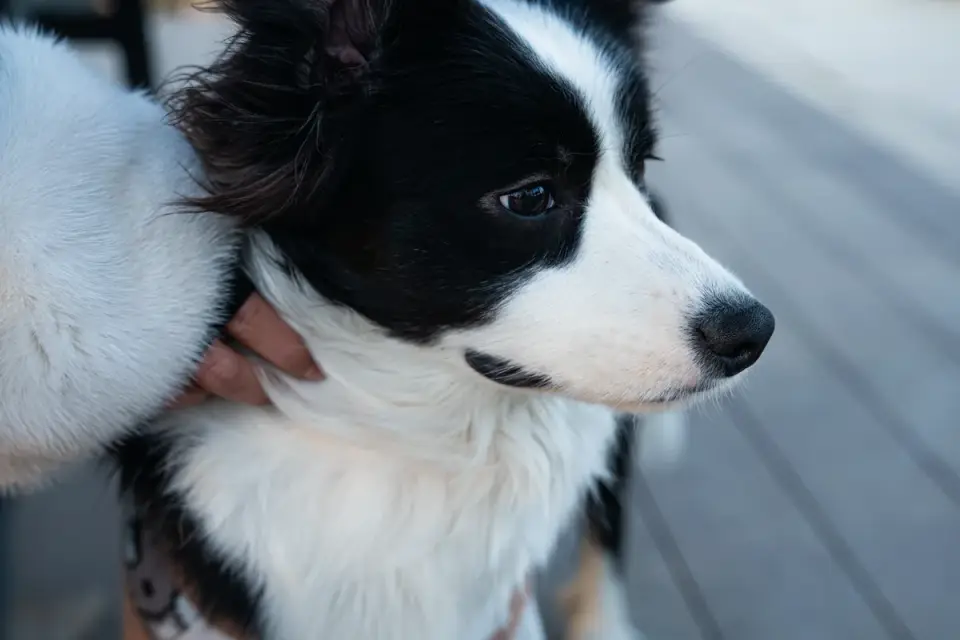
When Gilly asks with her whole body
Take Gilly, a 6-year-old spayed female Whippet living with her owner Dustin in Sioux Falls, South Dakota. Dustin noticed Gilly licked his hands for about three minutes every night after dinner, leaning in with soft eyes and a slow tail sweep. When he sat still and kept talking, she sighed and curled against his leg. When he stood to clear plates, she stopped on her own.
That pattern is classic social maintenance. The licking clustered around reunion and settling, switched off easily, and came with loose body language. For dogs like Gilly, rhythmic contact may help support calm togetherness the way grooming does in other social species — close, predictable, and brief.
You do not need to eliminate that kind of licking. Decide what you can live with, then teach it the same way every night.
What attention teaches her to repeat
Dogs repeat what works. If hand licking reliably brings laughter, eye contact, talking, pushing the nose away — which many dogs read as play — or a treat to stop, the dog has learned a polite button for your attention.
Low-stress handling gives you a kinder alternative. Keep hands still, keep your voice neutral, and reward the pause rather than the lick. When the tongue lifts for two seconds, mark it quietly and offer a chin scratch or brief pet. You are teaching that calm space, not licking, keeps you close. For mouthy young dogs, the same trade rules in How to Stop Puppy Biting and Mouthing apply: offer a toy or a trained settle, every time.
Be boring about licks, warm about pauses.
When licking is how worry shows
Context flips the meaning. Dogs also lick as an appeasement signal to defuse tension and as a self-soothing behavior during conflict, noise, visitors, or scolding. The VCA Hospitals guide to canine body language notes that lip licking, yawning, and avoidance paired with low or tucked posture often signal fear or anxiety rather than friendliness. Your hands become the nearest familiar target.
Watch for clusters, not single signs. Occasional hand licking during petting is different from pacing to find your hands, licking hands then pillows then air, gulping, drooling, grass eating, or vomiting. Repetitive oral behavior plus restlessness can reflect nausea, reflux, dental pain, or heightened anxiety, and it deserves a baseline check rather than training alone.
If worry-licking appears suddenly, intensifies over one to two weeks, happens mainly at night, or comes with appetite change, itching, or gastrointestinal signs, schedule a primary-care visit. Bring a brief log: when it happens, what happened just before, body posture, and what helped. That baseline makes diagnosis faster. Related touch tension is covered in Why Does My Dog Growl When I Pet Him? What the Rumble Means, and persistent fear around people or handling is a good reason to read Trainer, Behaviorist, or Veterinary Behaviorist? How to Pick the Right Call.
I hold this line because current evidence supports communication over single-cause claims: body context predicts function better than lick count alone. What would change my mind is a controlled study showing hand licking alone reliably predicts a specific medical or emotional state across breeds and homes. That evidence does not exist now, which is why context, not suppression, should guide you.
Your next calm step is small. Tonight, check the body, lower pressure for tense licking, and redirect soft licking to a brief settle or chew. If the pattern shifts fast or will not settle, call your veterinarian and bring your notes.
Frequently asked questions
Is hand licking a sign my dog loves me?
It can be part of friendly greeting and contact, especially with a loose, wiggly body. Look for soft eyes and easy posture rather than the lick alone.
When should I call the vet about licking?
Call if licking starts suddenly, intensifies over 1 to 2 weeks, clusters at night, or comes with drooling, gulping, vomiting, appetite change, or restlessness. Bring notes on timing and triggers.
How do I reduce hand licking without scolding?
Keep hands still, withdraw attention briefly, then reward a 2-second pause with calm petting. Offer a lick mat or chew during the usual lick window and keep the routine predictable.
Sources
- Normal Social Behavior in Dogs — Merck Veterinary Manual