On this page
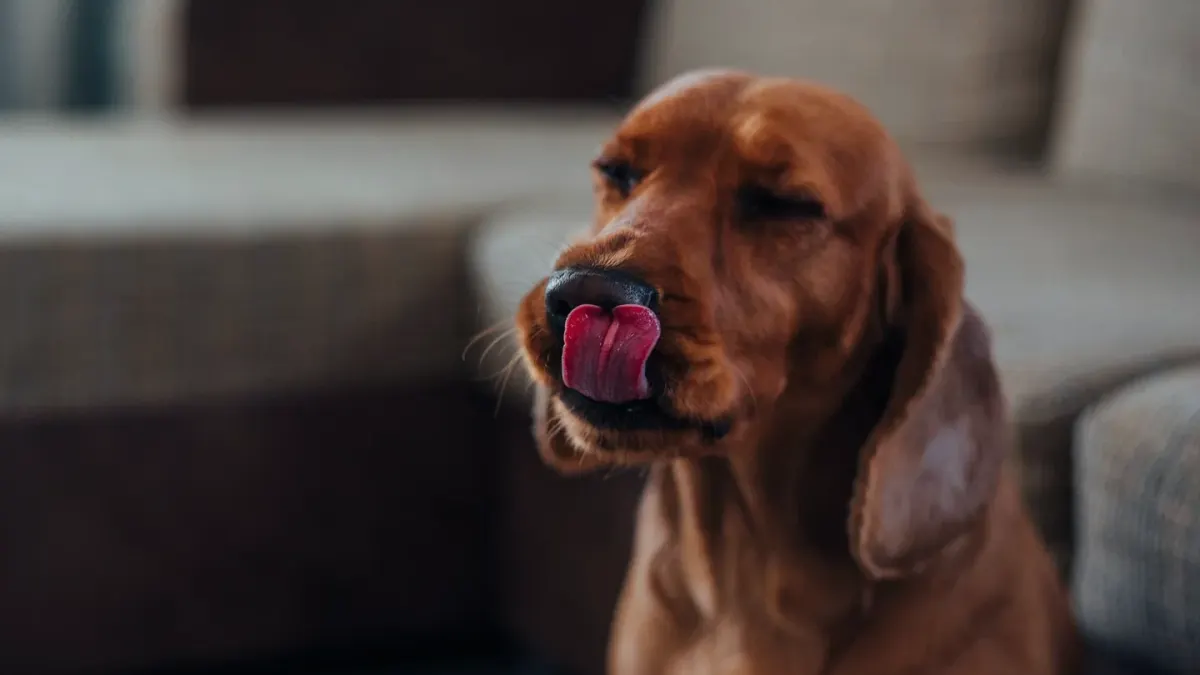
Sitting on the couch at 11pm, watching your dog lick at empty air and gulp again and again, is unsettling. It does not look like normal licking, and you are right to pause. In my mobile practice, that pairing — tongue flicking at nothing plus repeated swallowing — most often traces back to an uneasy stomach or an uncomfortable mouth, rather than a funny habit.
Think of the whole dog in that moment, not just the tongue. Is the belly also unsettled. Is the mouth sore somewhere. Is the nervous system wound up. Holding those three together helps you respond calmly and notice what matters.
What does this licking-and-gulping pattern usually mean?
Nausea often comes with lip-licking, drooling, swallowing hard, and turning away from food. The Vomiting in Dogs guide from VCA Hospitals describes nausea, retching, and drooling as early signs that vomiting may follow, which fits what many parents see right before the air-licking starts.
Mouth discomfort is the other common driver. A sore tooth, inflamed gums, something caught between teeth, or a sting on the lip can trigger licking, chomping at air, pawing at the muzzle, or drooling with a sour smell. The Dental Disease in Dogs guide from VCA Hospitals notes bad breath, drooling, pawing at the mouth, and reluctance to chew as typical signs of periodontal pain.
Less often, I see acid reflux after a late meal, a swallowed foxtail or treat fragment irritating the throat, motion sickness after a car ride, or anxiety that keeps the mouth busy. One behavior rarely explains repeated swallowing on its own, so look for the body pattern around it.
How can you tell nausea from mouth pain at home?
You do not need to diagnose, only to observe gently for a few minutes. Keep your hands soft and your voice low.
Signs that point more toward nausea:
- Repeated lip-licking, gulping, drooling, or grass-eating interest
- Restlessness, pacing, asking to go out, then coming right back in
- Belly gurgles, burping, eating very slowly or refusing dinner
- Recent trigger like a new treat, table scraps, empty stomach for many hours, or car ride
Signs that point more toward the mouth or throat:
- Pawing at one side of the face, dropping kibble, chewing on one side
- Bleeding gums, brown tartar, broken tooth, swelling under the eye or jaw
- Gagging as if something is stuck, coughing, or stretching the neck to swallow
- Bad breath that is new or much stronger
A patient of mine, Xavier, a 4-year-old neutered male Basenji mix from Tacoma, showed this clearly for his owner Tracy. He licked air and swallowed for about twenty minutes after stealing a greasy napkin, paced to the door, then settled once his stomach calmed. No mouth tenderness, no repeat episode. That context — sudden dietary indiscretion plus restlessness, then resolution — helped us treat it as a whole-system upset, not a training issue.
If you see both sets of signs, or you are unsure, treat the mouth check as look-don’t-pry. Lift the lips briefly in good light, note odor and drool, then stop if your dog pulls away. Forcing the jaw open can hurt and can damage trust, much like reaching for a dog who is already telling you he needs space, as we discuss in Why Does My Dog Growl When I Pet Him? What the Rumble Means.
When should you call the vet promptly?
Most brief episodes fade within 30 minutes. Call your veterinarian the same evening or first thing in the morning if you notice any of these:
- Licking and swallowing lasts more than an hour, keeps returning, or happens daily
- Vomiting more than once, dry heaves, drooling that soaks the chin, or belly pain and hunching
- Possible toxin, onion or garlic, xylitol, medication, or a foreign object — onion exposure is never wait-and-see, as explained in Can Dogs Eat Onions? Why Vets Say No, Every Time
- Facial swelling, bleeding from the mouth, a broken tooth, or refusal to drink
- Lethargy, pale gums, rapid breathing, repeated stretching into a play bow that looks painful rather than playful — if you are unsure which bow you are seeing, review Play Bow or Aggression? Reading Dog-to-Dog Signals and call for guidance
- A senior dog, a puppy, or a dog on daily medication who goes off food and water
Trust your midnight instinct here. A short video of the episode, plus notes on last meal, treats, chews, walks, and medications, may help support a calmer, faster visit. Plain expectation-setting helps: one episode rarely gives a final answer, but a pattern often does.
What helps settle things tonight without scolding?
Do not punish air licking. Scolding adds stress and does not ease nausea or tooth pain.
Try this quiet sequence:
- Make space. Dim the lights, lower voices, offer a familiar bed. Avoid patting the head or hugging tight.
- Offer a small check. Water nearby, a brief sniff walk or yard break for fresh air, and a look for anything stuck on lips or paws.
- Pause food briefly. For a queasy adult dog, withholding food for a couple of hours while offering small sips of water is often enough. Then offer a small bland meal only if interest returns and your vet has approved bland feeding for your dog in the past.
- Support comfort, not suppression. A gentle chest or ear rub if your dog leans in, slow breathing together, and a predictable bedtime cue. Warm, plain food therapy principles — small, warm, easy to digest — may help maintain comfort for sensitive stomachs, with your vet’s okay.
- Watch and write down. Time started, how often swallowing happened, drool or vomit, stool, appetite, and energy. Bring that log to your visit.

If anxiety seems layered on top — pacing at noises, licking after guests leave — keep handling predictable and optional, and ask about training support early. Choosing the right helper matters, and Trainer, Behaviorist, or Veterinary Behaviorist? How to Pick the Right Call walks through who fits which situation.
You did the right thing by noticing. Air licking with swallowing is your dog’s early, polite way of saying something feels off inside. Meet it with a calm body check, a quiet house, and a prompt call when the pattern repeats, and you will help maintain comfort for the whole system, not just quiet the tongue.
Frequently asked questions
Why does my dog keep licking the air and swallowing at night?
Evening episodes often follow a long gap without food, a rich treat, or mild reflux when lying down. Note timing, drool, appetite, and restlessness, and call your vet if it lasts over an hour or repeats nightly.
Can anxiety alone cause air licking and gulping?
Stress can increase licking, but repeated swallowing more often signals nausea or mouth irritation first. Rule out medical causes with your vet before treating it as behavior alone.
Should I feed my dog after air licking and swallowing?
Wait until gulping and drooling ease. Then offer water and, if your vet approves, a small bland meal. Skip rich treats and table scraps until you have guidance.
Sources
- Vomiting in Dogs — VCA Hospitals
- Dental Disease in Dogs — VCA Hospitals